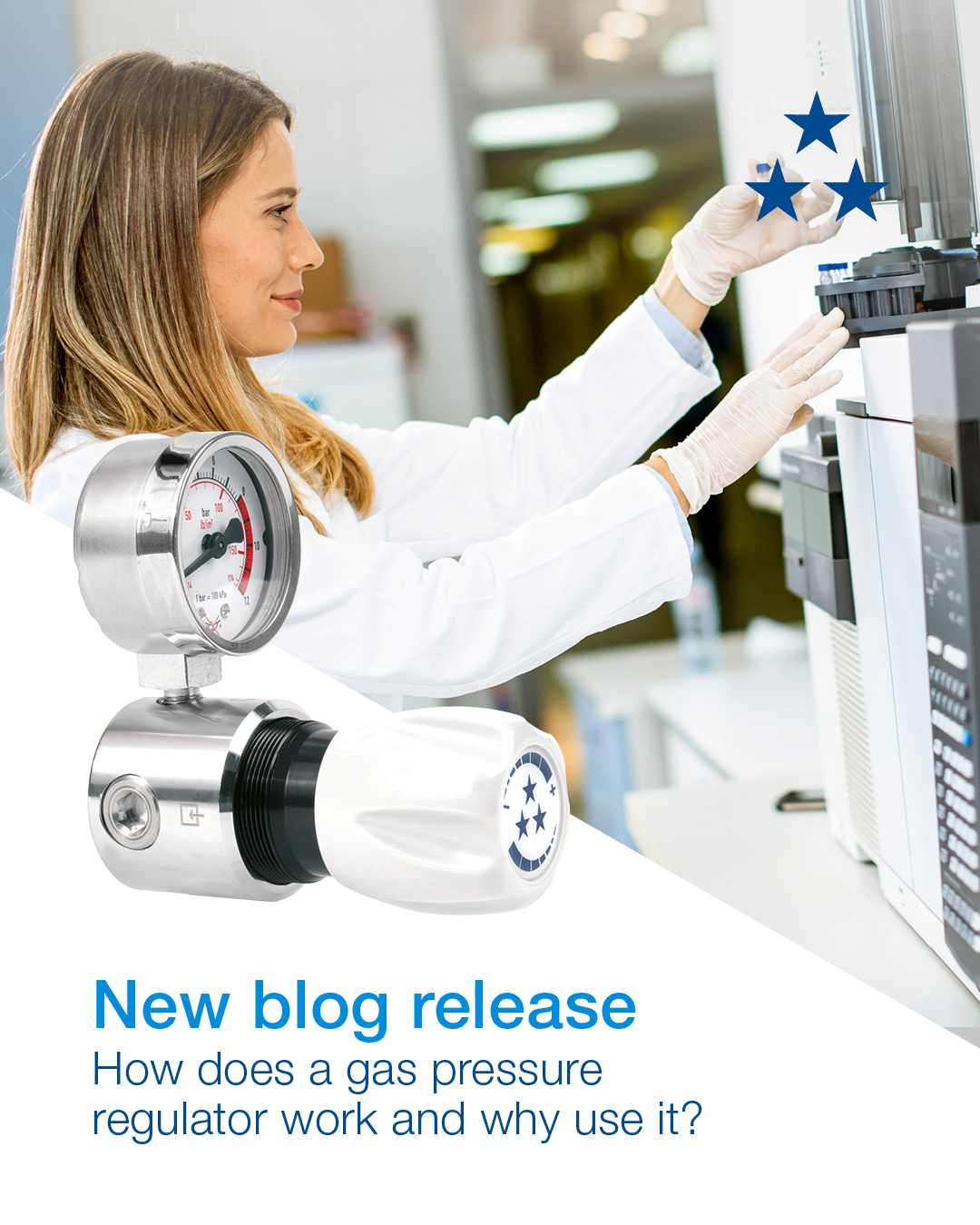
A gas pressure regulator is a spring-loaded control device designed to regulate pressure and keep it stable at the outlet, even when inlet conditions fluctuate. Using a sensing element such as a diaphragm or piston, it automatically balances forces to maintain safe operating conditions. In industrial environments where gases are stored and distributed at high pressure (sometimes several thousand psi) precise control is not optional; it is critical for safety, process stability, and regulatory compliance.
In this article, you’ll discover how pressure regulators work, their key components, the physics behind their operation, and why high-performance solutions from Rotarex are trusted worldwide.
Table of Contents
What Is a Gas Pressure Regulator?
A gas pressure regulator is a mechanical device that reduces and maintains outlet pressure at a predetermined setpoint, regardless of upstream pressure variations. It ensures that the downstream system receives gas at a constant and controlled pressure. When gas is supplied from a cylinder, tank, or pipeline, the pressure is often much higher than what the application requires. For example:
-
Industrial gas cylinders can contain gas at 3,000 psi or more
-
Propane tanks operate at variable pressures depending on temperature
-
Compressed air systems may exceed 150 psi
A pressure regulator works by detecting the pressure difference between upstream and downstream using a sensing element. When the outlet pressure exceeds the setpoint, the regulator restricts flow. In some systems, it works in coordination with a pressure relief valve for added safety.
Pressure regulators are widely used in:
-
Industrial gas distribution networks
-
Medical gas delivery systems
-
Semiconductor manufacturing processes
-
Energy and hydrogen applications
How Does a Pressure Regulator Work Step by Step?
The operation is based on force balance between spring tension and downstream pressure.
-
Inlet Pressure Enters
Pressurized gas enters the regulator through the inlet port. This pressure may vary significantly depending on the source and temperature.
-
Spring Force Sets Desired Pressure
The operator sets the desired outlet pressure by tightening or loosening the adjustment screw. This compresses or relaxes the spring.
-
Valve Opens
The spring pushes the diaphragm or piston downward, opening the valve plug and allowing fluid to flow.
-
Downstream Pressure Builds
As flow increases, downstream pressure pushes back against the diaphragm.
When downstream pressure equals the spring force, the valve stabilizes in a partially open position. This equilibrium maintains a stable outlet pressure.
-
Equilibrium Achieved
If demand increases, pressure drops slightly, the spring force opens the valve further, and more fluid is delivered. If demand decreases, the valve closes proportionally.
This continuous modulation allows the regulator to automatically deliver a constant pressure regardless of fluctuations in supply or demand.
Why Are Pressure Regulators Essential?
The primary function of a pressure regulator is to ensure safety, efficiency and durability.
1. Equipment Protection
Excessive pressure can rupture piping, damage instruments, and degrade seals. Insufficient pressure can lead to unstable processes or incomplete combustion in gas systems.
2. Process Stability
Industrial manufacturing processes depend on precise control. Variations in pressure affect flow rate, reaction conditions, and product quality. A regulator ensures the process receives a stable and predictable supply.
3. Safety Compliance
In many industries (eg. medical, chemical, energy) maintaining regulated pressure is a legal requirement. Overpressure events can cause severe hazards.
4. Energy Efficiency
Controlling pressure prevents unnecessary consumption and ensures gas is delivered only at the required operating level.
Main Components of a Pressure Regulator
A pressure regulator operates through a precise internal mechanism. Its core components include:
1. Regulator Body
The regulator body houses all internal components. It is typically made of brass, stainless steel, or specialty alloys depending on the application and gas compatibility. In high-purity or corrosive environments, advanced materials are selected during manufacturing to ensure long-term reliability.
2. Valve Plug (Poppet)
This movable element opens and closes to regulate flow. It directly controls how much fluid passes through the regulator.
3. Diaphragm or Piston
This sensing element detects downstream pressure. A diaphragm design is common in low-pressure applications, while piston designs are often used for higher-pressure service.
4. Spring
The spring determines the pressure setting. Adjusting the spring compression changes the outlet pressure setpoint.
5. Seat and Seal
The valve seat and seal ensure tight shutoff when the regulator closes. Seal materials are critical for performance, especially in oxygen, hydrogen, or high-purity gas applications.
6. Pressure Gauge
Displays outlet pressure in psi or bar, allowing operators to monitor performance in real time.
Types of Pressure Regulators and Their Applications
Pressure regulators vary depending on design, function, and service conditions.
1. Pressure Reducing Regulators
Lower high inlet pressure to a controlled outlet level. Common in industrial gas distribution.
2. Back Pressure Regulators
Maintain a specific upstream pressure by relieving excess pressure.
3. Single-Stage Regulators
Reduce pressure in one single step. Suitable when inlet pressure is relatively stable.
Provide greater stability when inlet pressure decreases over time.
5. Specialty Gas Regulators
Designed for high-purity or corrosive gases used in semiconductor or pharmaceutical manufacturing.
Each regulator type is defined by:
- Maximum inlet pressure (psi)
- Outlet pressure range
- Flow capacity
- Gas compatibility
- Environmental and service requirements
The Role of Temperature in Pressure Regulation
Temperature plays a critical role in gas regulation. Gas pressure inside cylinders changes with temperature variations. For example:
A properly designed regulator compensates for these changes by maintaining consistent downstream conditions. In precision manufacturing environments, even small pressure variations can impact product quality. High-end regulators are tested to ensure stable performance across a wide temperature range.
FAQ on Pressure Regulators
How do I know if my regulator is working properly?
Stable outlet pressure readings and consistent gauge values indicate correct function.
Where should it be installed?
Downstream of the supply source and upstream of sensitive equipment.
Are regulators necessary if inlet pressure is already low?
Yes, to maintain precise control and compensate for supply fluctuations.
How long do regulators last?
With proper maintenance and correct service conditions, many years.
Minor adjustments are possible, but internal repairs should be performed by trained professionals.