Print

Download datasheet

Breathing Air Valves : Safe and Reliable Cylinder Valves for Breathing Air Systems

Breathing air valves are essential components designed to open and close the supply of compressed breathing air in high-pressure cylinders. They are typically used in combination with a pressure regulator, which manages the downstream pressure and flow of the breathing air.

Engineered from high quality brass and tested in accordance with EN ISO 10297 and TPED directive standards, breathing air valves deliver reliable performance for SCBA cylinders, cascade storage systems, and other breathing air systems.
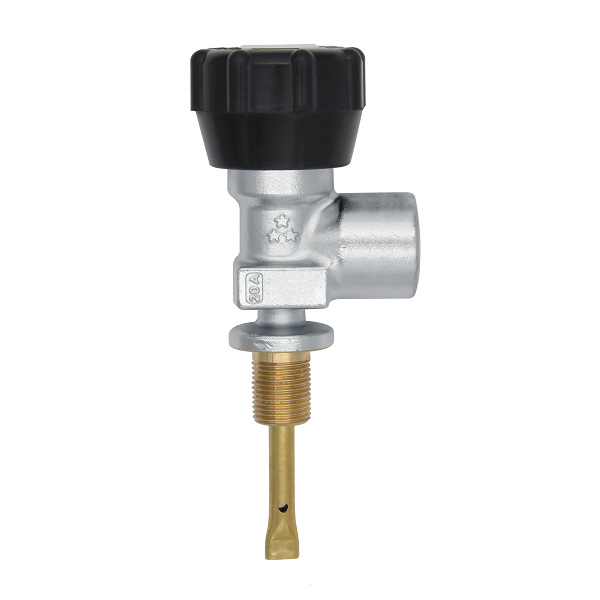
Industrial gas valves

Breathing air valves

What is Breathing Air Valve and How Does it Works?

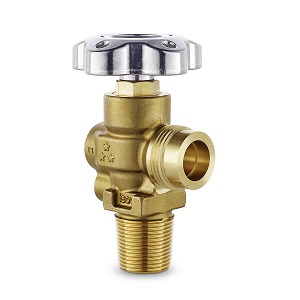
A breathing air valve is a high pressure cylinder valve specifically designed for breathing air service.

Its primary function is to open and close the supply of compressed breathable air from the cylinder, enabling safe connection to downstream equipment such as SCBA regulators, cascade filling systems, or respiratory protection devices.

These valves operate as pressure valves: when opened via the handwheel, the valve allows the compressed air to flow in the correct direction toward the outlet connection. The O-ring seal technology ensures a permanent gas tight seal, preventing any external leakage.

The valve body is manufactured from brass, with chrome-plated brass available as an option to enhance corrosion resistance in breathing air applications.

What is Breathing Air Valve and How Does it Works?
Types of Breathing Air Valves

Types of Breathing Air Valves

Breathing air valves are available in different configurations to suit various application requirements. The main types include:

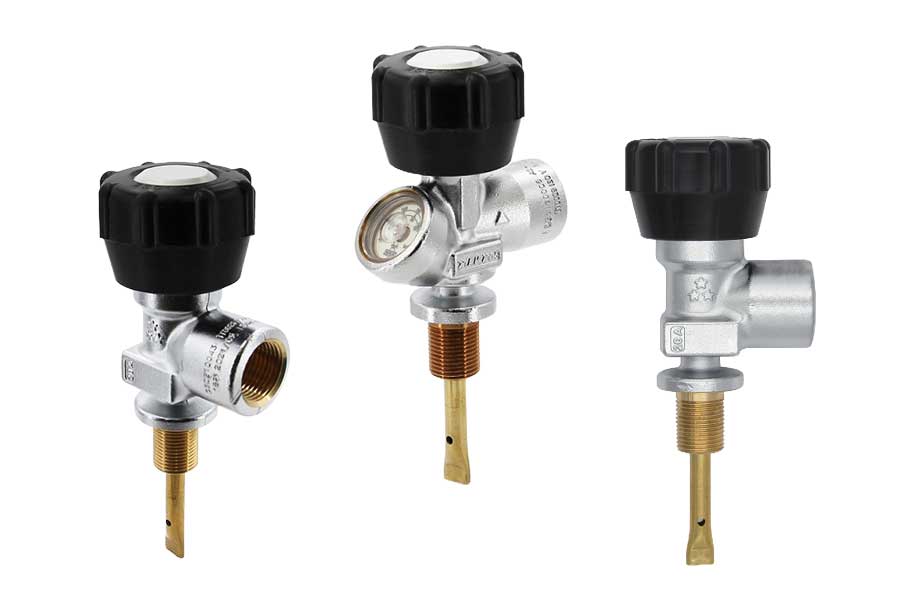
Standard breathing air cylinder valves (C300/C301/C302): Compact, high pressure brass cylinder valves with O-ring seal technology. Available at working pressures of 200 bar and 300 bar with a seat orifice of 4 mm.

These valves carry the π (pi) marking according to the TPED directive and are tested according to EN ISO 10297.

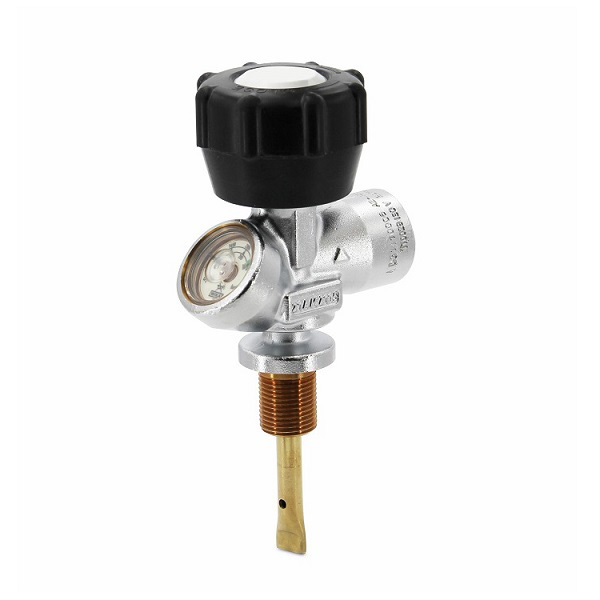
Breathing air valves with integrated manometer (C311) : High pressure brass cylinder valve for breathing air service with a built-in pressure gauge.

The integrated manometer allows operators to visually monitor the cylinder pressure at all times, improving safety and operational efficiency during use and storage.

Applications of Breathing Air Systems

Breathing air valves are essential across a wide range of applications where safe, clean, compressed breathing air must be stored and delivered reliably. The most common include:

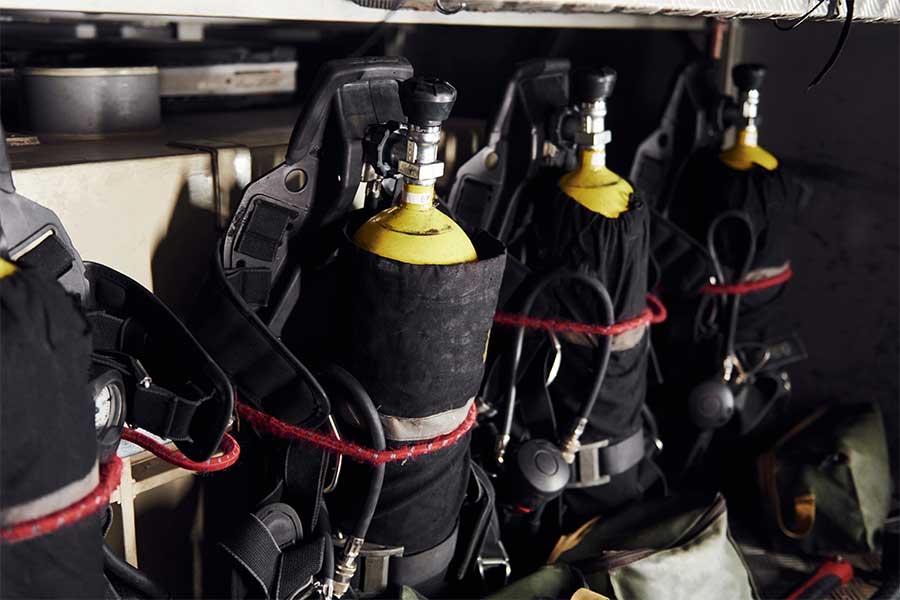
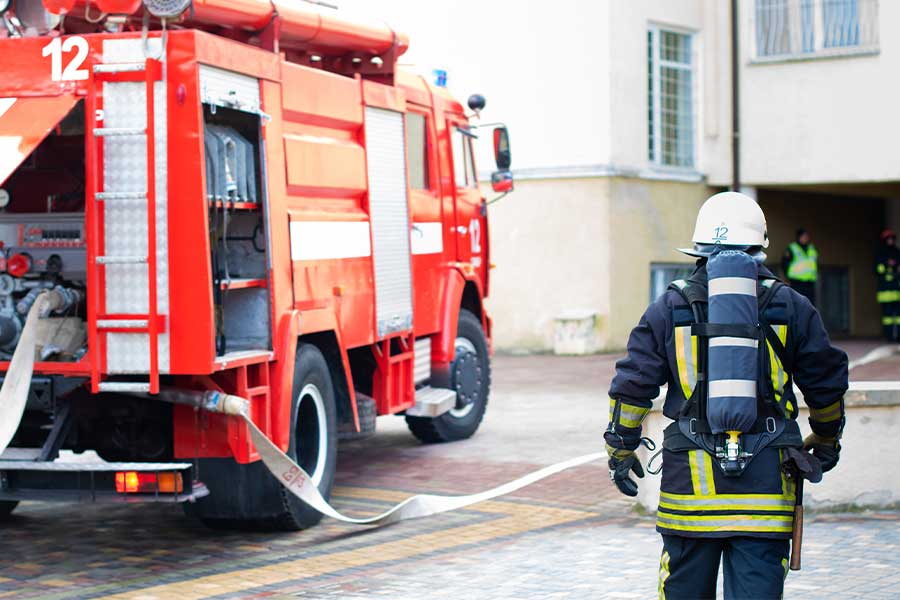
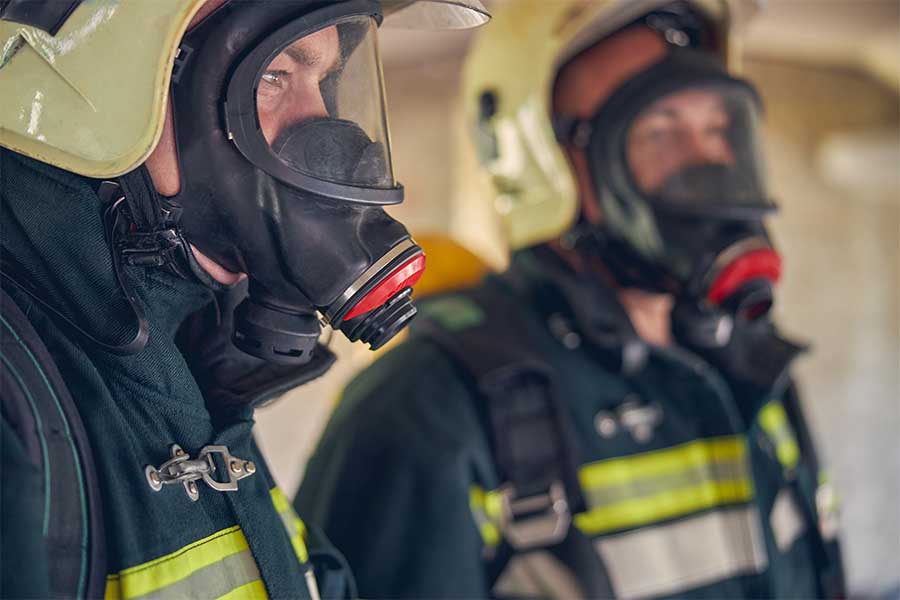
  • SCBA (Self-Contained Breathing Apparatus): Breathing air valves are used on SCBA cylinders for firefighting, hazardous material handling, and industrial rescue operations. The valve must ensure a reliable and safe air supply under extreme conditions.
  • Industrial respiratory protection: In environments with hazardous atmospheres (painting, sandblasting, chemical processing), breathing air systems provide clean air to workers through supplied-air respirators connected to compressed air cylinders.
  • Cascade storage and refill systems: Breathing air valves equip cascade cylinder banks used for storing and refilling SCBA cylinders. The valve controls the safe delivery of high pressure air between storage cylinders and the filling station.
  • Medical and life support: Breathing air valves support medical applications such as positive airway pressure systems, mechanical ventilation, and emergency life support equipment in hospitals and intensive care units, where air quality and pressure regulation are critical for patient safety.
  • Emergency and FEMA response: Breathing air systems are essential equipment for emergency response teams, providing safe breathing air in disaster zones, confined space rescue, and hazardous material incidents.
Applications of Breathing Air Systems
How to Select a Breathing Air Valve

How to Select a Breathing Air Valve

Selecting the proper breathing air valve requires careful consideration of several technical criteria to ensure the valve matches the application and guarantees safe gas delivery:

  • Working pressure: Different models are designed for different service pressures. The C300, C301, and C302 models are available with inlet pressure ratings of either 200 bar (3000 psi) or 300 bar (4350 psi). Select the valve that matches your cylinder's maximum working pressure.
  • Inlet and outlet connections: Breathing air valves must be compatible with the cylinder thread and the downstream equipment. Common outlet connections include DIN 477-1 Nr.13, BS 341-3 Nr.3, and EN ISO 12209. Inlet connections include 25E, 17E (EN ISO 11116), 18P (EN ISO 15245-1), and 25P (EN ISO 15245-1). Ensure the valve connections comply with your country standards and CGA requirements where applicable.
  • Integrated manometer: If visual pressure monitoring is required, the C311 model with integrated pressure gauge provides this functionality directly on the valve, eliminating the need for external gauges.
  • Material compatibility: Breathing air valves feature brass bodies, neoprene handwheels, PA 6.6 seats, and EPDM O-rings. These materials are specifically selected for compatibility with clean compressed air and to prevent contamination.
  • Safety and compliance: Ensure the valve carries the appropriate certifications, including π marking according to the TPED directive and testing according to EN ISO 10297, for safe operation in your jurisdiction.
Frequently Asked Questions About Breathing Air Valves
What are the types of breathing air valves?

The main types include standard breathing air cylinder valves (such as the C300/C301/C302 series), which are compact O-ring seal valves available at 200 and 300 bar (3000 and 4350 psi) working pressures.

For applications requiring visual pressure monitoring, valves with integrated manometers (such as the C311) combine the valve function with a built-in pressure gauge.

Do breathing air valves regulate pressure or flow?

No. Breathing air valves function as on/off valves. Pressure and flow regulation are performed by a pressure regulator installed after the valve.

What pressure ratings are common for breathing air valves?

Most breathing air cylinder valves are designed for 200 bar or 300 bar working pressure, depending on the gas cylinder specification and application.

Connect with an Expert
Go up
×
Loading