Print

Download datasheet

Medical Gas Pressure Regulators

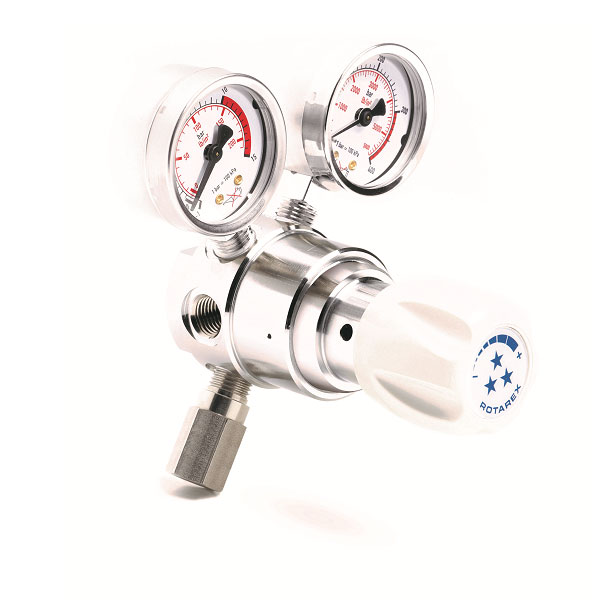
Medical pressure regulators are devices that reduce high inlet pressure from a medical gas cylinder to a safe, stable outlet pressure suitable for direct connection to medical devices, flowmeters, and respiratory equipment. Used with oxygen, medical air, nitrous oxide, nitric oxide and Heliox across hospitals, clinics, and emergency care settings, they are a critical component of any medical gas delivery system.

The Rotarex complete series of medical pressure regulators delivers precise pressure control, reliable flow rates, and durable performance across the full range of medical gas applications. The range includes models equipped with a flow selector, preset regalutors and other configurations designed to meet the specific requirements of modern healthcare environments.
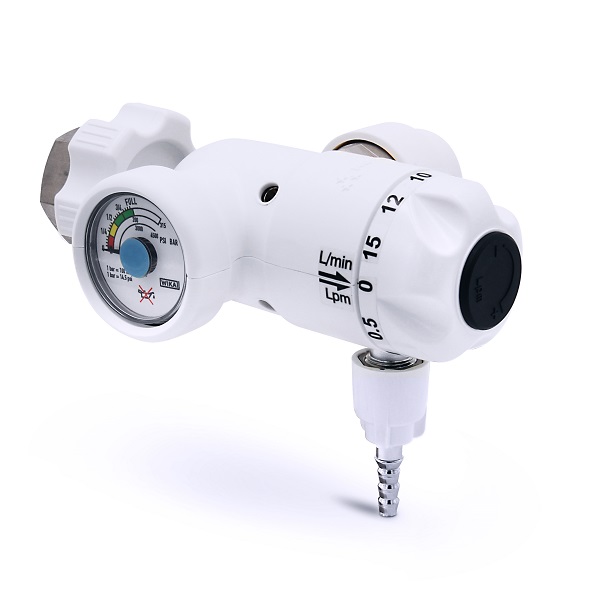
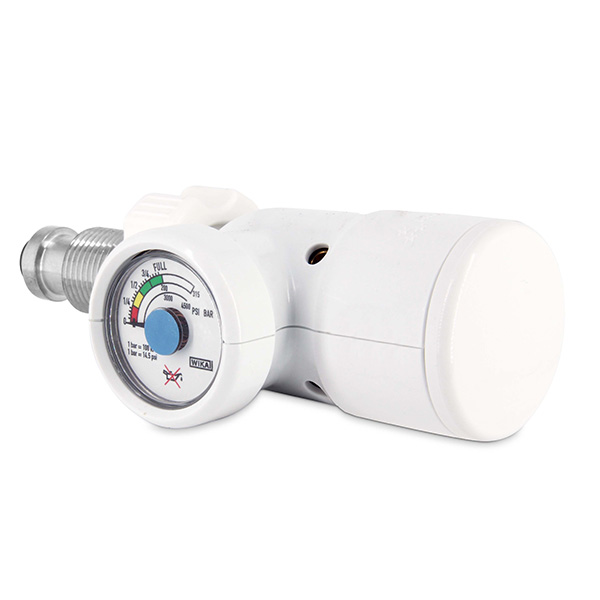
Medical Pressure Regulators

Standard gas pressure regulators

  • Cylinder pressure regulator
    With flow selector
    All medical gases

Nitric oxide pressure regulators

  • High pressure regulator
    Bellows / double stage
    For NO gas mixtures
  • High pressure regulator
    Single stage
    Diaphragm seal
  • High pressure regulator
    Single stage
    Diaphragm technology

How Do Medical Pressure Regulators Work?

A medical pressure regulator reduces the inlet pressure from a medical gas cylinder, which can reach 200 to 300 bar (2000 to 4350 psi) depending on the cylinder and gas type, to a preset, controlled outlet pressure suitable for safe use with medical equipment. Gas flows from the cylinder through the inlet connection into the regulator body, typically manufactured from high-quality brass to ensure durability and reliability in demanding medical environments. Inside the regulator, a piston mechanism reduces the pressure to the required delivery level.

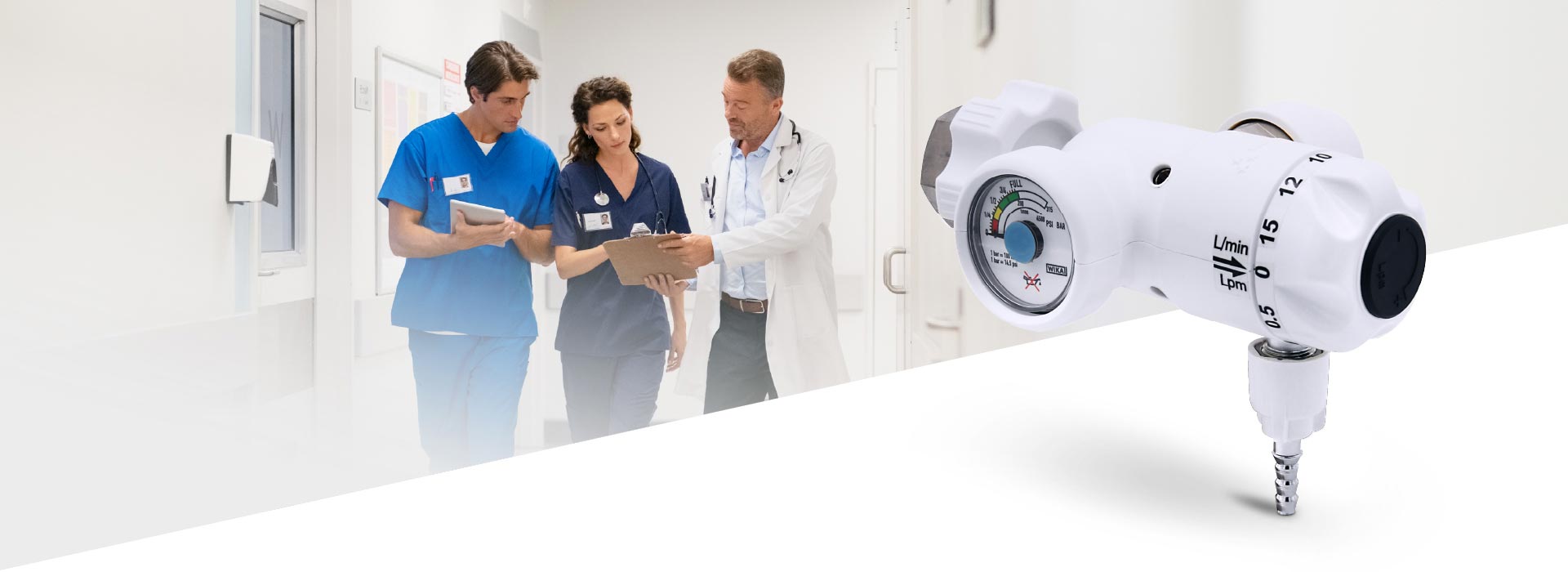
A pressure gauge monitors inlet pressure, allowing healthcare professionals to quickly assess the remaining gas in the cylinder. Flow rate can be adjusted using an integrated flow selector or an external flowmeter, with delivery typically measured in liters per minute (LPM). For fixed-outlet regulators, the device provides a preset outlet pressure while flow regulation is managed by the connected medical equipment.

How Do Medical Pressure Regulators Work?
Medical Applications - Where Medical Pressure Regulators Are Used

Medical Applications - Where Medical Pressure Regulators Are Used

Medical pressure regulators are used wherever compressed medical gases are delivered from cylinders to patients or medical devices. Key application areas include:

  • Oxygen therapy in hospitals, clinics, and homecare settings
  • Emergency transportation and ambulance services requiring portable oxygen supply
  • Anaesthesia gas supply in surgical environments
  • Respiratory care in intensive care units (ICU) and on ventilators
  • MRI suites, where non-magnetic aluminum components are specified
  • Nitrous oxide supply for pain management in clinical settings
  • Heliox delivery for respiratory conditions
  • Medical air distribution in hospitals and healthcare facilities

Compliance & Certifications - Designed to Meet Global Medical Standards

Rotarex medical pressure regulators are designed and manufactured in compliance with the applicable international and European standards governing pressure-reducing devices used with medical gases:

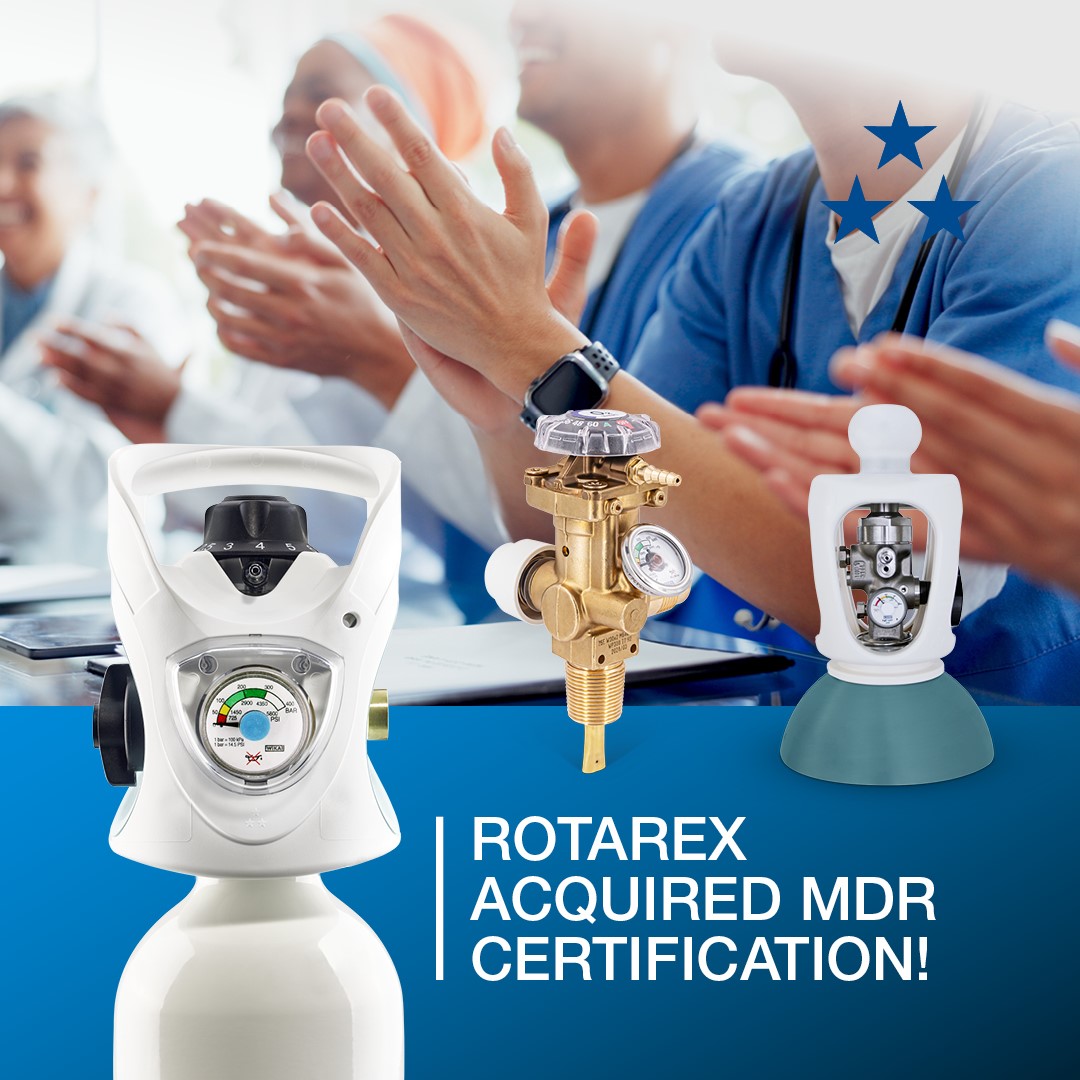
  • EU MDR (Medical Device Regulation): European market compliance for medical devices
  • EN ISO 10524-1 / EN ISO 10524-3: Pressure regulators for use with medical gases
  • EN ISO 15996: Residual pressure valves
  • TPED Directive: Transport pressure equipment directive for cylinder valves
  • CGA and DIN connection standards for gas cylinder valve outlets

All materials in contact with gas pathways are selected for compatibility with oxygen service and medical requirements. Brass is used for most of the gases and stainless steel for specific applications as ino therapy. Full lifecycle testing, material certification, and traceability documentation are available to support regulatory submissions and compliance audits.

Types of Medical Gas Regulators

Rotarex offers a complete range of medical pressure regulator configurations designed to meet a wide variety of clinical requirements. Each model is optimized for a specific use, from oxygen therapy to powering medical devices. The range includes regulators with different features, allowing healthcare professionals to compare solutions and select the most compatible option for their medical gas systems and applications.

Standard Regulators

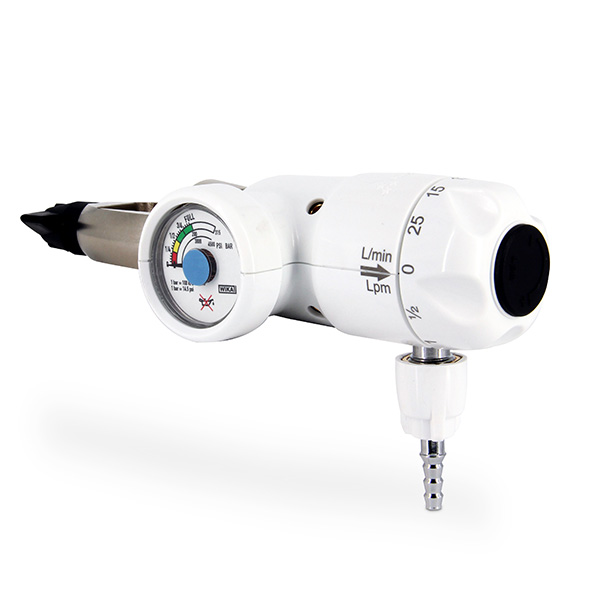
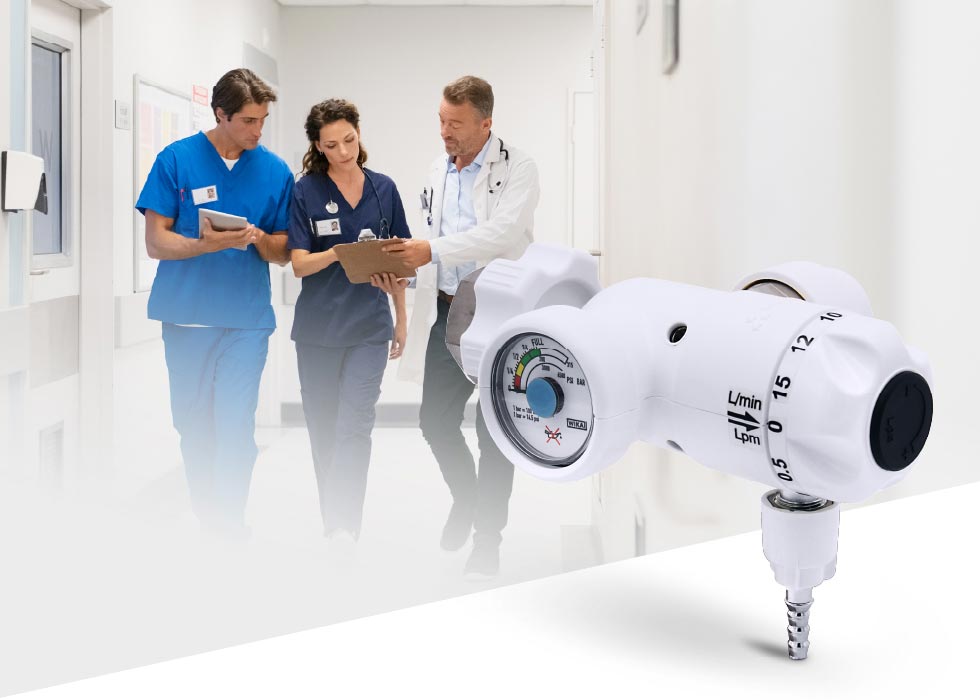
Standard medical gas regulators reduce the high pressure from a cylinder to a safe working pressure and allow caregivers to adjust the flow of gas supplied. They are equipped with a built-in flow selector that provides pre-set flow settings for oxygen therapy. These regulators are widely used in ambulances, emergency care and home care environments, where fast, simple and reliable gas delivery is essential.

Fixed Outlet Regulators

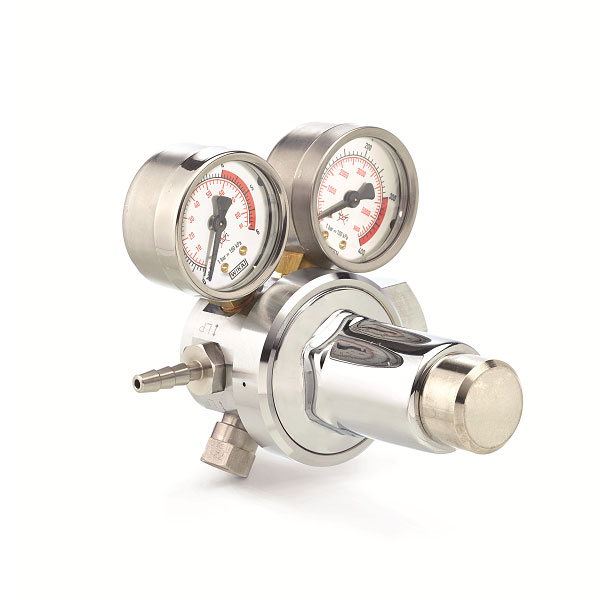
Preset regulators are factory-set to a fixed outlet pressure and cannot be adjusted in the field. They eliminate the risk of incorrect adjustment and are commonly used for oxygen therapy, home care and emergency situations where ease of use and patient safety are paramount. By providing stable pressure, Preset regulators are also ideal for supplying medical devices such as ventilators, anaesthesia systems, or other equipment that regulates gas flow internally.

Column Versions Regulators

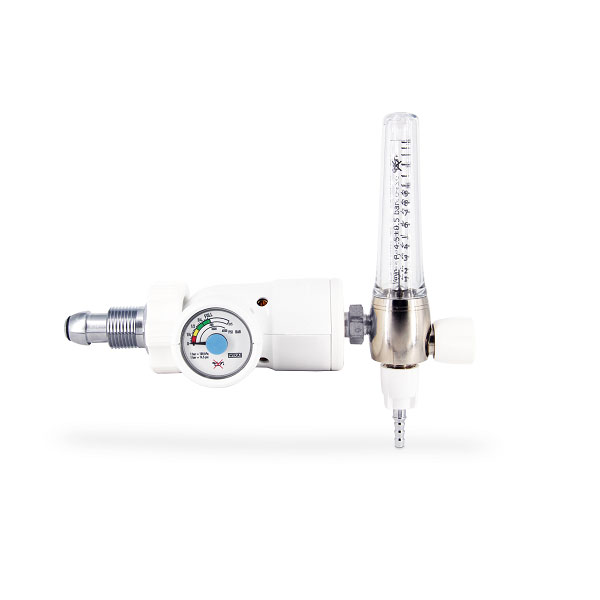
Column flow meter regulators combine pressure regulation with a vertical flow meter that allows for precise and continuous adjustment of the gas flow rate.The transparent column of the flow meter provides a clear visual indication of the flow rate, allowing healthcare professionals to accurately control the gas supply. These regulators are commonly used in hospital wards, respiratory therapy and clinical environments where precise flow control is required.

Yoke Versions Regulators

Yoke version for pin index regulators are designed for use with small medical gas cylinders fitted with a pin index connection. The integrated Pin Index Safety System (PISS) ensures that the regulator can only be connected to the appropriate gas cylinder, preventing connection errors between different medical gases. This type of regulator is commonly used with portable cylinders in ambulances, emergency care and mobile oxygen therapy applications.

Nitric Oxide Regulators

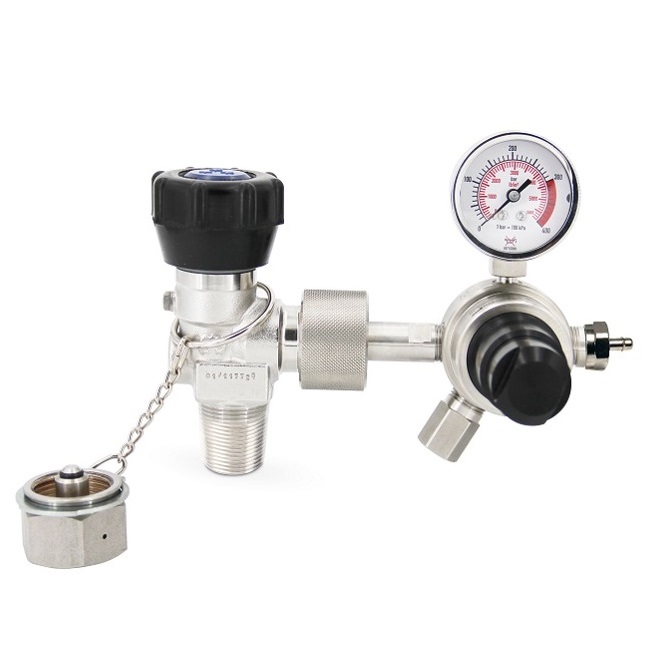
Nitric oxide regulators are specially designed to handle nitric oxide (NO) gas mixtures used in inhalation therapies, particularly in neonatal and intensive care units. These regulators ensure precise pressure control and compatibility with nitric oxide delivery systems, while meeting the high safety standards required for handling this specialised medical gas.

Why Rotarex Medical Pressure Regulators Are Trusted by Healthcare Facilities Worldwide

Rotarex is a specialist manufacturer of cylinder valves and pressure control equipment for medical, industrial, and specialty gas applications.

Our medical pressure regulators are trusted by hospitals, medical gas distributors, and cylinder manufacturers worldwide.

  • Precise outlet pressure control for stable delivery across varying inlet pressures
  • Durable brass and stainless steel construction for long service life
  • Full compatibility with standard CGA and DIN medical gas cylinder connections
  • Preset and adjustable models to match operational and safety requirements
  • Available for oxygen, medical air, nitrous oxide, nitric oxide, Heliox, and other breathing gases
  • Complete compliance with EU MDR, EN ISO 10524, and TPED standards
  • Full traceability, material certification, and documentation for regulatory submissions
Why Rotarex Medical Pressure Regulators Are Trusted by Healthcare Facilities Worldwide
Medical Pressure Regulators - FAQ
What is the flow rate of a medical pressure regulator?

Flow rate depends on the regulator model, the outlet pressure setting, and the connected medical device. Most medical pressure regulators are used with a flowmeter connected to the outlet port, which controls and displays flow in liters per minute (LPM).

Rotarex medical pressure regulators are designed to deliver stable, precise flow rates across the full service life of the cylinder, ensuring consistent gas delivery regardless of remaining cylinder pressure.

How should medical pressure regulators be maintained?

Medical pressure regulators should be inspected regularly for signs of wear, contamination, or damage to seals and connections. Maintenance intervals and procedures are defined by the manufacturer and applicable standards.

Key practices include verifying outlet pressure calibration, inspecting the pressure gauge for accuracy, checking all connections for gas-tight integrity, and replacing consumable components such as seals and washers according to the service schedule. Only qualified technicians should perform maintenance on medical gas equipment.

Durable brass and stainless steel construction in Rotarex regulators supports long service life with proper maintenance.

Where can I buy Rotarex medical pressure regulators?

Rotarex medical pressure regulators are available through authorized regional distributors and direct from Rotarex. Contact the Rotarex team to identify the preferred source in your region, discuss product availability, and obtain pricing.

Rotarex operates worldwide and works with a global network of medical gas equipment distributors.

Are There Alternatives to Medical Gas Cylinder Regulators?

Cylinder valves with an integrated pressure regulator, commonly known as VIPR (Valve with Integrated Pressure Regulator), combine the cylinder valve and the pressure regulator into a single compact device.

Instead of attaching a separate regulator to the cylinder valve, the pressure regulation function is built directly into the valve assembly. This design improves safety by reducing the number of connections, minimizing potential leakage points, and simplifying operation for healthcare professionals.

VIPR systems are increasingly used in portable medical gas cylinders, particularly for oxygen therapy, emergency care, and homecare applications where ease of use, compact design, and enhanced safety are essential.

Connect with an Expert
Go up
×
Loading