
Print

Download datasheet

Hydrogen solutions: Green future starts today

Hydrogen concentrates a set of engineering challenges that no other industrial gas combines at the same scale. It has the smallest molecular size of any element, the widest flammability range of any common gas, a demonstrated ability to cause embrittlement in standard steel alloys and a liquid phase that exists only at -253 degrees Celsius. Each of these properties individually demands specialized equipment. Hydrogen requires all of them to be addressed simultaneously.

Standard gas equipment designed for nitrogen, argon or even high-purity process gases does not meet the leak integrity, material compatibility and temperature range requirements of hydrogen service. Using non-specified equipment in a hydrogen circuit creates safety risks and operational failures that cannot be tolerated in any application context.

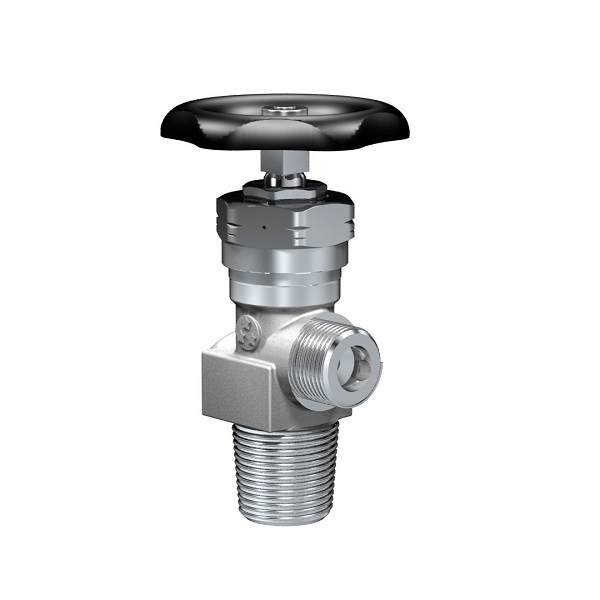
Rotarex designs and manufactures gas control equipment for the full hydrogen value chain: high-pressure cylinder and bundle valves for compressed hydrogen storage and transport in MEGCs and tube trailers, bellows valves for cryogenic liquid hydrogen piping systems, check valves for cryogenic circuits and weld fittings and connectors for hydrogen distribution systems requiring maximum gas purity and leak integrity.

MEGC Containers: Compressed Hydrogen Transport by Road, Rail, and Sea

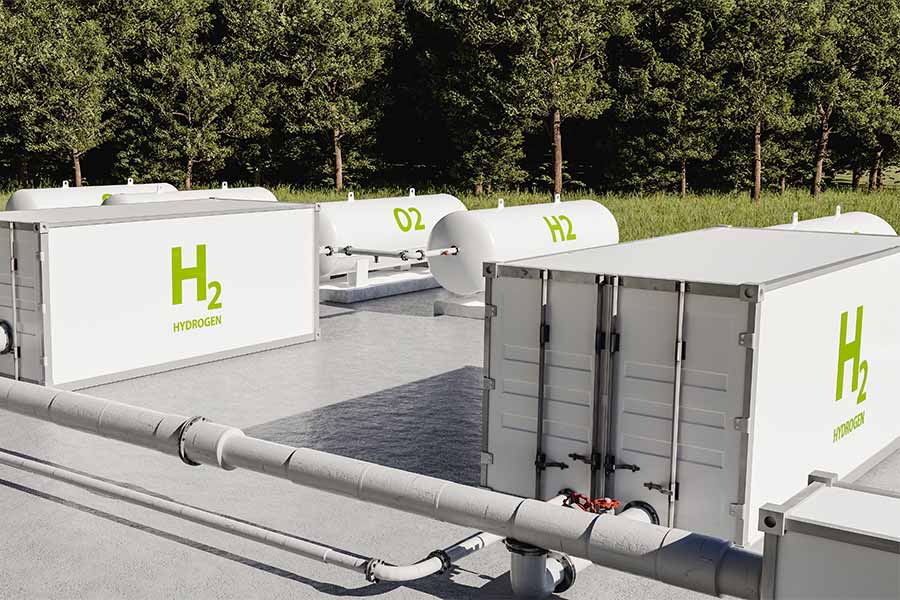
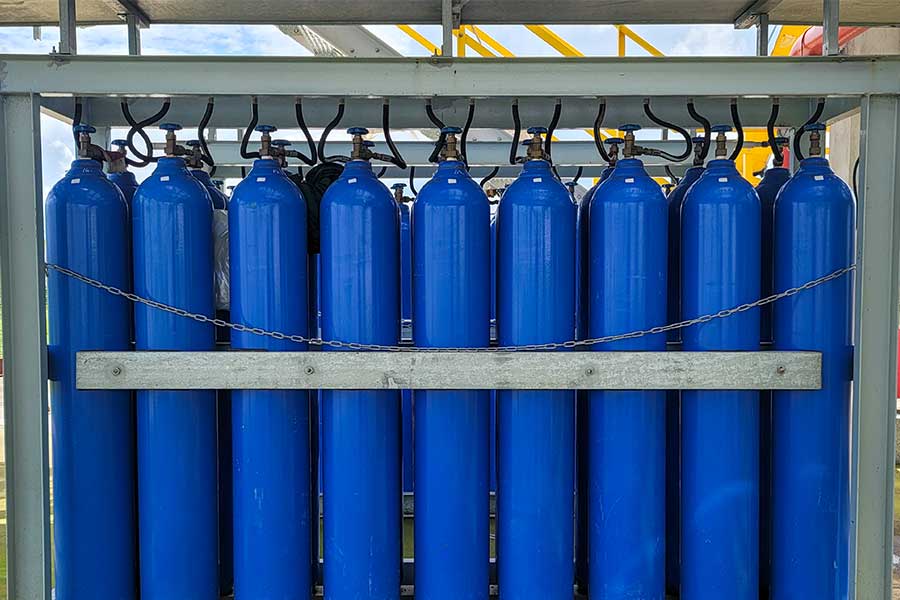
Multiple Element Gas Containers are the standard solution for transporting large quantities of compressed hydrogen where pipeline infrastructure is not available. A MEGC connects multiple high-pressure gas cylinders into a single transportable assembly, allowing efficient bulk delivery of hydrogen by truck, train, or ship.

Equipment at the MEGC cylinder interface operates under the combined stresses of high working pressure, repeated pressurization and depressurization cycles, and the mechanical loads of transport. Every valve on a MEGC is a safety-critical component: a failure in transit with a flammable gas at high pressure is a serious incident. Rotarex cylinder and bundle valves for MEGC are adapted for hydrogen service and homologated according to ISO 10297:2024.

MEGC Containers: Compressed Hydrogen Transport by Road, Rail, and Sea
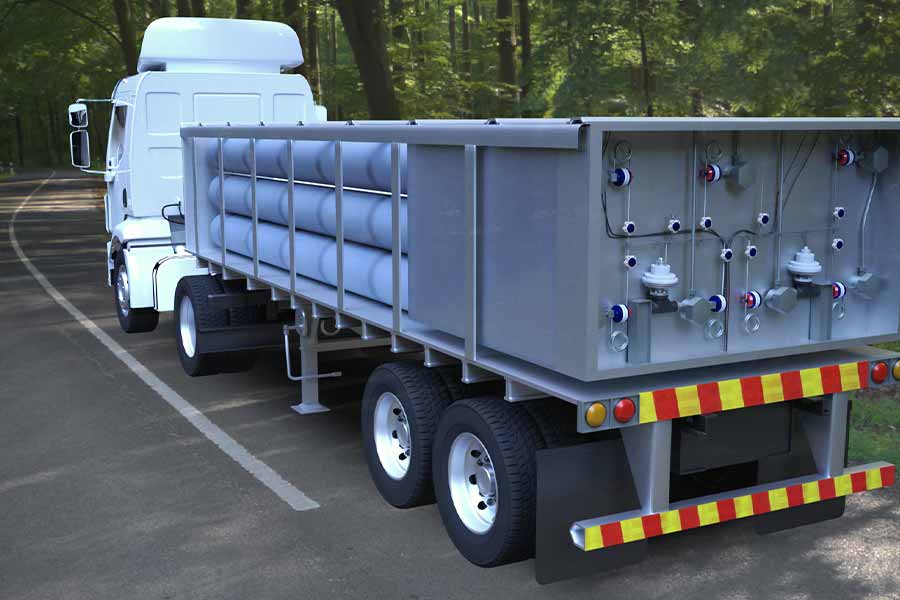
Tube Trailers: High-Pressure Compressed Gas Transport

Tube Trailers: High-Pressure Compressed Gas Transport

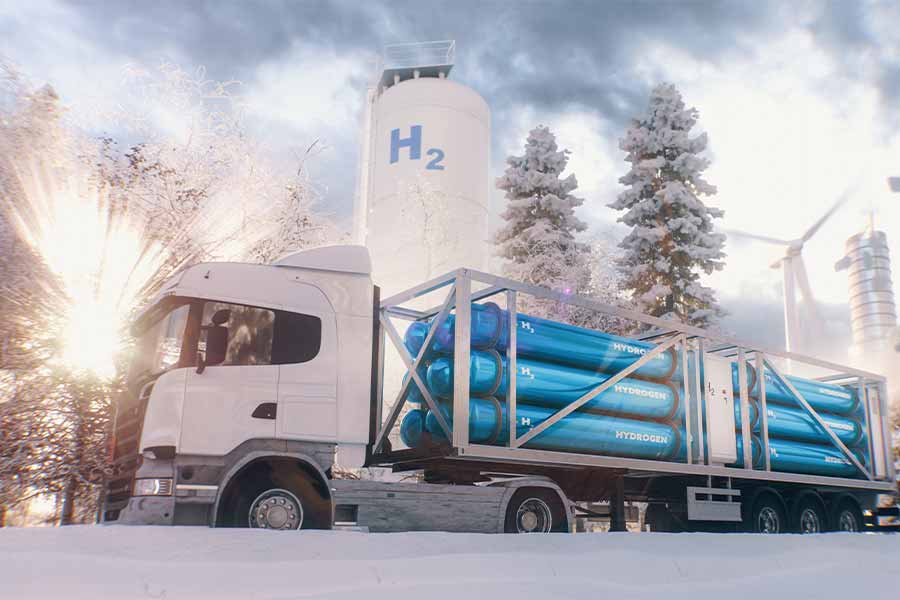
Tube trailers transport compressed hydrogen at high pressure over road distances. The steel tubes are engineered to withstand the structural loads of transport while maintaining gas containment at full operating pressure. Valve equipment on tube trailers must function reliably through repeated fill and discharge cycles over an extended service life.

Rotarex high-pressure valves for tube trailer applications cover the full pressure range of compressed hydrogen transport, available in manual and pneumatic actuation versions.

Cryogenic Gas Piping Systems: From Storage to Point of Use

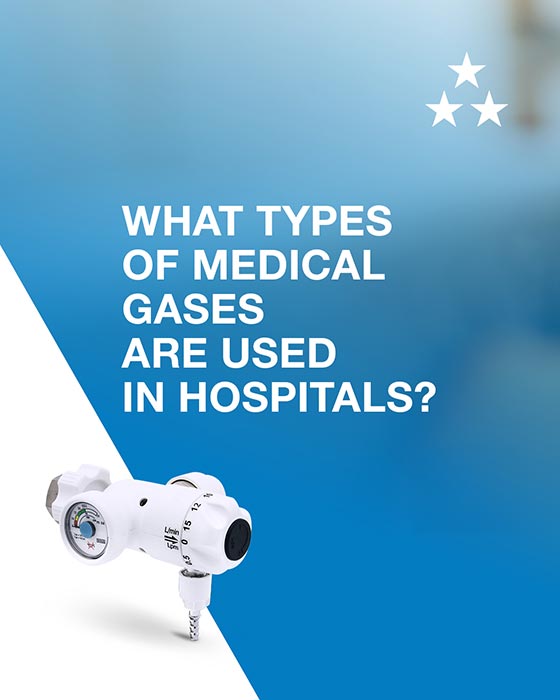
Liquid hydrogen is used across a range of high-demand applications: industrial processes, space propulsion, nuclear fusion research, and certain medical applications. Transporting liquid hydrogen from bulk storage to the point of use requires piping systems with valves that maintain full cryogenic integrity across the operating temperature range.

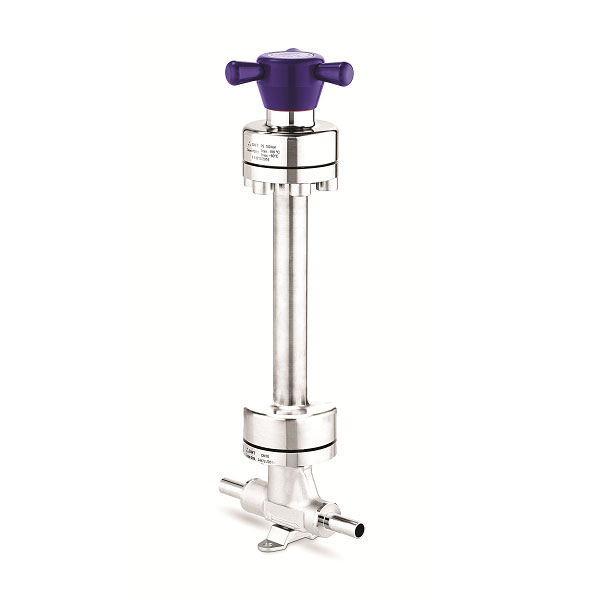
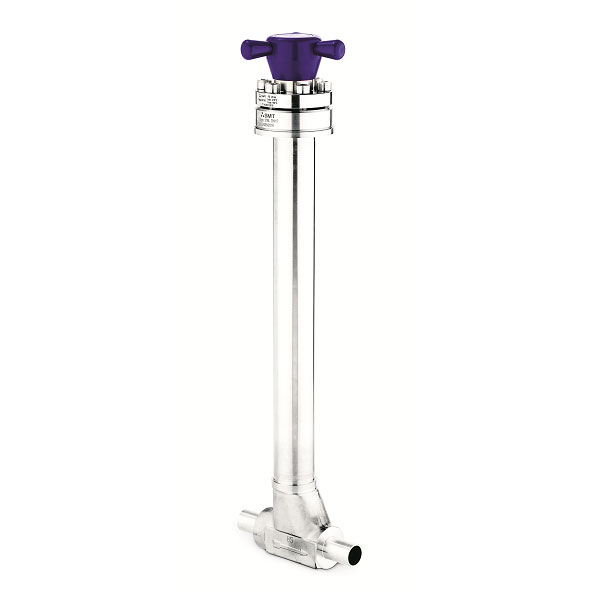
Cryogenic piping for liquid hydrogen imposes requirements on every valve in the circuit: metallic sealing, cryogenic-rated materials, and sustained leak integrity through thermal cycling. The Rotarex cryogenic bellows valve range covers the complete temperature window for liquid hydrogen service, including the SUPRA valve for the deepest cryogenic applications.

Cryogenic Gas Piping Systems: From Storage to Point of Use
Energy Transition and Industrial Hydrogen Applications

Energy Transition and Industrial Hydrogen Applications

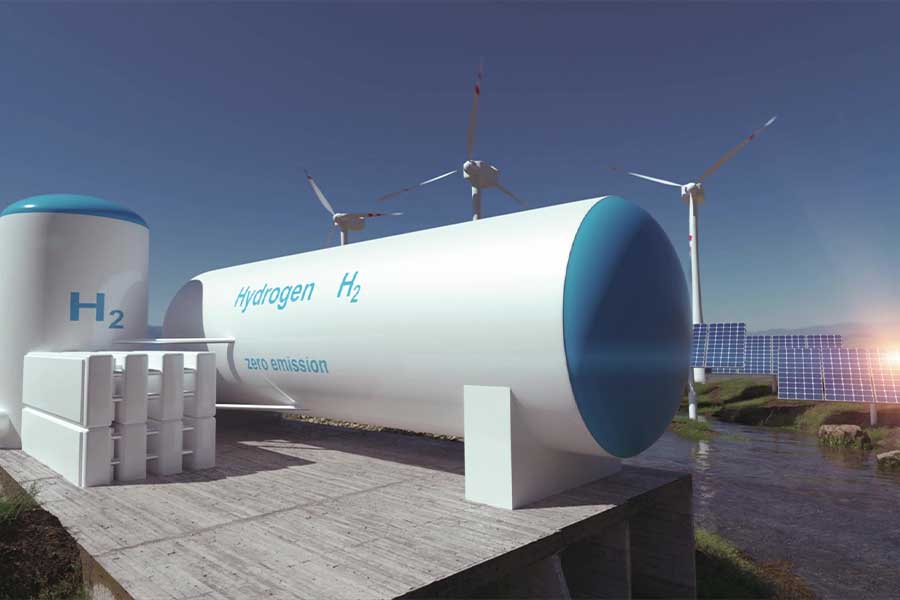
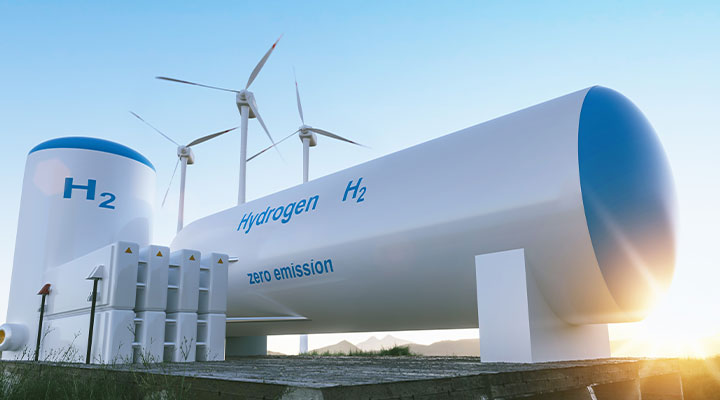
Hydrogen produced by electrolysis from renewable electricity is a key energy carrier in decarbonization strategies for power generation, industry, and transportation. Hydrogen is also an essential process gas in ammonia synthesis, petroleum refining, and chemical production. In scientific research, it plays a central role in nuclear fusion experiments and materials characterization.

Each of these applications places specific requirements on gas control equipment in terms of working pressure, purity, temperature, and safety classification. The Rotarex hydrogen equipment range covers the full spectrum from high-pressure compressed hydrogen to ultra-high purity liquid hydrogen circuits, providing a single supplier for multiple application contexts.

Hydrogen solutions

Cryogenic Hydrogen

Cryogenic solutions

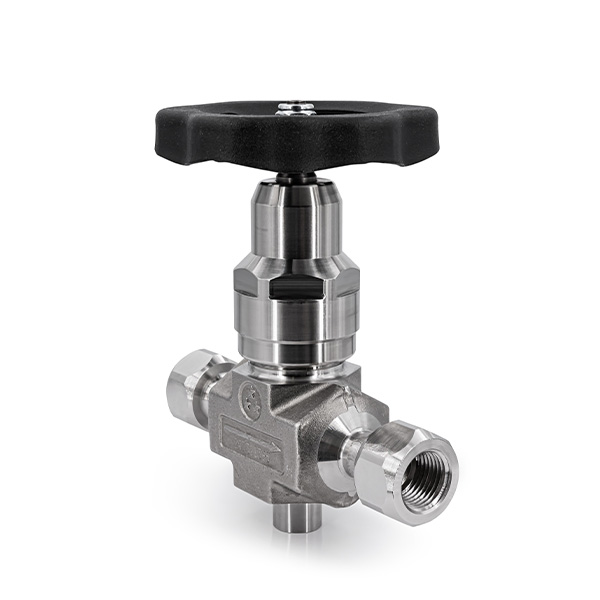
  • Bellows low to high pressure valve for HP, UHP, corrosive gases and fluids – K300
    Bellows valve
    Low or high pressure
    -40°C to + 120°C (ambient)
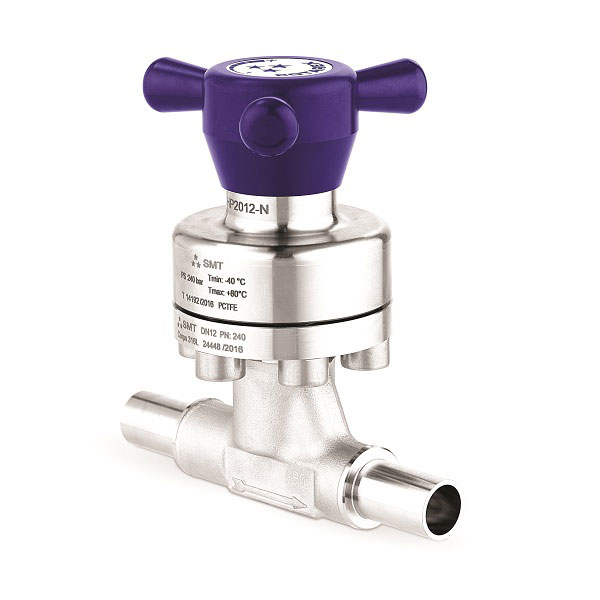
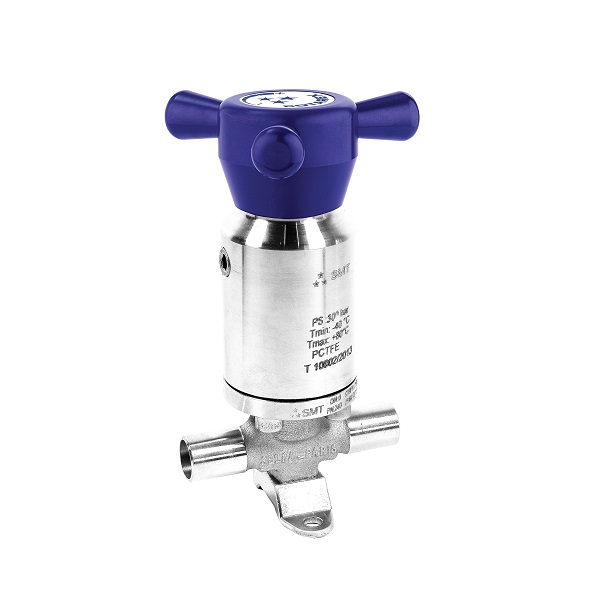
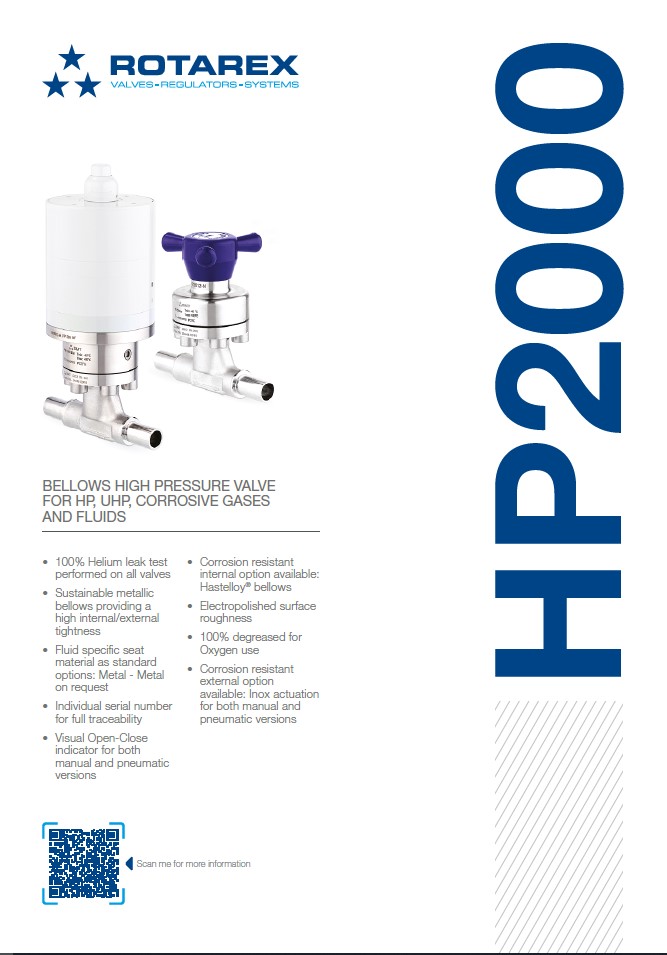
  • Bellows high pressure valve for HP, UHP, corrosive gases and fluids – HP2000
    Bellows valve
    High pressure
    -40°C to + 120°C (ambient)
  • Bellows low to high pressure valve for HP, UHP, cryogenic gases and fluids –  K900
    Bellows valve
    Low to high pressure
    -196°C to + 250°C (cryogenic)
  • Bellows high pressure valve for HP, UHP, cryogenic gases and fluids –  HP9000
    Bellows valve
    High pressure
    -196 °C to + 250°C (cryogenic)
  • Bellows high pressure valve for HP, UHP, corrosive gases and fluids – HP3000
    Bellows valve
    High pressure
    -40°C to + 120°C (ambient)
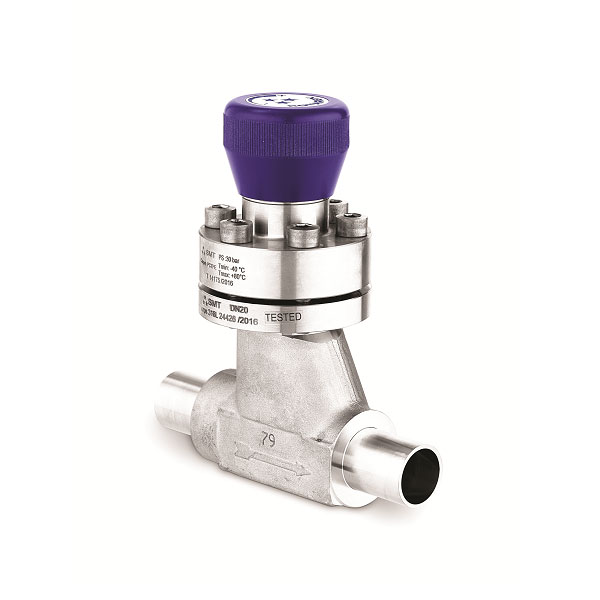
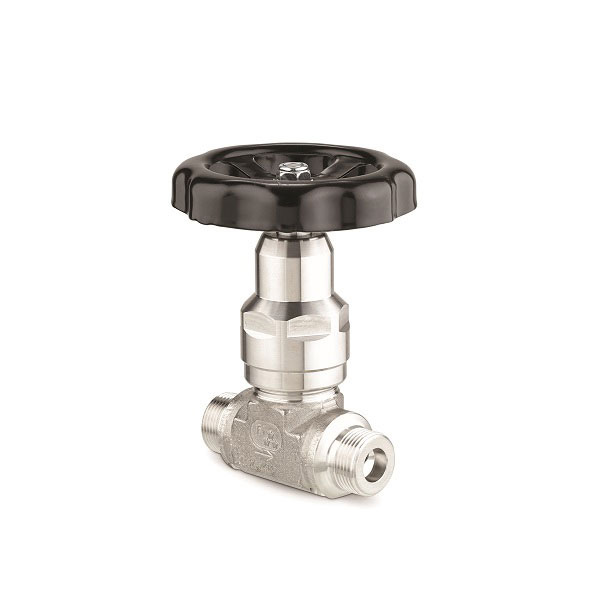
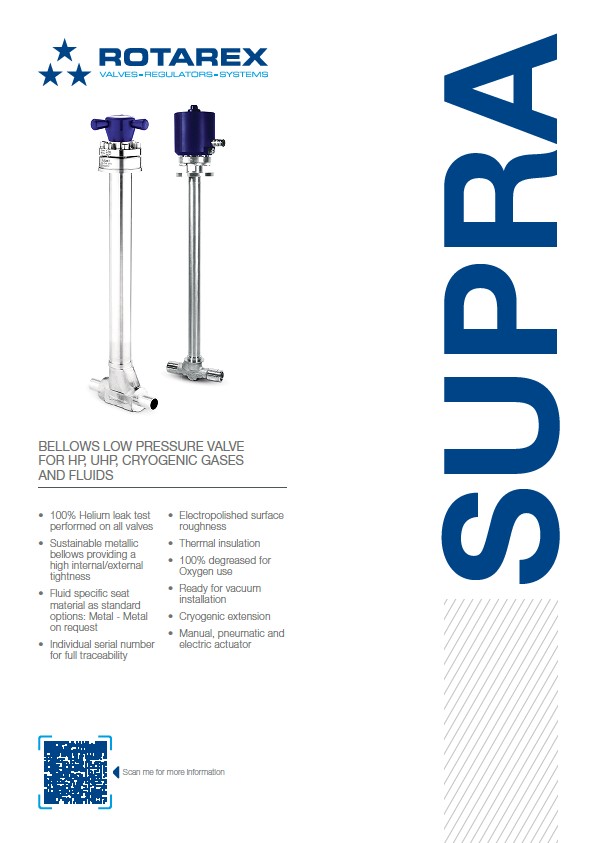
  • Bellows low pressure valve for HP, UHP, cryogenic gases and fluids –  SUPRA
    Bellows valve
    Low pressure
    -270°C to + 80°C (cryogenic)
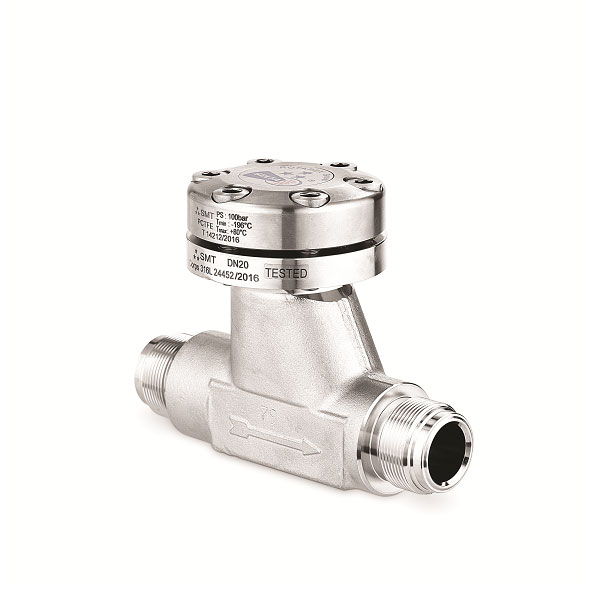
  • Spring type check valve for HP, UHP, cryogenic gases and fluids – CAR(S)
    Check valves
    Low to high pressure
    -196°C to +250°C (cryogenic)

Bundle and cylinder solutions

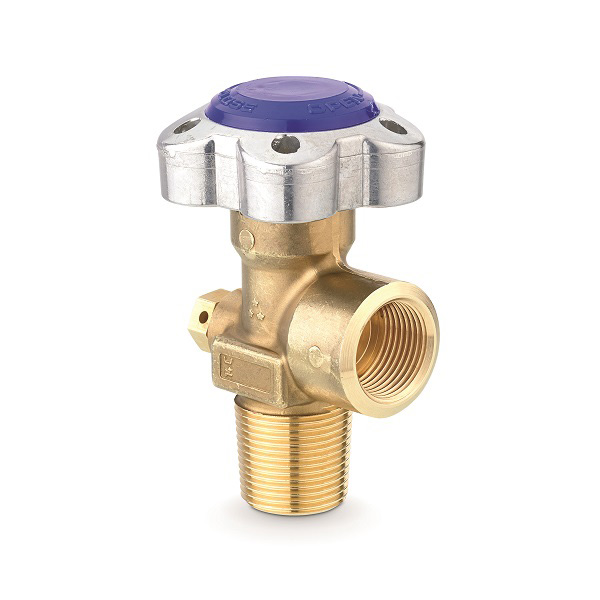
  • High pressure bundle valve for hydrogen, helium and other gases – D615 ​
    Bundle Valve
    Up to 500 bar
    Manual actuation
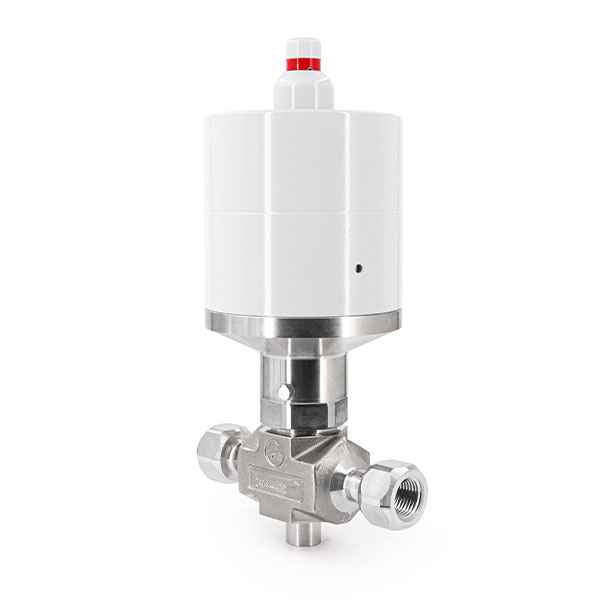
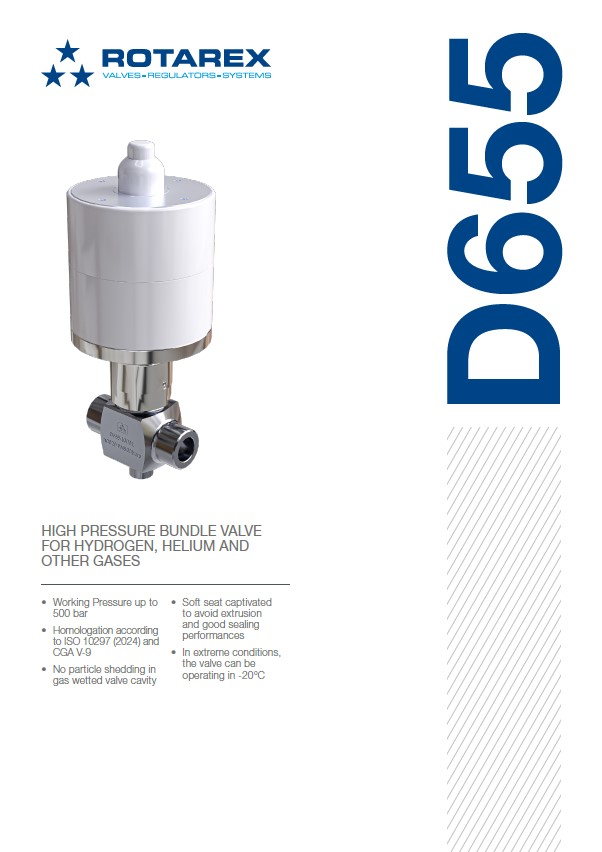
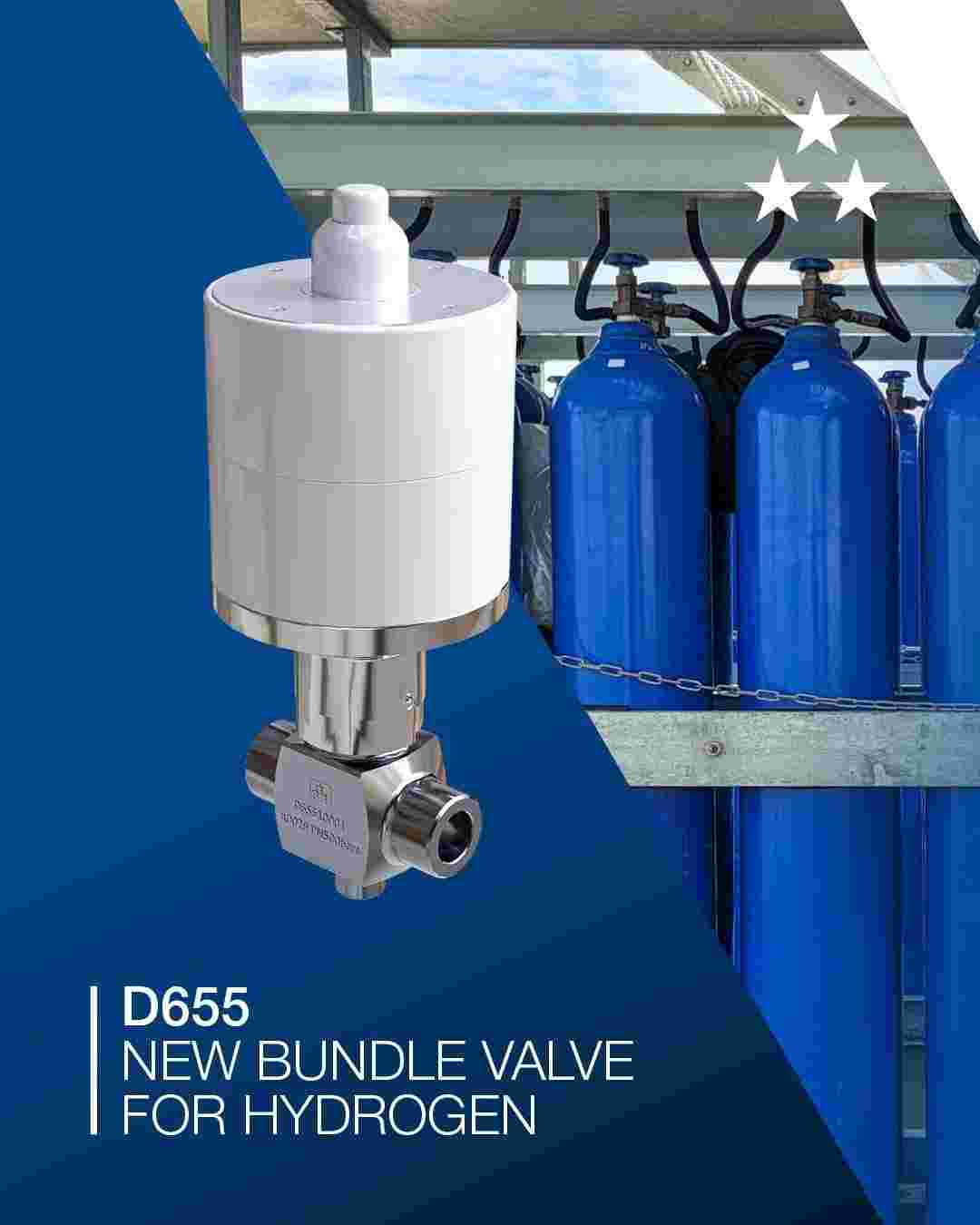
  • Pneumatic high-pressure bundle valve for hydrogen, helium and other gases - D655
    Bundle Valve
    Up to 500 bar
    Pneumatic actuation
  • High pressure line valve specific applications - D605
    Hydrogen, methane and acetylene applications
    O-ring
    12mm orifice
  • Standard valves - C200/C205/C210/C215
    Inert, mixtures and flammable
    Max. Inlet pressure: 300 bar
    Standard valves
  • High pressure cylinder valve specific applications - D488
    Hydrogen, methane and acetylene applications
    O-ring
    6mm orifice

Digital measurement systems

Certifications and Standards for Hydrogen Gas Equipment

ISO 10297:2024 and CGA V9: Cylinder Valve Compliance

ISO 10297:2024 is the international standard governing the design, specification and type testing of valves for gas cylinders. For hydrogen applications, it defines the performance and safety requirements that cylinder valves must satisfy before they can be placed on the market. In North America, CGA V9 is the corresponding reference standard for hydrogen cylinder valves.

Rotarex high-pressure cylinder valves for hydrogen applications are homologated according to ISO 10297:2024 and CGA V9. Compliance documentation is available to support equipment qualification and regulatory submissions in all markets.

TPED: Transport Pressure Equipment Directive 2010/35/EU

The Transport Pressure Equipment Directive establishes the requirements for transportable pressure equipment placed on the European market, including gas cylinders and their valves used in transport applications.

MEGC and tube trailer equipment falls within its scope. Valve equipment for compressed hydrogen transport must satisfy TPED requirements in addition to the applicable gas-specific cylinder valve standards.

PED: Pressure Equipment Directive 2014/68/EU

The Pressure Equipment Directive covers pressure equipment intended for fixed installation, including stationary hydrogen storage systems. Rotarex D615 and D655 valves are homologated in accordance with PED, making them suitable for use in permanent hydrogen infrastructure across European markets.

ADR: International Transport of Dangerous Goods

ADR governs the international carriage of dangerous goods by road. It classifies compressed and liquefied hydrogen as dangerous goods and defines the requirements for their containers, valves, and documentation. Tube trailers and MEGC equipment operating in international road transport must meet the applicable ADR requirements.

ATEX Directive 2014/34/EU: Explosive Atmospheres

The ATEX Directive applies to equipment and protective systems intended for use in potentially explosive atmospheres.

Hydrogen installations that operate in zones where the gas concentration could approach the lower flammability limit require equipment rated for the applicable ATEX zone classification.

This includes hydrogen refueling stations, electrolysis facilities, and certain industrial process environments handling hydrogen at elevated concentrations.

The Smallest Molecule Penetrates the Tightest Seals

Hydrogen is the lightest and smallest molecule in existence. It diffuses through gaps and across interfaces that contain all heavier gases effectively. Standard sealing technologies that perform adequately with nitrogen or helium, already the reference gas for leak detection, provide insufficient integrity in continuous hydrogen service.

Leakage in a hydrogen system is never inconsequential. In partially enclosed environments, hydrogen accumulates rapidly near ceilings and in confined spaces. Its flammability range in air extends from 4% to 75% by volume.

Its minimum ignition energy is approximately 0.017 millijoules, roughly fourteen times lower than that of methane. A leak rate that would be acceptable for any other industrial gas can generate an explosive atmosphere within minutes in a hydrogen installation.

Rotarex hydrogen equipment uses metallic bellows technology and tied diaphragm sealing, both engineered specifically for the leak integrity that hydrogen service demands.

The Smallest Molecule Penetrates the Tightest Seals
Hydrogen Embrittlement: Material Compatibility Cannot Be Assumed

Hydrogen Embrittlement: Material Compatibility Cannot Be Assumed

Hydrogen interacts with many metal alloys at the atomic level. Hydrogen atoms diffuse into the metal lattice under pressure, reducing ductility and fracture toughness. This phenomenon, known as hydrogen embrittlement, causes components that perform reliably with other gases to fail without warning under the combined effect of hydrogen exposure and mechanical stress.

Not all stainless steels are compatible with high-pressure hydrogen service. Not all brass alloys are qualified for cryogenic hydrogen. Material selection for hydrogen equipment requires grades with documented resistance to hydrogen-induced degradation across the operating pressure and temperature range of the application.

Rotarex hydrogen equipment uses brass and stainless steel materials specifically selected and tested for hydrogen service, in O-ring, tied diaphragm and bellows configurations adapted to the application.

Cryogenic Service: Liquid Hydrogen at -253° C (-423° F)

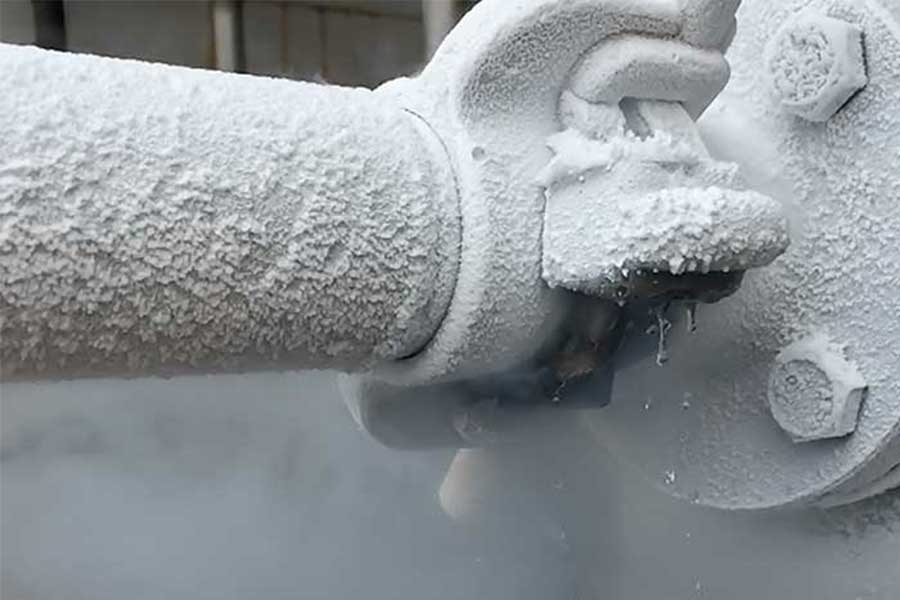
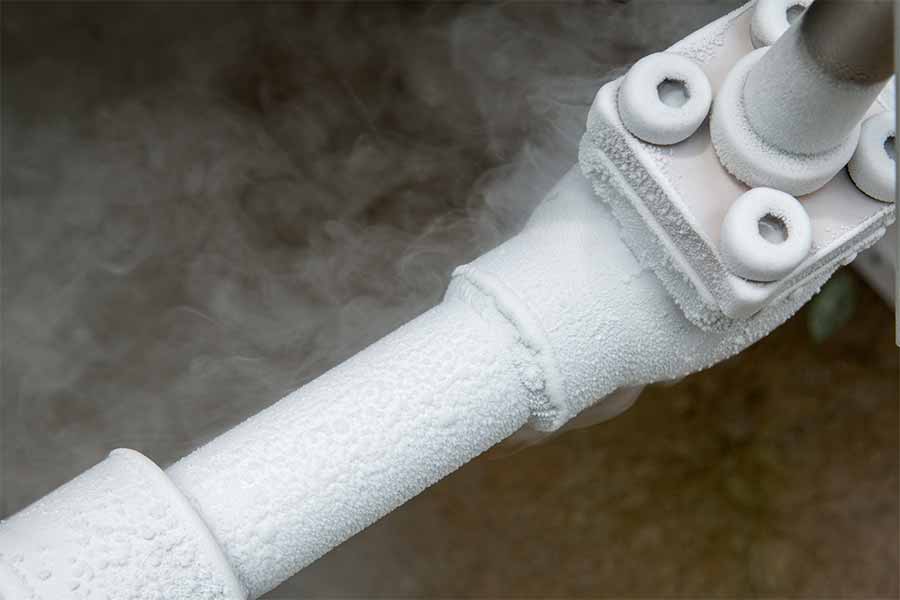
Liquid hydrogen is stored and handled at -253 degrees Celsius (-423 degrees Fahrenheit), only 20° C above absolute zero. This is approximately 57° C colder than liquid nitrogen. At these temperatures, standard elastomeric seals become brittle and fail.

Thermal contraction creates temporary dimensional changes in valve bodies, bonnets and connection interfaces that standard designs cannot accommodate without leakage.

Cryogenic hydrogen service requires metallic sealing, materials with controlled and matched thermal expansion coefficients and valve designs validated through full thermal cycling at operating temperature. The Rotarex cryogenic bellows valve range covers the operating window from -270 degrees Celsius to +250 degrees Celsius (from -454°F to 482°F) , providing a single product family for the complete range from ambient to liquid hydrogen service.

Cryogenic Service: Liquid Hydrogen at -253° C (-423° F)
High-Pressure Containment for Transport and Storage

High-Pressure Containment for Transport and Storage

Compressed hydrogen for MEGC and tube trailer applications is stored and transported at pressures up to 500 bar. At these pressure levels, every mechanical interface in the valve is a potential failure point under the cumulative effect of pressure cycling, transport vibration, and thermal variation.

Equipment intended for compressed hydrogen transport must be designed for the dynamic loads of road and rail transport as well as the static pressure requirements of storage. Rotarex bundle and cylinder valves for MEGC and tube trailer applications are specifically designed for these combined mechanical and pressure constraints, and have been tested for full operation down to -40°C to ensure safe performance even in the coldest regions.

Rotarex Hydrogen Equipment Range

Cryogenic Solutions: Bellows Valves from Ambient to -270 Degrees Celsius

The Rotarex cryogenic bellows valve range provides complete coverage of the operating temperature window for liquid hydrogen and cryogenic gas piping applications.

The K300 and HP3000 bellows valves cover ambient and aggressive gas service from -40 degrees Celsius to +120 degrees Celsius, for high-purity, UHP, and corrosive gas applications. The HP2000 high-pressure bellows valve covers the same ambient temperature range at higher working pressures.

The K900 low-to-high pressure bellows valve and HP9000 high-pressure bellows valve extend service to the cryogenic range from -196 degrees Celsius to +250 degrees Celsius, covering liquid nitrogen temperature and above for hydrogen circuit applications.

The SUPRA low-pressure bellows valve covers the deepest cryogenic range in the Rotarex portfolio, from -270 degrees Celsius to +80 degrees Celsius. This range covers liquid hydrogen service at 20 Kelvin and liquid helium service, making it the reference product for the most demanding cryogenic piping applications.

The CAR spring-type check valve provides cryogenic check valve functionality from -196 degrees Celsius to +250 degrees Celsius, at low-to-high pressure, for one-way flow control in cryogenic gas circuits.

All bellows valves undergo 100% helium leak testing before shipment. Metallic bellows provide sustained tightness across the full operating temperature range and through repeated thermal cycling.

Stockage and Transport Solutions: Compressed Hydrogen up to 500 Bar

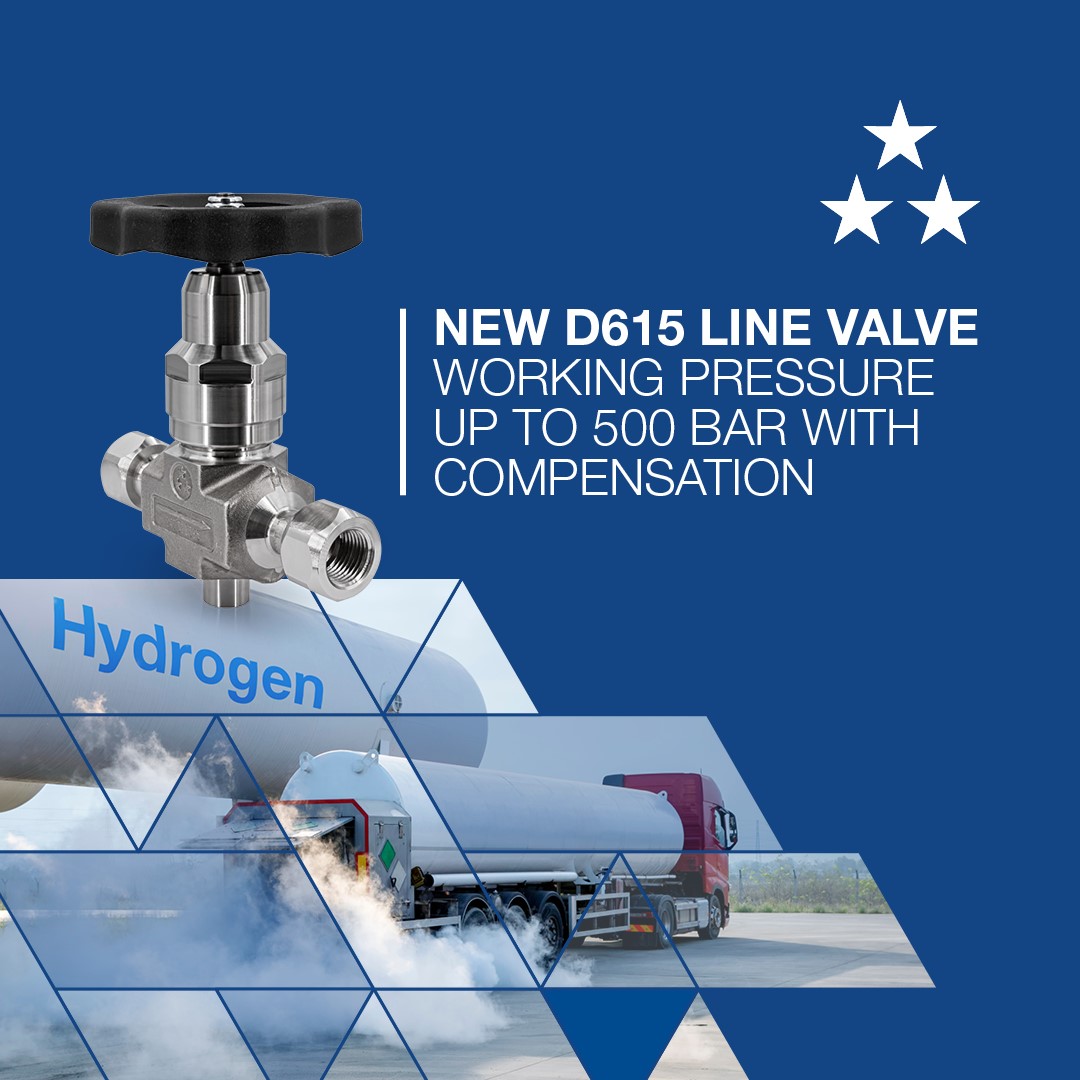
The D615 high-pressure bundle valve (manual actuation) and D655 pneumatic high-pressure bundle valve are designed for compressed hydrogen service up to 500 bar.

Both are adapted for MEGC applications, with a compensation function that maintains stable performance across the pressure range of the cylinder charge. An open-close indicator option is available on both models.

The D605 high-pressure line valve and D488 high-pressure cylinder valve cover hydrogen, methane, and acetylene applications. The D605 uses a 12 mm orifice for line service; the D488 uses a 6 mm orifice for cylinder applications. Both use O-ring sealing technology in stainless steel.

Weld Fittings and Connectors: Leak Integrity for Hydrogen Circuits

Weld fittings and connectors for hydrogen circuits provide metal-to-metal face seal connection technology, eliminating elastomeric seals that are incompatible with long-term hydrogen exposure. The range covers cylinder connectors, cap nuts, adaptors, gaskets, buttweld bodies, socket weld glands, and tube weld glands in standard and high-flow configurations.

Upstream cylinder connection standards covered include CGA, DISS, JIS, DIN, BS, and NF, providing compatibility with all international hydrogen cylinder valve outlet formats.

Why Choose Rotarex for Hydrogen Solutions

  • Complete product range for the full hydrogen value chain: cylinder valves, bundle valves, cryogenic bellows valves, check valves, fittings and connectors
  • Custom-engineered solutions tailored to customer-specific requirements, including pressure, temperature, interface, and application needs
  • Proven sealing technologies for hydrogen service: metallic bellows (100% helium leak tested), O-ring, and tied diaphragm designs selected according to application requirements
  • Broad operating range: cryogenic temperatures from -270°C to +250°C and pressures up to 500 bar for MEGC and tube trailer applications, with compact and cost-effective cylinder valves up to 300 bar
  • Full cryogenic temperature range: -270 degrees Celsius to +250 degrees Celsius, covering liquid hydrogen to high-temperature service
  • Hydrogen-compatible materials: brass and stainless steel designed for hydrogen service and resistance to embrittlement
  • Certified compliance with ISO 10297:2024 and CGA V9 for hydrogen cylinder valves
  • Manual and pneumatic actuation options with open/close position indicator across all product families
  • UHP fittings with metal-to-metal face seal available with CGA, DISS, JIS, DIN, BS, and NF connection standards
downloads
  • Download
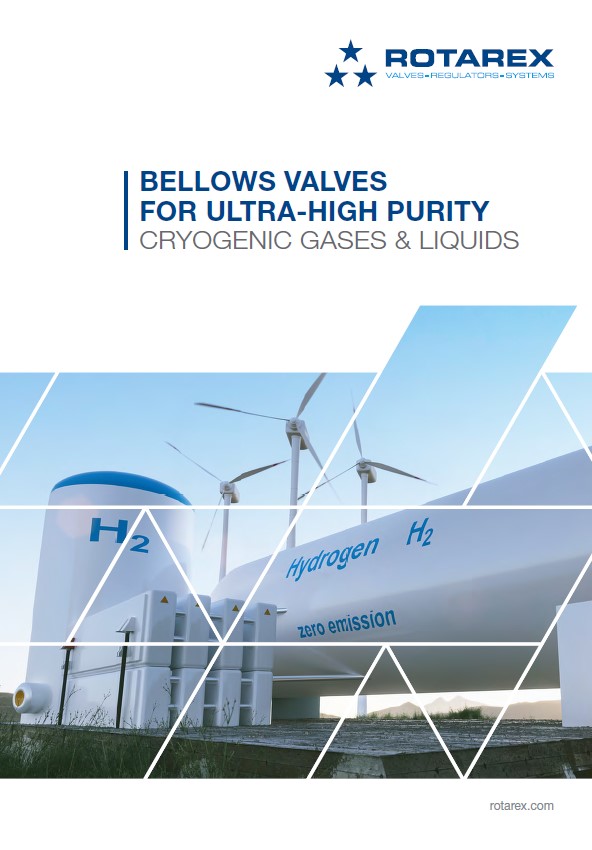
    Bellows Valves for UHP Cryogenic Gases and Liquids
    Last update: Feb 20, 2026
    Available in: en
  • Download
    SUPRA
    Last update: Feb 20, 2026
    Available in: en
  • Download
    HP2000
    Last update: Feb 20, 2026
    Available in: en
  • Download
    D655
    Last update: Feb 20, 2026
    Available in: en
FAQ: Hydrogen Gas Equipment
Can standard industrial gas equipment certified for nitrogen or argon be used in a hydrogen installation?

No. Equipment certified for nitrogen, argon, or other inert industrial gases does not qualify for hydrogen service, even if the pressure and temperature ratings appear compatible on paper.

Hydrogen has a smaller molecular size than any other common industrial gas, meaning it penetrates sealing interfaces that reliably contain nitrogen or helium. It causes embrittlement in steel and alloy grades that perform adequately with inert gases.

For cryogenic applications, the -253 degree Celsius operating temperature of liquid hydrogen is beyond the qualified range of equipment designed for liquid nitrogen service.

Each of these failure modes is independent: equipment must be specifically designed, material-selected, and tested for hydrogen service to be qualified for use in a hydrogen circuit.

How do I verify that a valve or fitting is compatible with hydrogen embrittlement constraints?

Material compatibility with hydrogen service requires more than a generic stainless steel or brass specification. When evaluating equipment, request documentation that explicitly identifies the alloy grade used in wetted components and confirms its qualification for hydrogen service at the intended working pressure and temperature.

For high-pressure compressed hydrogen, the alloy grades and heat treatment conditions affect susceptibility to embrittlement; these should be referenced in the supplier's material compliance documentation. The sealing technology is equally relevant: elastomeric seals can absorb hydrogen under pressure and degrade over time, while metallic bellows or tied diaphragm seals eliminate this mechanism.

Confirm that the certification documents reference hydrogen explicitly as a qualified service gas, and not just generic inert or industrial gas service. Rotarex hydrogen equipment documentation includes material specifications for all wetted components, the sealing technology used, and the validated operating range for each product.

What is the difference between compressed hydrogen and cryogenic hydrogen equipment?

Compressed hydrogen is stored and transported in gas form at high pressure, typically in the range of 200 to 500 bar for industrial cylinders, MEGCs, tube trailers and fixed installation.

Equipment for compressed hydrogen must address high working pressure, leak integrity against a small-molecule gas, and hydrogen embrittlement in structural components. Cryogenic hydrogen is stored and used in liquid form at -253 degrees Celsius.

Equipment for cryogenic hydrogen service must additionally address extreme low-temperature performance: metallic sealing to replace elastomers that fail at cryogenic temperatures, materials with controlled thermal expansion for dimensional stability, and sustained leak integrity through repeated thermal cycling. Rotarex covers both regimes: bundle, cylinder and line valves for compressed hydrogen up to 500 bar, and bellows valves rated to -270 degrees Celsius for cryogenic liquid hydrogen service.

What certification documents should I request when procuring hydrogen cylinder or bundle valves?

The primary document to request is a type approval certificate or declaration of conformity against ISO 10297:2024 for valves intended for European and international markets, or CGA V9 for North American markets.

For MEGC and tube trailer equipment, request TPED compliance documentation in addition to the cylinder valve approval.

For transport applications, confirm that the equipment meets ADR.

Rotarex provides full compliance documentation for all products in its hydrogen range, including homologation certificates and material compatibility records, to support procurement qualification and regulatory submissions.

What are MEGC containers and what valve requirements do they impose?

Multiple Element Gas Containers are transportable assemblies connecting multiple high-pressure gas cylinders, used to transport large volumes of compressed gas by truck, rail, or ship.

For hydrogen service, MEGC cylinders operate at working pressures up to 500 bar. Valves on MEGC cylinders are subject to repeated pressurization and depressurization cycles and the mechanical loads of continuous transport operation.

They must be made from materials compatible with hydrogen, provide leak integrity appropriate for a flammable gas at high pressure, and satisfy the homologation requirements of ISO 10297:2024 for cylinder valves and the transport regulations applicable to the modes of transport used.

Rotarex bundle valves D615 and D655 are adapted for MEGC and tube trailer applications and cover service up to 500 bar.

How is leak integrity verified for hydrogen gas equipment?

The standard method for verifying leak integrity in gas equipment is helium leak testing using a mass spectrometer leak detector.

Helium is used as the test gas because its small molecular size and inert properties allow detection of leak paths at very low flow rates without safety risk.

For hydrogen service, where the actual operating gas has an even smaller molecular size than helium, helium leak testing provides a reliable and conservative verification of the seal integrity achievable in service.

Rotarex bellows valves undergo 100% helium leak testing on every unit before shipment.

Leak test records are available as part of the product documentation package. For UHP fittings, metal-to-metal face seal technology eliminates the elastomeric seals that represent the primary long-term leak risk in hydrogen distribution circuits.

Connect with an Expert
Go up
×
Loading