
Print

Download datasheet

LABORATORY & RESEARCH CENTERS GAS EQUIPMENT

The validity of an analytical result depends partly on the integrity of the gas circuit supplying the instruments. A carrier gas contaminated by outgassing seals, a pressure drop during a chromatographic run, a cylinder that runs out mid-experiment: each of these produces measurable effects on analytical output.

In laboratory settings, these are not edge cases. They happen on instruments that run continuously, in facilities where cylinders are changed by multiple users with varying attention to protocol.

Specialty gases in research are not utilities. They are part of the measurement process. Their purity grade, delivery pressure and flow rate are analytical parameters. When any of these shifts outside the required range, the result changes. If the shift is not identified, the data is wrong without any indication that something failed.

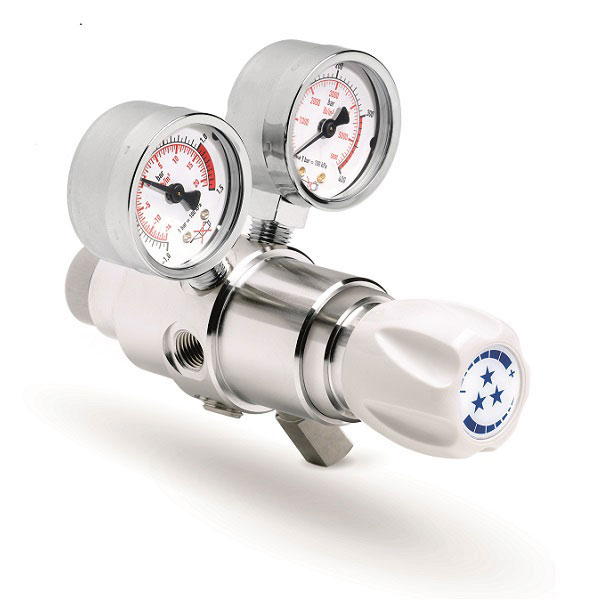
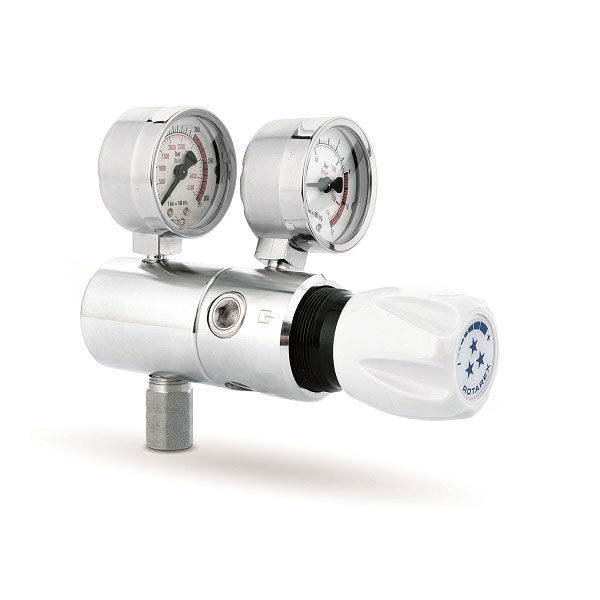
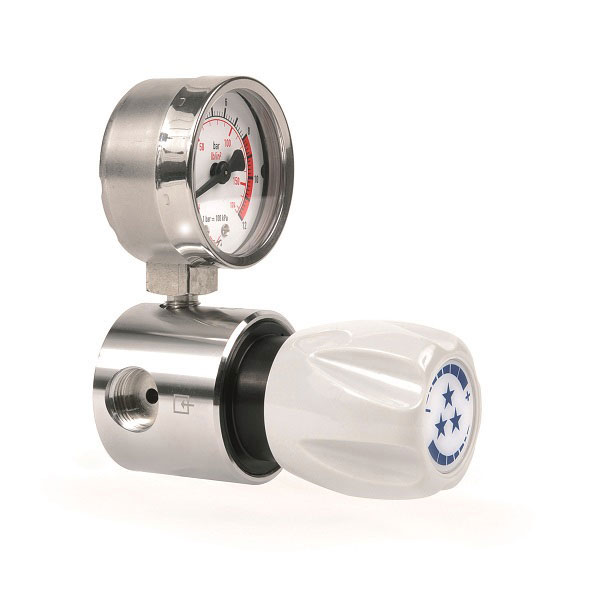
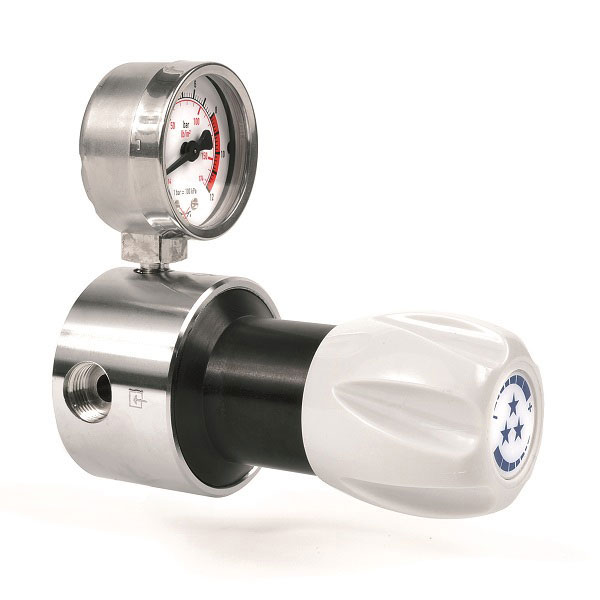
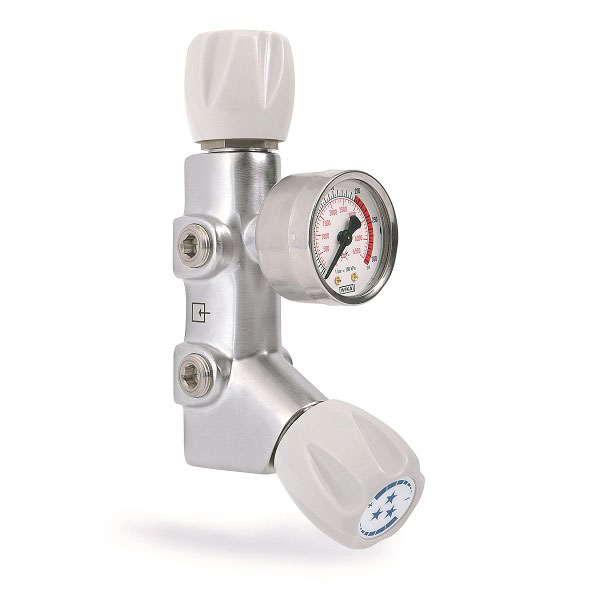
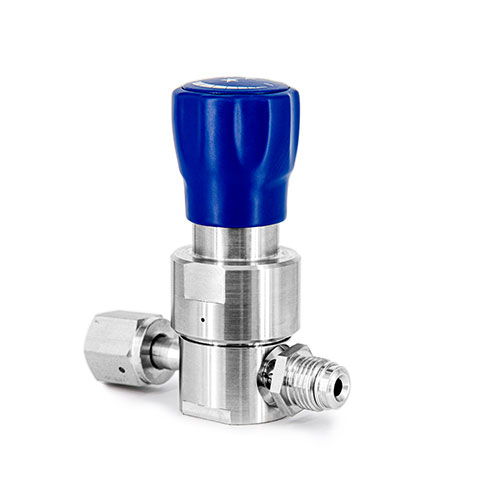
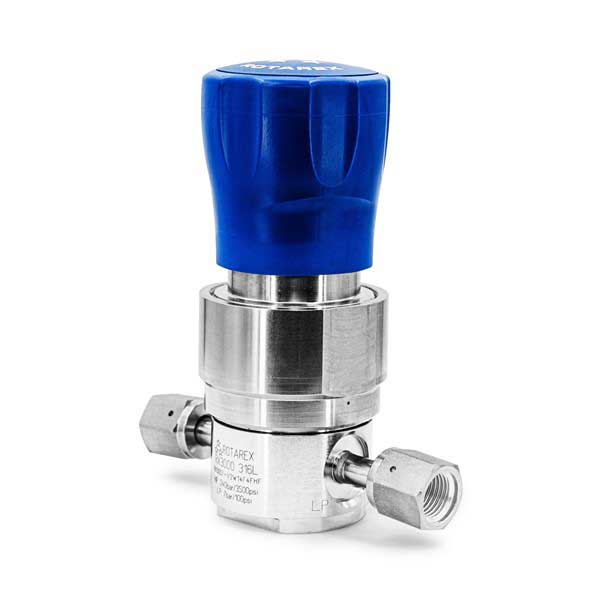
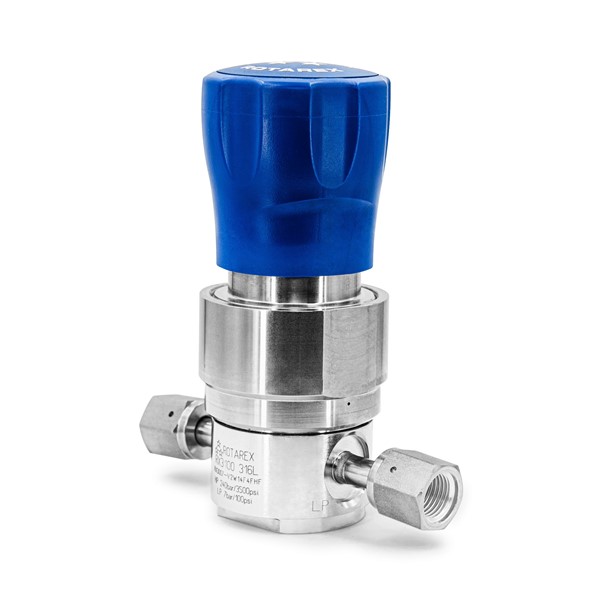
Rotarex manufactures specialty gas equipment for laboratory and research applications. The range covers supply and switchover boards, pressure regulators, point-of-use solutions, ultra-high purity systems, high purity cylinder valves and integrated calibration gas valves. It spans the full distribution chain from the cylinder connection to the instrument inlet.
videos

Laboratory & research

Speciality gas equipment

Supply & switchover boards

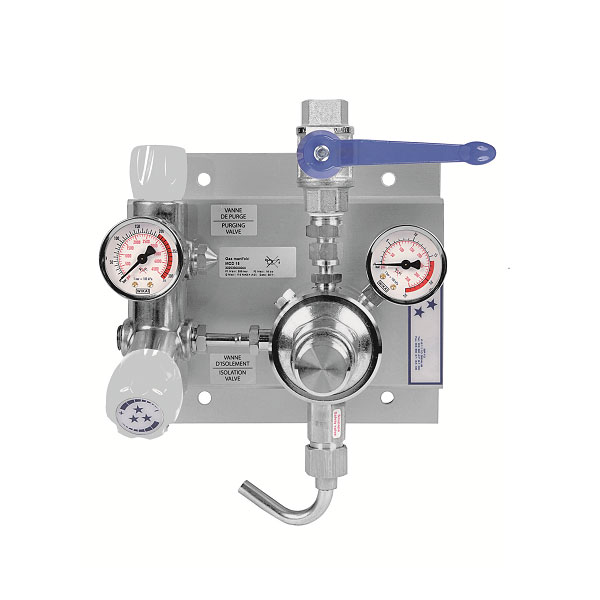
  • Diaphragm single stage supply board with cartridge - CM280/CM380
    Supply board with duo bloc
    Single stage
    Diaphragm tech. + Cartridge
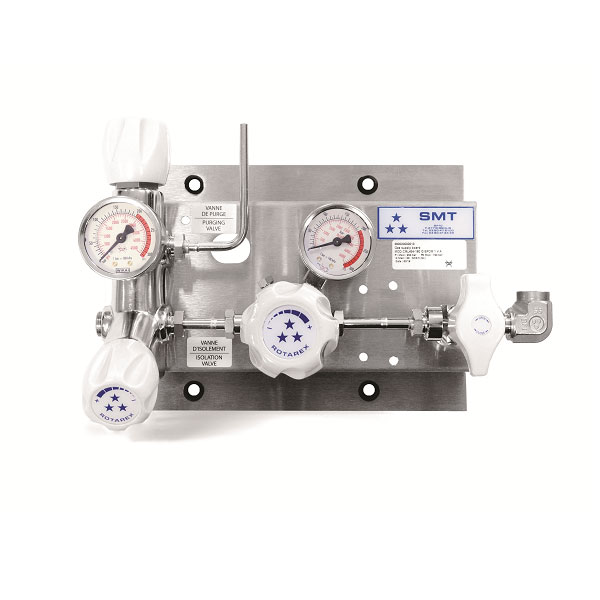
  • Diaphragm single stage supply board with balanced valve - MOD
    Supply board with duo bloc
    Single stage
    Diaphragm technology + BV
  • Diaphragm single stage supply board - CM104
    Supply board with duo bloc
    Single stage
    Diaphragm technology
  • Piston single stage supply board - CM454
    Supply board with duo bloc
    Single stage
    Piston technology
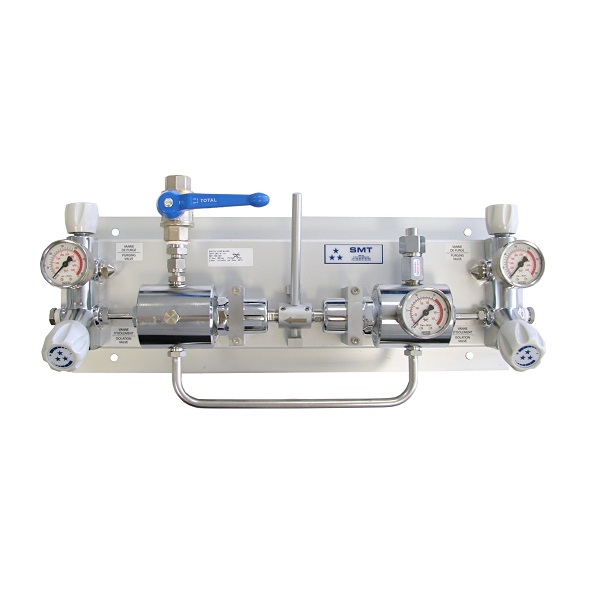
  • High flow automatic switchover board with manual reset - CEN
    Automatic SOB with manual reset
    Single stage
    Diaphragm technology
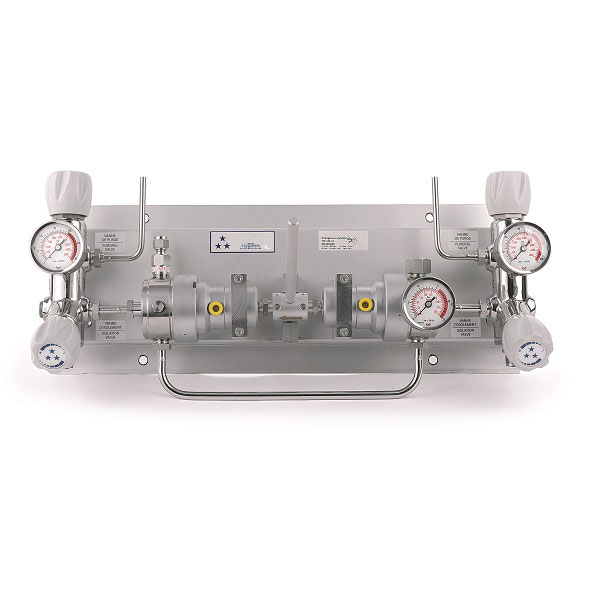
  • Diaphragm single stage automatic switchover board with manual reset - TDI High Purity
    Automatic SOB with manual reset
    Single stage
    Diaphragm technology
  • Diaphragm single stage automatic switchover board with manual reset - TDI Specyl
    Automatic SOB with manual reset
    Single stage
    Diaphragm technology
  • Diaphragm single stage automatic switchover board with manual reset - TD202
    Automatic SOB with manual reset
    Single stage
    Diaphragm technology

Pressure regulators

  • Diaphragm single stage high pressure regulator with cartridge - SC280/SC380
    High pressure regulator
    Single stage
    Diaphragm tech. + Cartridge
  • Diaphragm single stage high pressure regulator - S220
    High pressure regulator
    Single stage
    Diaphragm technology
  • Piston single stage high pressure regulator - S400
    High pressure regulator
    Single stage
    Piston technology
  • Diaphragm single stage high pressure regulator with balanced valve - S800
    High pressure regulator
    Single stage
    Diaphragm technology + BV
  • Single stage low pressure regulator - Specyl Serie
    Low pressure regulator
    Single stage
    25 bar Inlet pressure
  • Diaphragm single stage high pressure regulator for very high flow - TDG250
    Very high flow pressure regulator
    Single stage
    Diaphragm technology
  • Diaphragm dual stage high pressure regulator with cartridge -  DC280/DC380
    High pressure regulator
    Dual stage
    Diaphragm tech. + Cartridge
  • Piston/Bellow dual stage high pressure regulator - D230
    High pressure regulator
    Dual stage
    Piston/Bellow technology
  • Piston/Diaphragm dual stage high pressure regulator - D230-0.1
    High pressure regulator
    Dual stage
    Piston/Diaphragm technology
  • Diaphragm low pressure regulator with balanced valve - S10
    Low pressure regulator
    Single stage
    Diaphragm technology + BV
  • Diaphragm low pressure regulator with balanced valve for high flow - S15
    High flow low pressure regulator
    Single stage
    Diaphragm technology + BV
  • Bellow low pressure regulator - S20
    Low pressure regulator
    Single stage
    Bellow technology
  • Diaphragm low pressure regulator for very low outlet pressure - S20-0.1
    Low pressure regulator
    Single stage
    Diaphragm technology
  • Diaphragm low pressure regulator - S55
    Low pressure regulator
    Single stage
    Diaphragm technology
  • Diaphragm low pressure regulator with balanced valve for very high flow - DC50
    Low pressure regulator
    Single stage
    Diaphragm technology + BV

Point of use

  • Bellow point of use - S21
    Point of use
    Bellow technology
  • Bellow modular point of use - Labline S22
    Point of use
    Modular
    Bellow technology
  • Diaphragm integrated point of use with balanced valve - MS15
    Point of use
    Integrated
    Diaphragm technology
  • Bellow integrated point of use - MS20
    Point of use
    Integrated
    Bellow technology

Flow regulators

  • Piston constant flow regulator equipped with 10 positions flow selector - S75
    Constant flow regulator
    10 positions flow selector
    Piston technology

Springless diaphragm line valves

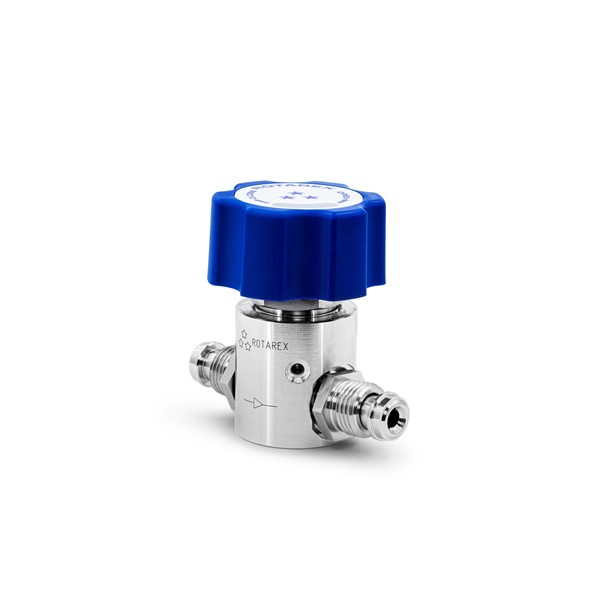
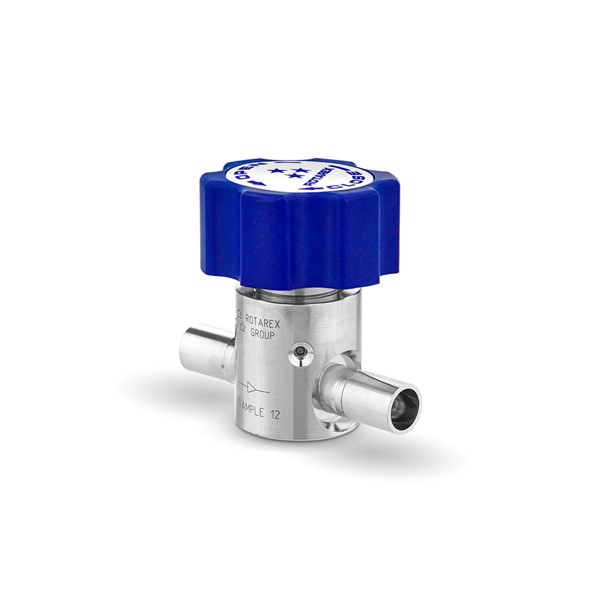
  • Diaphragm high and low pressure line valve for HP & UHP gases - RX04
    HP & UHP line valve
    Flow capacity 0.2
    Springless diaphragm
  • Diaphragm high and low pressure line valve for HP & UHP gases - RX08
    HP & UHP line valve
    Flow capacity 0.5
    Springless diaphragm
  • Diaphragm low pressure line valve for HP & UHP gases - M12
    HP & UHP line valve
    Flow capacity 1.75
    Springless diaphragm
  • Diaphragm low pressure line valve for HP & UHP gases - M20
    HP & UHP line valve
    Flow capacity 3.5
    Springless diaphragm

O-ring and diaphragm line valves

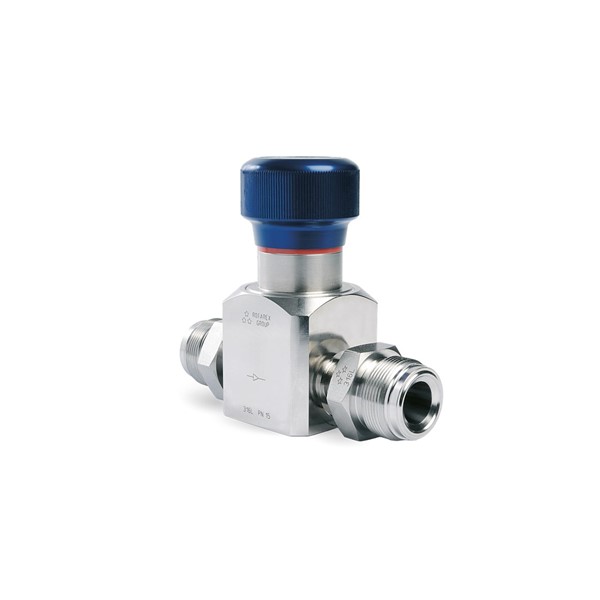
  • Diaphragm low to high pressure line valve - VD
    Low to high pressure line valve
    ¼ turn handwheel
    Diaphragm technology
  • Diaphragm low pressure line valve - VM20
    Low pressure line valve
    ¼ turn or multi-turn handwheel
    Diaphragm technology
  • Diaphragm low pressure line valve for high flow - VM45
    High flow low pressure line valve
    ¼ turn or multi-turn handwheel
    Diaphragm technology
  • Metering valve with needle - RD10
    Low pressure metering valve
    Multi-turn
    With needle

Bellows valves

  • Bellows low to high pressure valve for HP, UHP, corrosive gases and fluids – K300
    Bellows valve
    Low or high pressure
    -40°C to + 120°C (ambient)
  • Bellows high pressure valve for HP, UHP, corrosive gases and fluids – HP2000
    Bellows valve
    High pressure
    -40°C to + 120°C (ambient)
  • Bellows low to high pressure valve for HP, UHP, cryogenic gases and fluids –  K900
    Bellows valve
    Low to high pressure
    -196°C to + 250°C (cryogenic)
  • Bellows high pressure valve for HP, UHP, cryogenic gases and fluids –  HP9000
    Bellows valve
    High pressure
    -196 °C to + 250°C (cryogenic)
  • Bellows high pressure valve for HP, UHP, corrosive gases and fluids – HP3000
    Bellows valve
    High pressure
    -40°C to + 120°C (ambient)
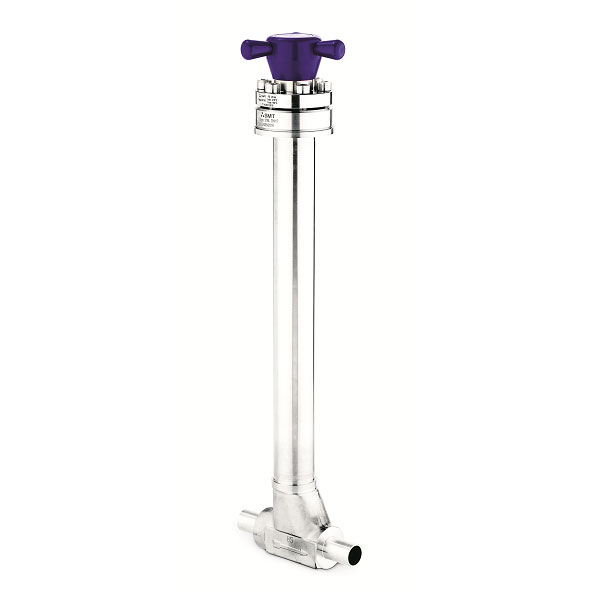
  • Bellows low pressure valve for HP, UHP, cryogenic gases and fluids –  SUPRA
    Bellows valve
    Low pressure
    -270°C to + 80°C (cryogenic)

Check valves

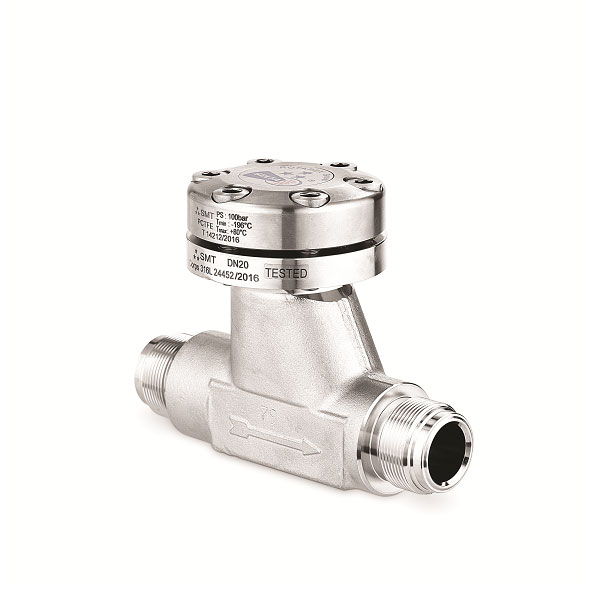
  • Spring type check valve for HP, UHP, cryogenic gases and fluids – CAR(S)
    Check valves
    Low to high pressure
    -196°C to +250°C (cryogenic)

Accessories

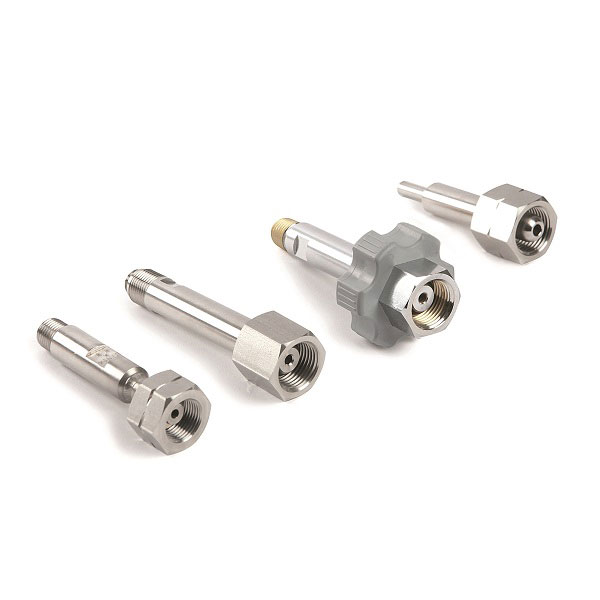
  • BS, UNI, DIN, CGA/DISS, AFNOR, NEN cylinder connectors
    High pressure cylinder connectors
    200/300 bar versions
    BS, UNI, DIN, CGA/DISS, AFNOR, NEN..
  • Diaphragm low to high pressure line valve - VD
    Low to high pressure line valve
    ¼ turn handwheel
    Diaphragm technology
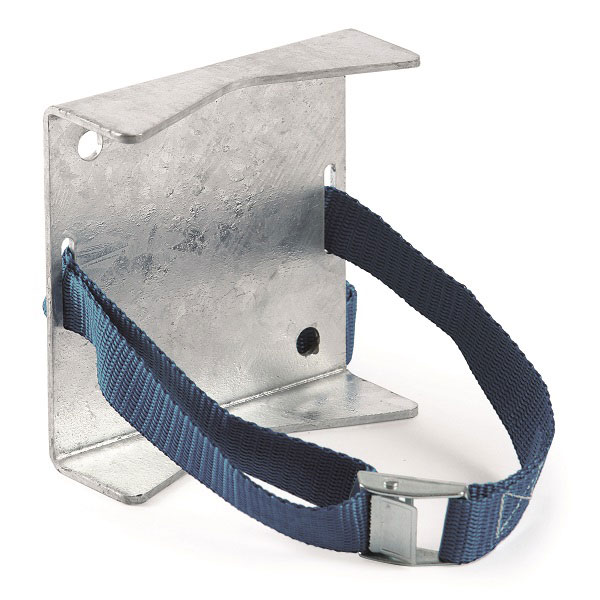
  • Gas cylinder holder for storage area
    Gas cylinder holder
    Fixed permanently to the wall
    With fixing belt
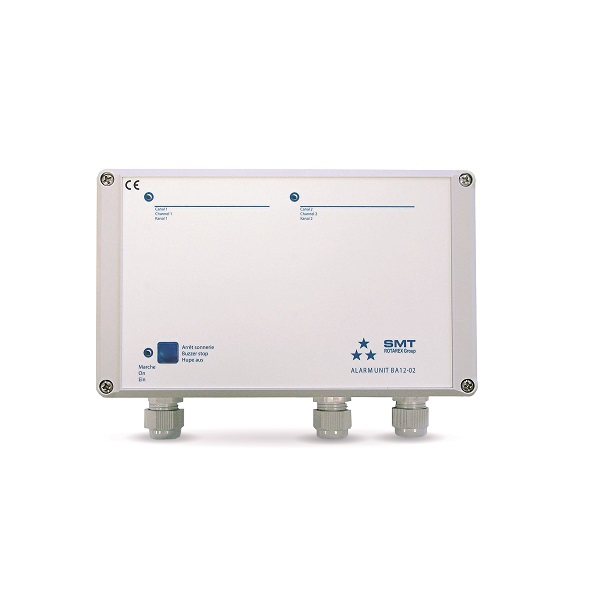
  • Alarm boxes - BA12
    Alarm boxes
    Available in 3 versions
    Signal sent automatically
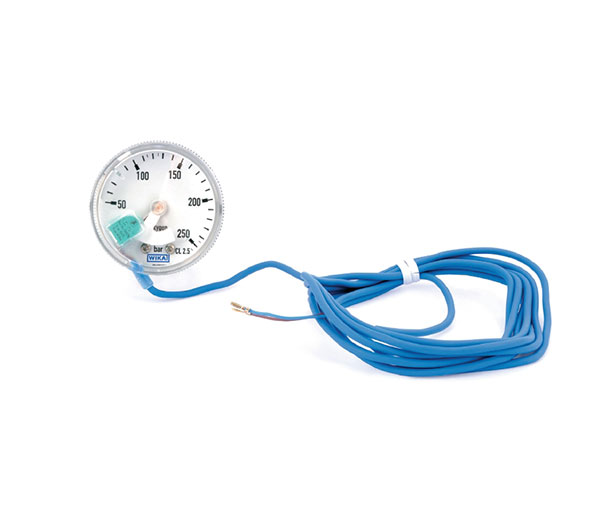
  • Contact Pressure Gauges
    Spare part contact pressure gauges for regulators, points of use, supply boards or switch over boards
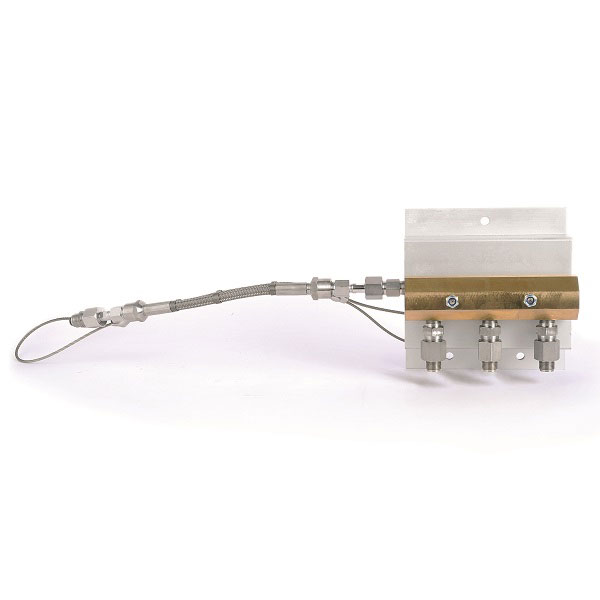
  • TD & CM / CEN & MOD extensions
    For supply and switchover board
    Right or left versions
    2 or 3 cylinders
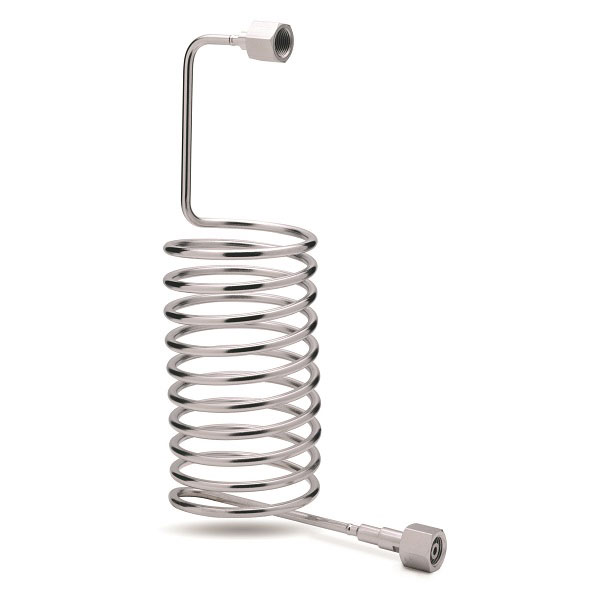
  • Straight or elbow pigtails
    Pigtails
    Straigh or elbow versions
    AFNOR, DIN, NEN, UNI…
  • 3 inlets/2 outlets monoblock valves - Duoblocs
    Monoblock valve
    200 bar or 300 bar
    3 inlets/2 outlets

Ultra high purity gas equipment

Pressure regulators

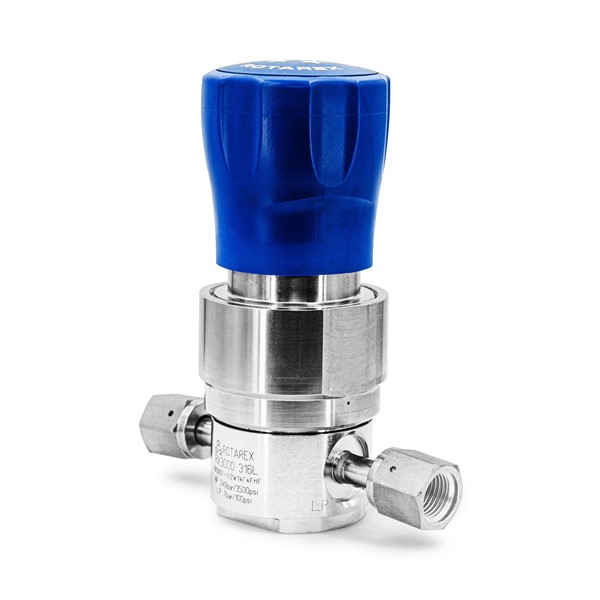
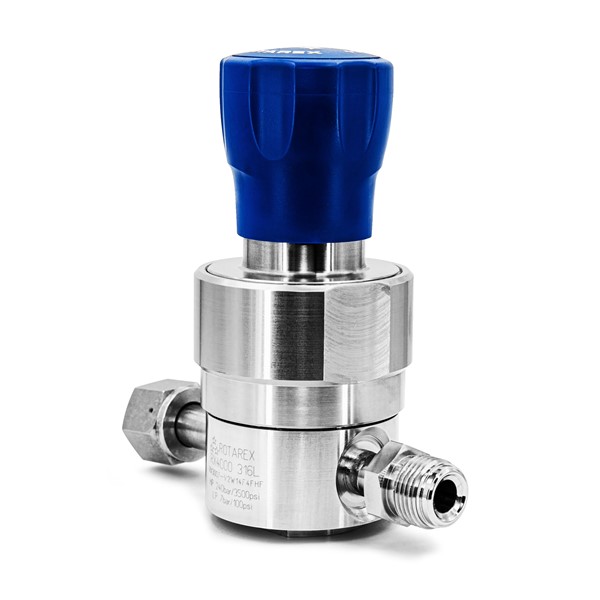
  • Single-stage diaphragm pressure regulator for HP & UHP gases - RX3000
    Single stage diaphragm
    Cv 0.09, 0.15
    Inlet 21/240 bar
  • Sub-atmospheric pressure regulator for HP & UHP gases - RX3100
    Sub-atmospheric
    Cv 0.09
    Inlet 21 bar
  • Single-stage tied-diaphragm pressure regulator for HP & UHP gases - RX3200
    Single stage tied-diaphragm
    Cv 0.09, 0.15
    Inlet 21/240 bar
  • Single-stage diaphragm pressure regulator for HP & UHP gases - RX4000
    Single stage diaphragm
    Cv 0.15, 0.25, 0.5, 0.9, 1.1
    Inlet 21/117/207/240 bar
  • Sub-atmospheric pressure regulator for HP & UHP gases - RX4100
    Sub-atmospheric regulator
    Cv 0.5
    Inlet 21 bar
  • Single-stage tied-diaphragm pressure regulator for HP & UHP gases - RX4200
    Single stage tied-diaphragm
    Cv 0.15, 0.25, 0.5, 0.9, 1.1
    Inlet 21/117/207/240 bar

Tied diaphragm line valves

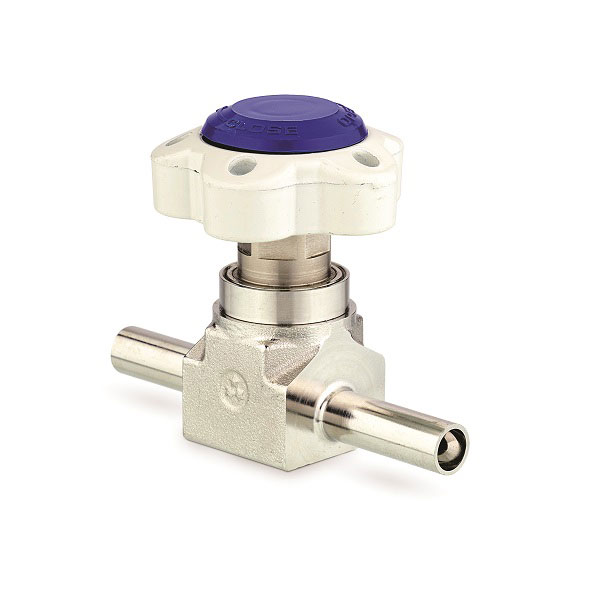
  • High Pressure manual line valve for UHP gases – D604
    Manual line valve
    Soft Seat
    4mm orifice
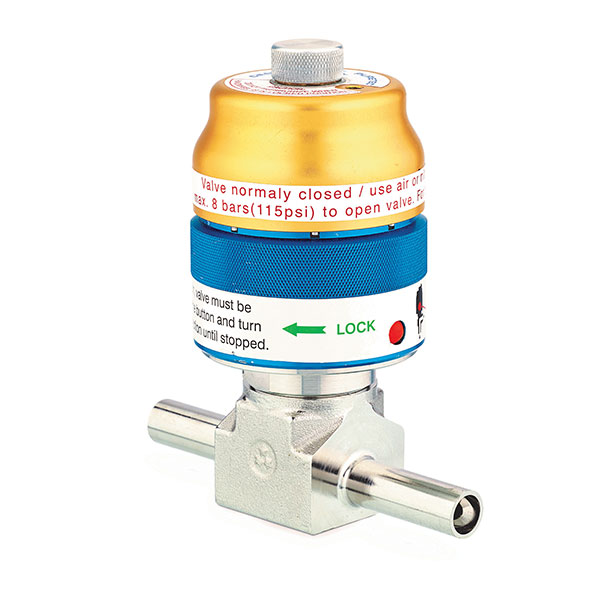
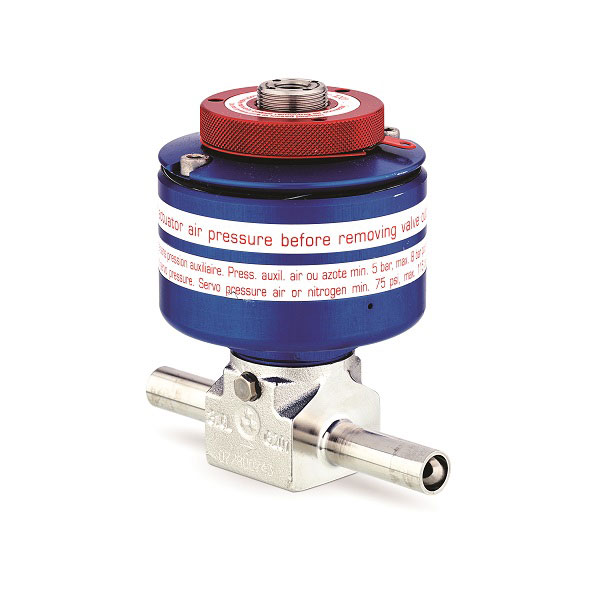
  • High Pressure line valve for UHP gases with oleo-pneumatic actuator – D654
    Oleo-pneumatic line valve
    Soft Seat
    4mm orifice
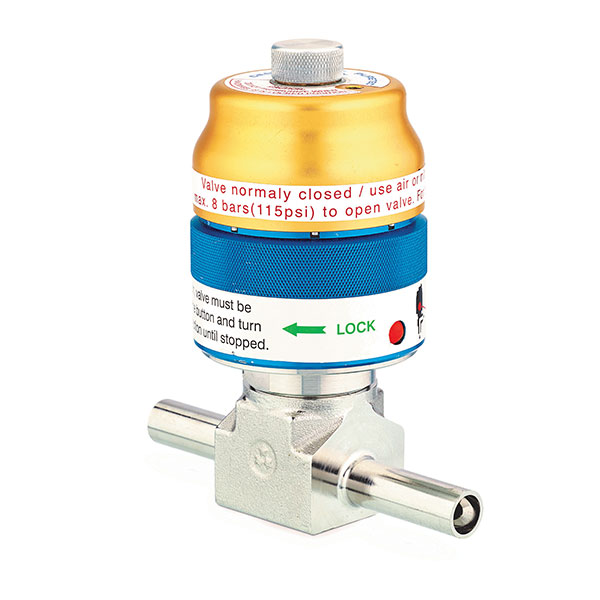
  • High Pressure line valve for UHP gases with pneumatic actuator – D688
    Pneumatic line valve
    Soft knife edge Seat
    4mm orifice
  • High Pressure manual line valve for UHP gases – D639S
    Manual line valve
    Soft Seat
    6mm orifice
  • High Pressure line valve for UHP gases with oleo-pneumatic actuator – D689S
    Oleo-pneumatic line valve
    Soft Seat
    6mm orifice

Springless diaphragm line valves

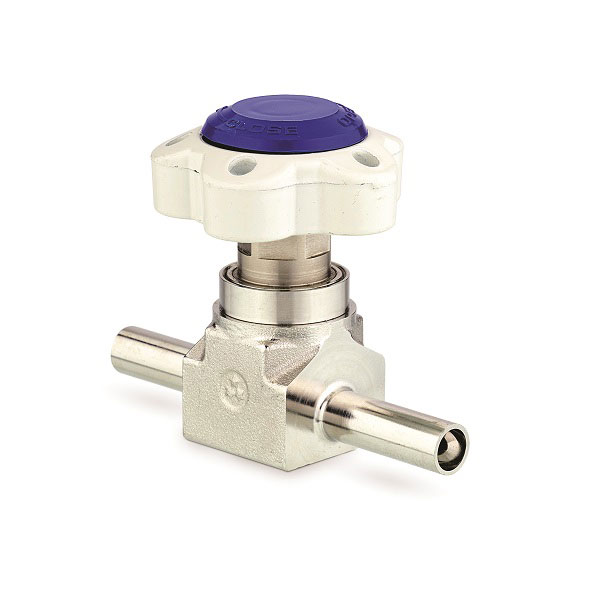
  • Diaphragm high and low pressure line valve for HP & UHP gases - RX04
    HP & UHP line valve
    Flow capacity 0.2
    Springless diaphragm
  • Diaphragm high and low pressure line valve for HP & UHP gases - RX08
    HP & UHP line valve
    Flow capacity 0.5
    Springless diaphragm
  • Diaphragm low pressure line valve for HP & UHP gases - M12
    HP & UHP line valve
    Flow capacity 1.75
    Springless diaphragm

Bellows valves

  • Bellows low to high pressure valve for HP, UHP, corrosive gases and fluids – K300
    Bellows valve
    Low or high pressure
    -40°C to + 120°C (ambient)
  • Bellows high pressure valve for HP, UHP, corrosive gases and fluids – HP2000
    Bellows valve
    High pressure
    -40°C to + 120°C (ambient)
  • Bellows low to high pressure valve for HP, UHP, cryogenic gases and fluids –  K900
    Bellows valve
    Low to high pressure
    -196°C to + 250°C (cryogenic)
  • Bellows high pressure valve for HP, UHP, cryogenic gases and fluids –  HP9000
    Bellows valve
    High pressure
    -196 °C to + 250°C (cryogenic)
  • Bellows high pressure valve for HP, UHP, corrosive gases and fluids – HP3000
    Bellows valve
    High pressure
    -40°C to + 120°C (ambient)
  • Bellows low pressure valve for HP, UHP, cryogenic gases and fluids –  SUPRA
    Bellows valve
    Low pressure
    -270°C to + 80°C (cryogenic)

Check valves

  • Spring type check valve for HP, UHP, cryogenic gases and fluids – CAR(S)
    Check valves
    Low to high pressure
    -196°C to +250°C (cryogenic)

High purity gas cylinder valves

Diaphragm seal

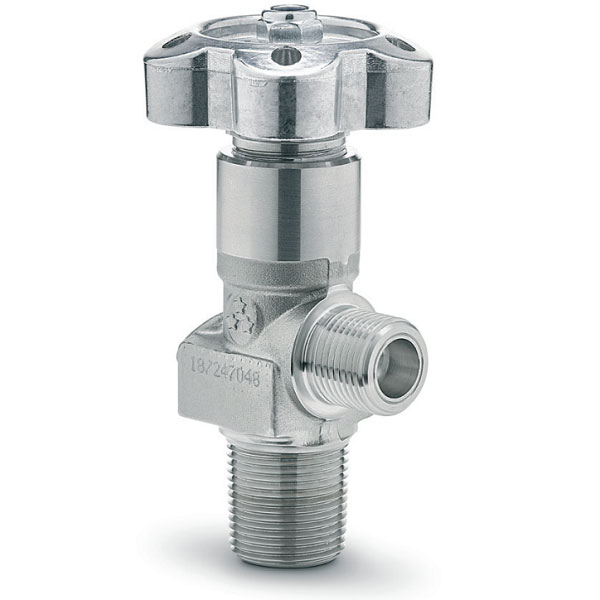
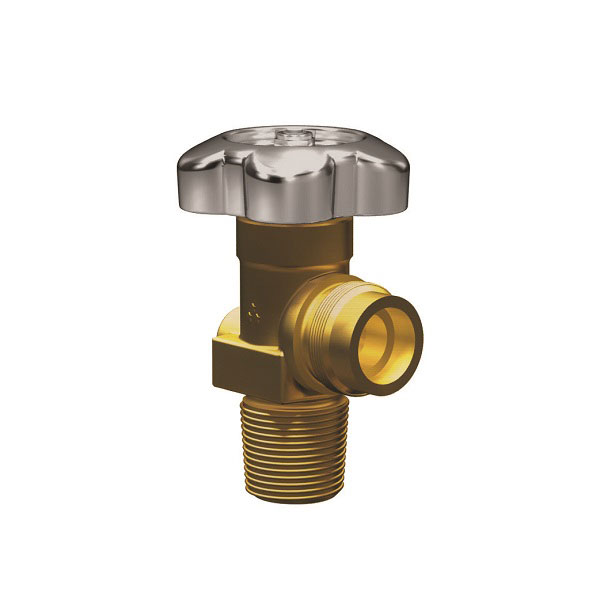
  • High pressure cylinder valve for High purity gases – D200
    High pressure
    Soft seat
    4mm orifice
  • Diaphragm seal lecture bottle valve - D250
    Lecture bottle valve
    High pressure
    4mm orifice size
  • High pressure dual port cylinder valve for High Purity gases - D265
    Dual Port high purity valve
    Soft seat
    3.5mm orifice
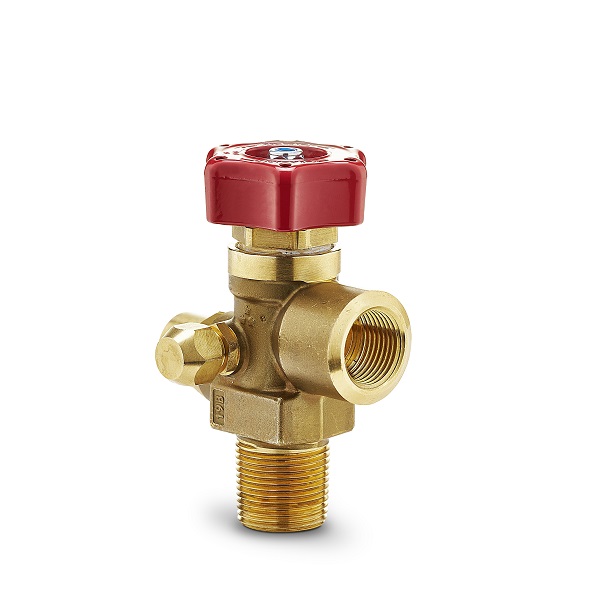
  • Brass cylinder inline RPV valve for High Purity gases - D283
    Brass inline RPV
    Soft Seat
    3.5mm orifice
  • Stainless steel cylinder offline RPV valve for High Purity gases - D282
    Offline RPV
    Soft Seat
    3.5mm orifice
  • Direct seal brass cylinder valve for high purity gases - D203
    Direct seal type
    Soft Seat
    3.5mm orifice
  • Low pressure dual port brass cylinder valves - D285
    Dual port
    8mm orifice
    Low pressure

Calibration gas

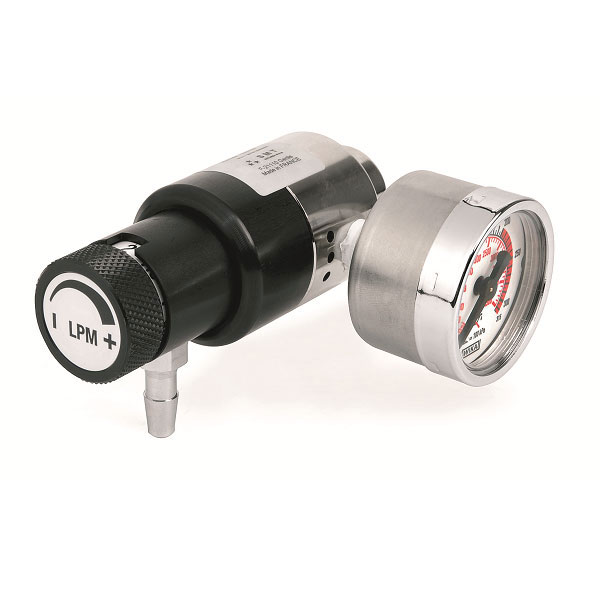
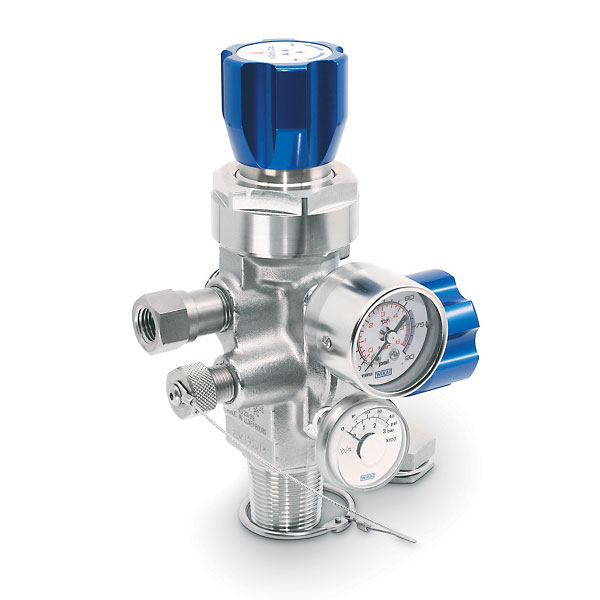
  • Integrated valve with adjustable pressure regulator - DUCAL D551
    Stainless Steel VIPR
    Adjustable pressure regulator
    For calibration applications
  • Constant Flow Cylinder Valve - D405
    Constant Flow Cylinder Valve
    Self-closing valve
    Up to 110 bar
  • Integrated valve with flow selector - D552 Flowcal
    Stainless Steel VIPR
    Integrated flow selector
    For calibration applications
  • Diaphragm seal lecture bottle valve - D250
    Lecture bottle valve
    High pressure
    4mm orifice size

What gas circuit failures mean for research results

Contamination: the invisible source of analytical error

Gas purity grades describe the purity inside the cylinder. What reaches the instrument depends on the distribution system. Standard elastomeric seals outgas into the gas stream. Valve seats and connection interfaces introduce moisture.

Metal particles from incompatible materials enter the circuit. These contamination sources are invisible to the analyst until they affect the result: peak drift, baseline instability, unexpected background signals, or calibration failures that cannot be traced to the instrument itself.

Diaphragm and bellows sealing technologies eliminate elastomeric contact with the gas. All-metal sealing and electropolished internal surfaces reduce outgassing and particulate generation to levels compatible up to 6.0 grade service.

Equipment selection must match the purity grade required by the application, not just the pressure rating.

Pressure instability: when delivery conditions affect results

Gas chromatography separates compounds using a carrier gas flowing at controlled pressure through a separation column. Retention times and peak areas depend on these conditions being stable across each analytical run.

A single-stage pressure regulator delivers an outlet pressure that shifts as the cylinder pressure drops. Over the life of a cylinder, this drift produces changes in retention time that affect compound identification and changes in peak area that affect quantification.

The same stability requirement applies to mass spectrometers, where source pressure affects ionization efficiency and sensitivity and to FTIR spectrometers using gas cells. Any instrument that uses a process gas as an active part of the measurement relies on consistent delivery conditions. This is not an instrument maintenance issue. It is part of the analytical method.

Corrosive and reactive gases: material selection determines system lifespan

Specialty gases used in research and environmental analysis include acids (HCl, HF, SO2, NO2), reducing gases (H2S, NH3), oxidizing agents (Cl2), and reactive mixtures. These gases attack copper-containing alloys in standard brass equipment and degrade standard elastomeric seals.

Premature seal failure produces two problems at once: the equipment leaks, and the products of seal degradation enter the gas stream and the analytical circuit. Material selection for corrosive gas service must be gas-specific.

No single material combination covers all reactive specialty gases. Stainless steel construction, PCTFE or PTFE seating, and inert-coated surfaces are required for aggressive chemistries. The Rotarex Specyl range is designed for corrosive and aggressive specialty gas applications. Always verify material compatibility against the specific gas identity and concentration before placing equipment in service.

Supply interruption: the experiment that cannot be paused

Many laboratory experiments cannot be stopped and restarted without invalidating the work. A chromatographic sequence running overnight, a cryogenic study in progress, a controlled-atmosphere reaction: in each case, a supply interruption causes sample loss, atmospheric contamination, or forced restart of a multi-hour procedure.

In multi-user laboratory environments, manual cylinder management fails because no individual user has full visibility into the consumption rate of shared resources. A cylinder runs out because nobody checked.

Automatic switchover boards address this at the source. When the primary cylinder bank reaches a preset pressure threshold, the secondary bank activates automatically. Gas supply continues without operator intervention. A manual reset mechanism allows the depleted cylinder to be exchanged without disturbing the active experiment.

Applications and their gas circuit requirements

Gas chromatography and analytical instrumentation

Gas chromatography is the most common application for specialty gas equipment in research laboratories. Carrier gas (helium, hydrogen, nitrogen, or argon, depending on the detector and column type) requires a purity grade of 5.0 to 6.0 and stable delivery pressure at the column head.

Detector gases have similar purity and stability requirements. A gas distribution system for a multi-instrument GC laboratory must supply multiple instruments at once, manage cylinder changeover without pressure transients, and provide local pressure control at each instrument connection point.

Single-stage regulators with balanced valve technology maintain more consistent outlet pressure as cylinder pressure drops. Automatic switchover boards eliminate manual intervention during cylinder changeover. Point-of-use regulators at the instrument provide the final pressure control step. The flow regulator with multi-position selector handles applications requiring a calibrated constant flow rate rather than a set delivery pressure.

Gas chromatography and analytical instrumentation
Ultra-high purity applications

Ultra-high purity applications

Applications in particle physics, photonics, semiconductor research and certain areas of materials science require gases at 6.0 grade or above, with distribution systems that do not degrade that purity at any point between the cylinder and the instrument.

In these applications, even equipment rated for standard high-purity service introduces unacceptable contamination. The entire distribution system requires all-metal sealing, electropolished internal surfaces, and connection technology that keeps polymeric gaskets out of the gas path.

For cryogenic specialty gas circuits supplying laboratory instruments at liquid helium or liquid nitrogen temperatures, bellows valves rated from -270 degrees Celsius to +250 degrees Celsius provide gas control across the full operating range without requiring multiple valve families for the same installation.

Calibration gas and reference gas management

Gas detectors, analyzers and monitoring systems require periodic calibration against reference gas mixtures of certified composition. The accuracy of every measurement that instrument makes depends on the accuracy of the reference gas delivered during calibration. Standard cylinder valves offer only open and closed function.

Using one with a calibration gas cylinder requires an external pressure regulator and, if a fixed flow rate is needed, a separate flow control device. Each additional connection point is a potential contamination source between the certified reference gas and the detector.

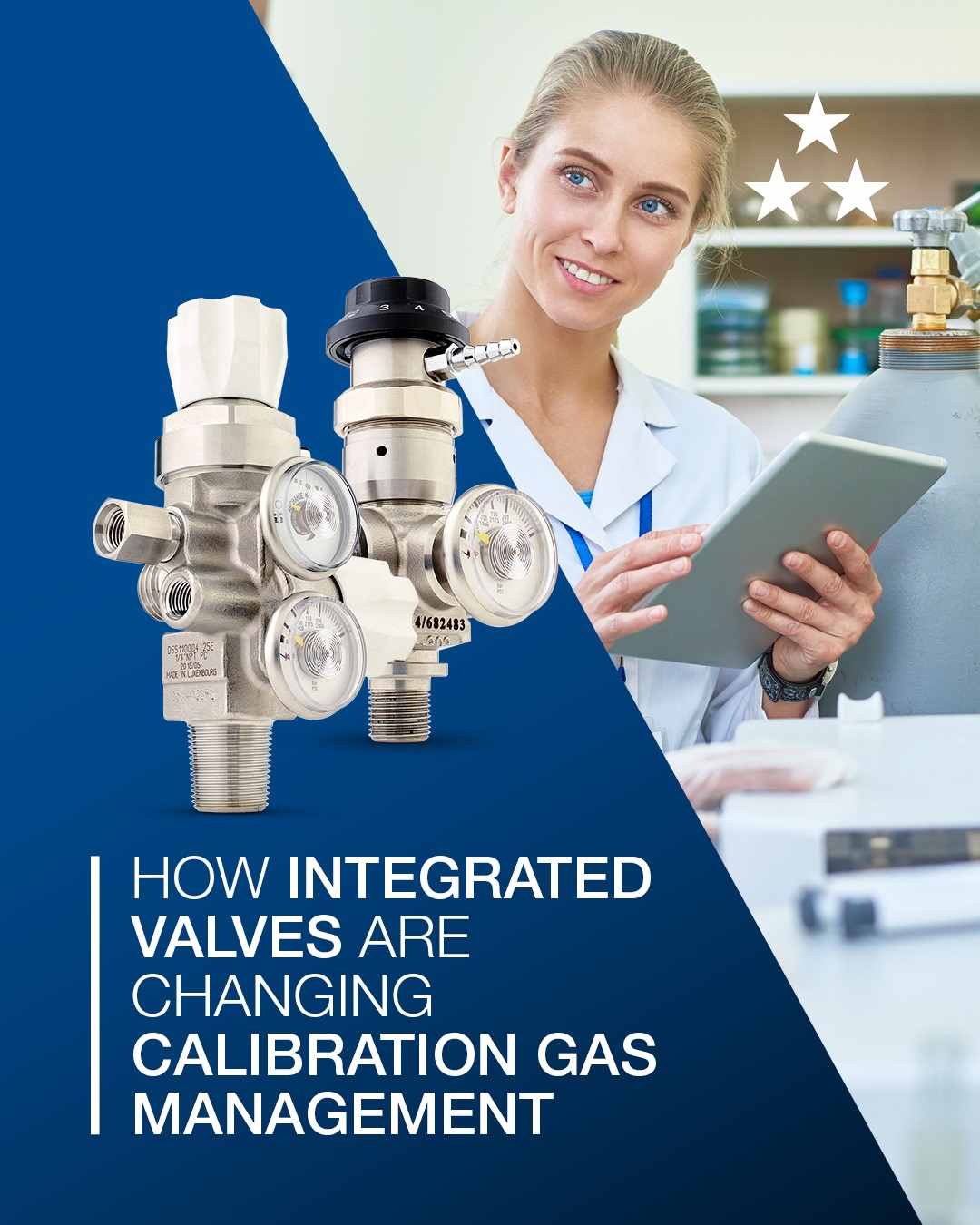
Integrated calibration gas cylinder valves eliminate external hardware. A valve with an integrated adjustable pressure regulator delivers reference gas at working pressure directly from the cylinder.

A valve with an integrated flow selector provides direct flow-controlled delivery. A constant flow valve delivers a fixed pre-set flow rate. These reduce the connection count between the reference gas and the detector and simplify the calibration procedure.

Calibration gas and reference gas management
Reactive and corrosive specialty gas handling

Reactive and corrosive specialty gas handling

Environmental monitoring laboratories, chemical research facilities, and calibration gas producers work with toxic and corrosive gas mixtures. Standard products for inert gases cannot be assumed compatible with reactive specialty gases.

Compatibility must be verified for the specific gas, concentration, and operating conditions. For gases such as HCl, SO2, NO, NO2, NH3, and H2S, material selection determines both safety and analytical performance. An incompatible seal does not fail cleanly: it degrades progressively while contaminating the gas stream.

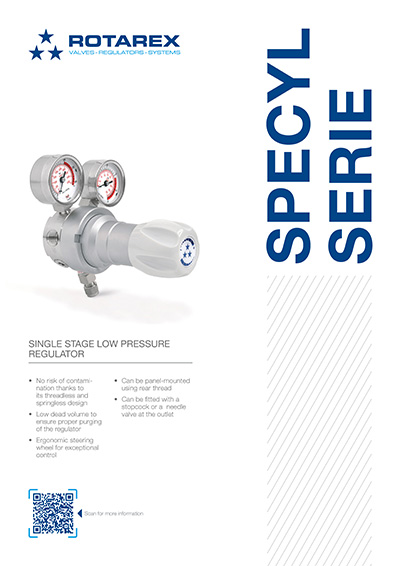
The Specyl range of regulators and switchover boards covers aggressive specialty gas applications. All wetted materials are selected for compatibility with the target gas types.

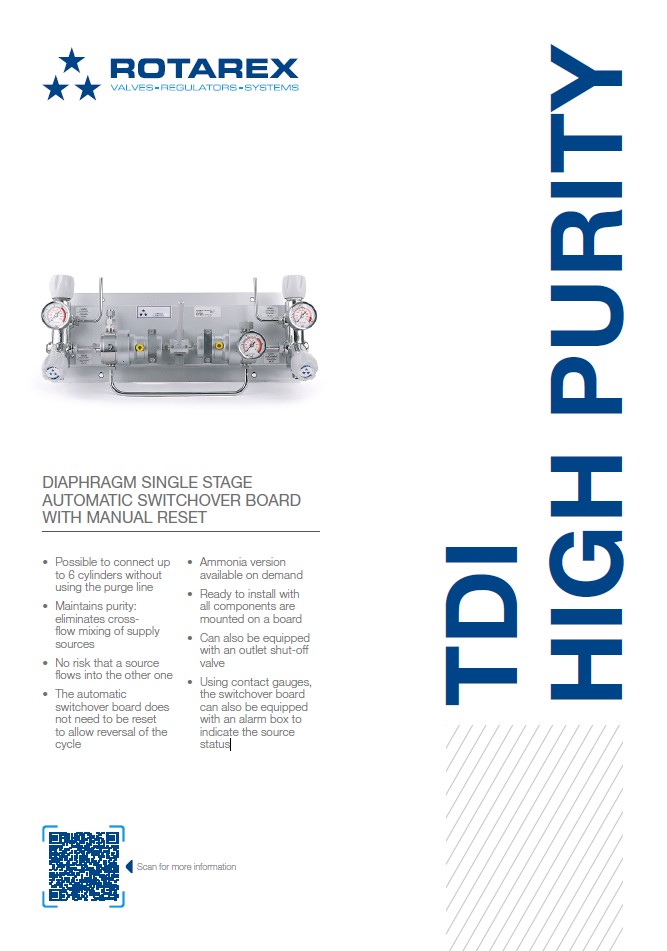
The TDI Specyl semi-automatic switchover board provides continuous supply for corrosive gas applications where supply interruption would affect the experiment or the monitoring system.

Rotarex specialty gas equipment range

Supply and switchover boards

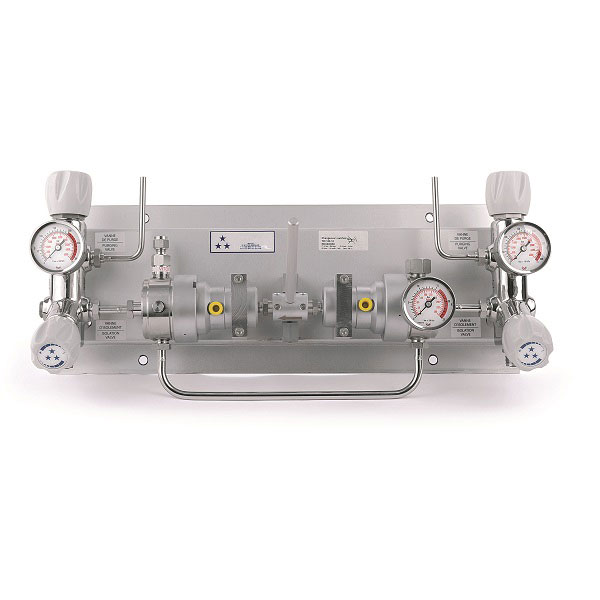
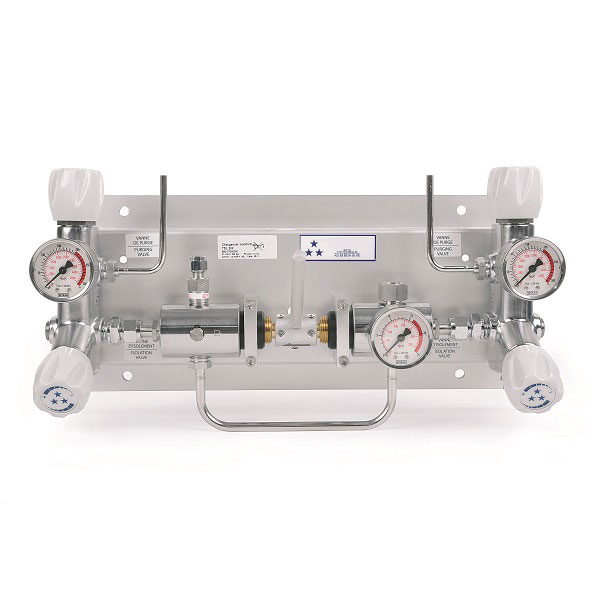
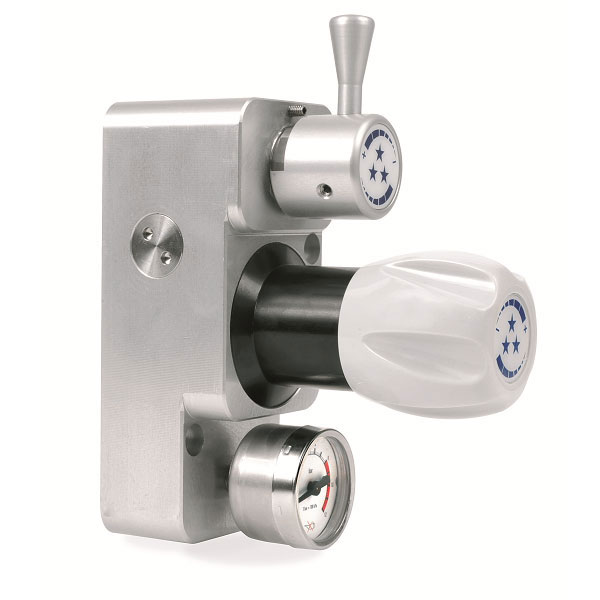
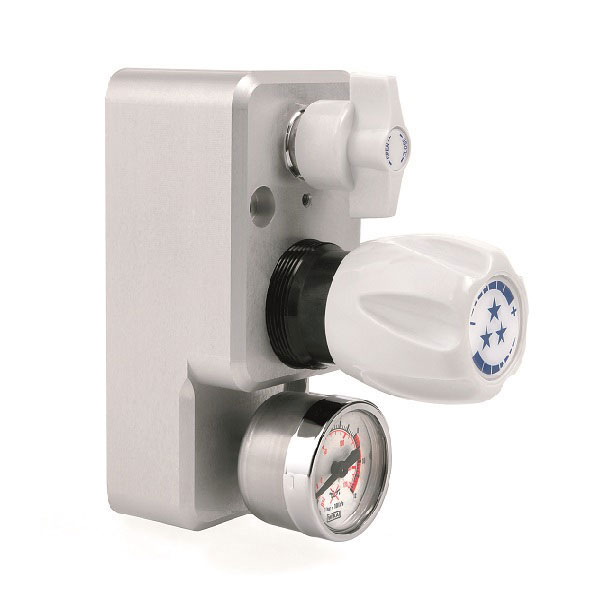
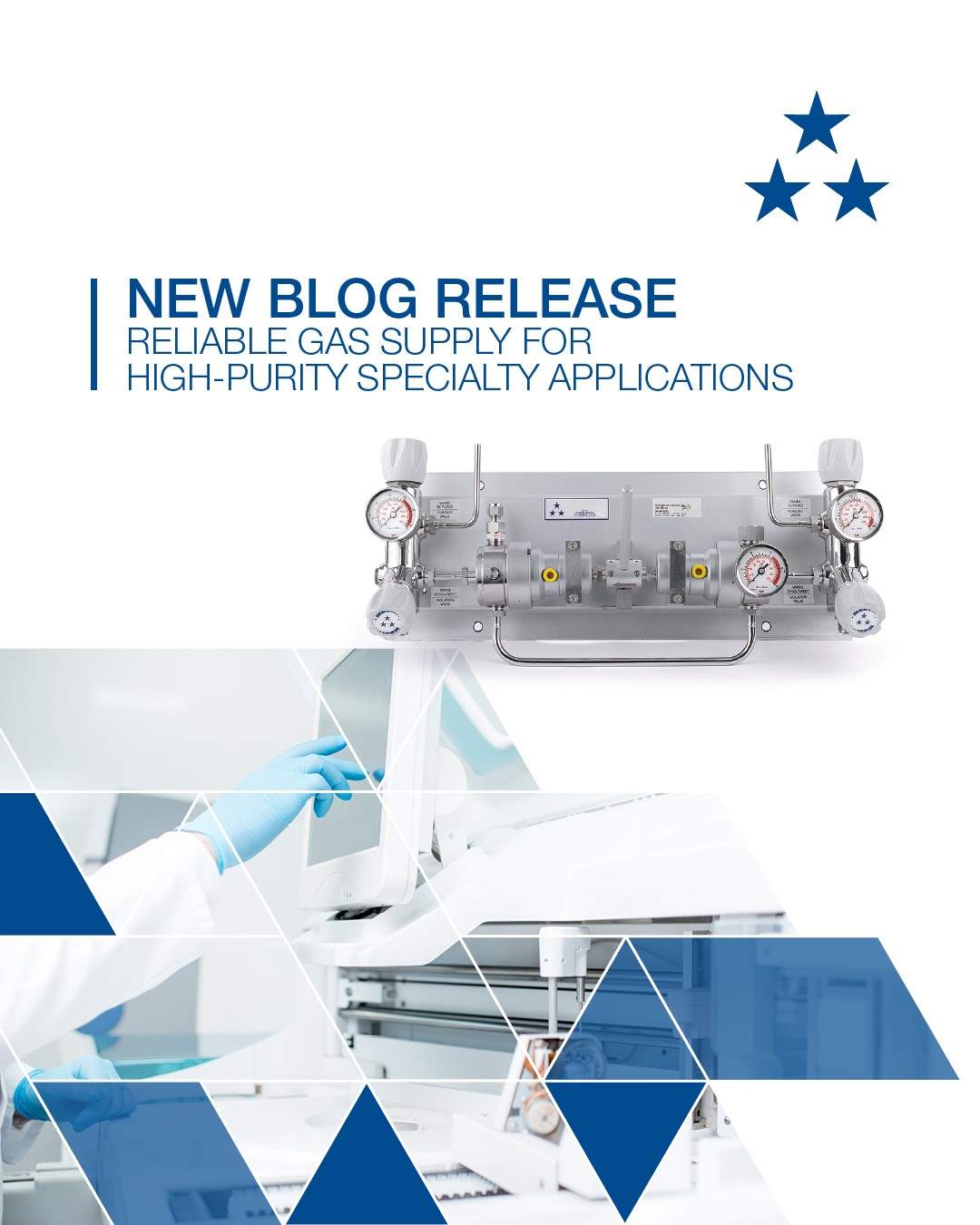
Supply boards provide reliable pressure regulation for a wide range of gas applications. Semi-automatic switchover boards automatically transfer the gas supply from the primary to the reserve cylinder bank when the pressure drops below a set threshold, ensuring continuous gas supply without interruption. Rotarex technology offers a compact and space-saving design and allows up to six cylinders to be connected without the need for an extension. This simplifies installation while maintaining a reliable and continuous gas supply.

Pressure regulators

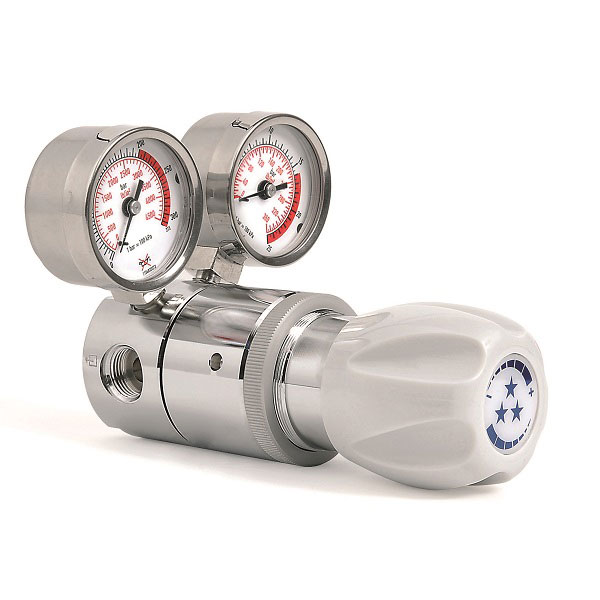
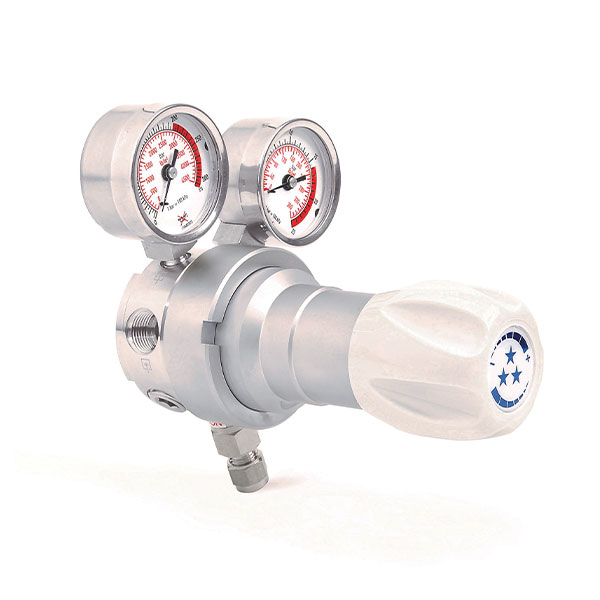
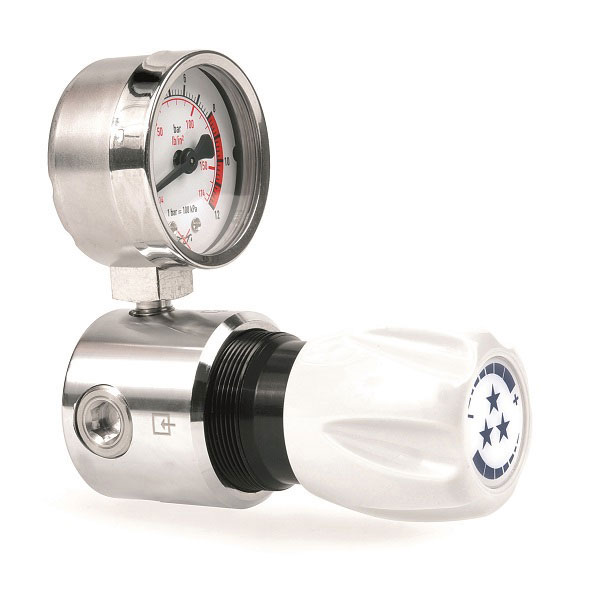
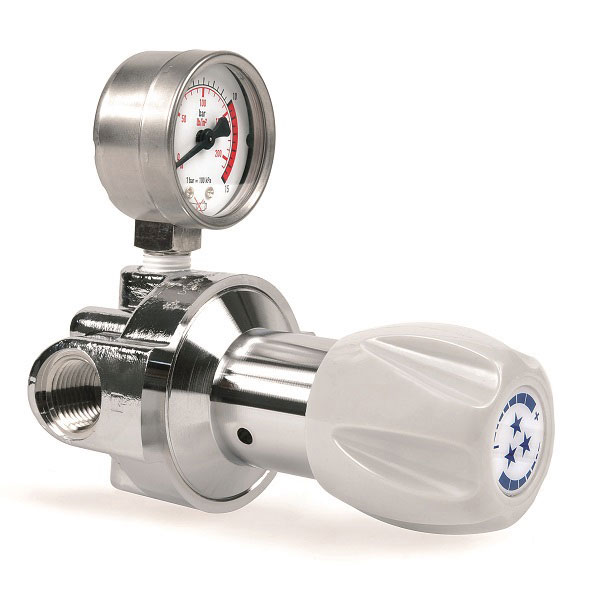
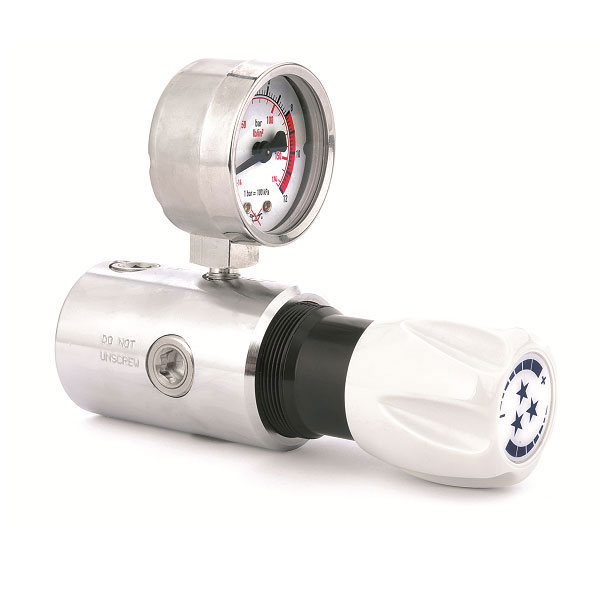
High-pressure single-stage regulators provide reliable pressure reduction for a wide range of analytical and industrial gas applications. Balanced-valve designs help maintain stable outlet pressure as cylinder pressure decreases, while high-flow versions support more demanding installations.

Dual-stage regulators reduce pressure in two steps, providing greater outlet pressure stability and making them well suited to analytical applications where consistent gas conditions are essential.

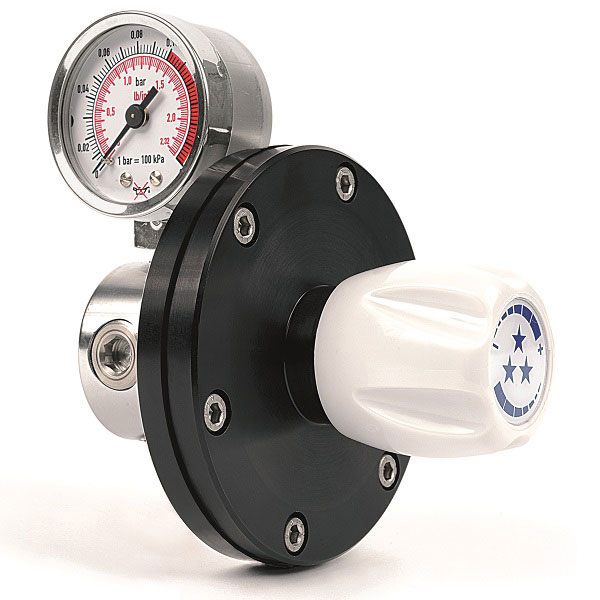
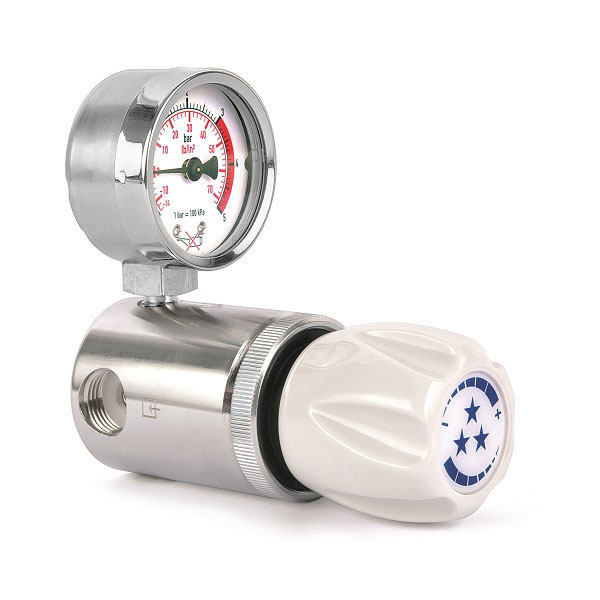
Low-pressure regulators cover applications ranging from very low outlet pressures to high-flow requirements, including configurations for specialty and aggressive gases. Selection depends on the gas type, required outlet pressure, flow demand, and application conditions.

Points of use

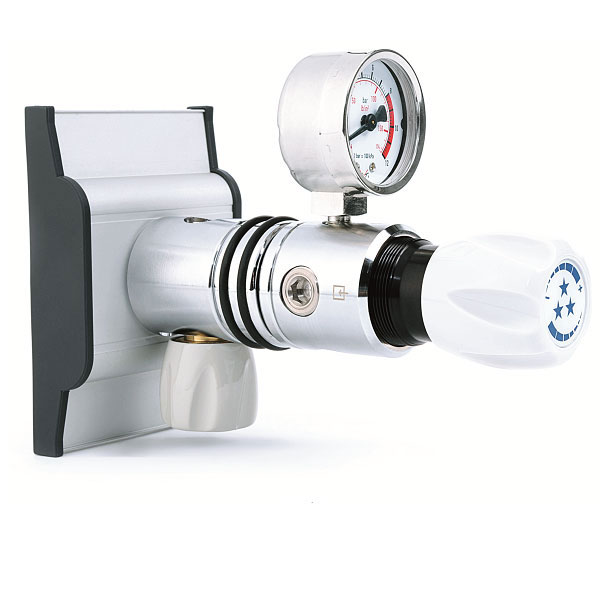
Point of use regulators provide local pressure control at the instrument connection. The S21 and Labline S22 are bench-mounted solutions.

The MS15 and MS20 combine pressure regulation and shutoff in a single compact unit for direct instrument connection, reducing the number of fittings between the distribution line and the instrument inlet.
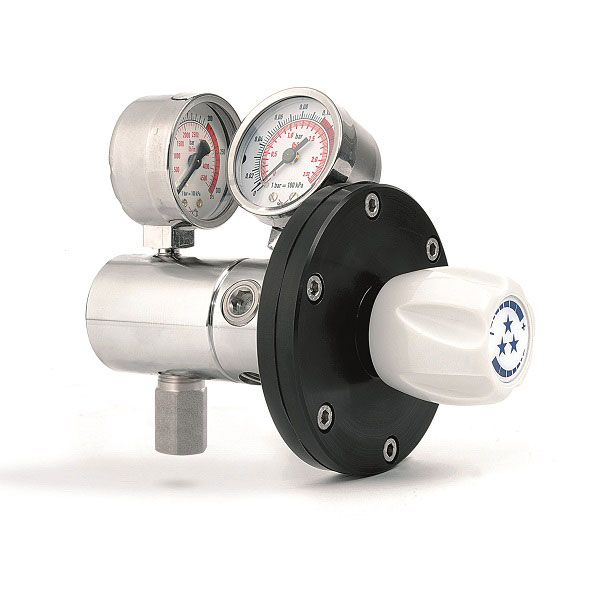
The S75 constant flow regulator with 10-position flow selector covers applications requiring a calibrated fixed flow rate rather than a controlled pressure.

UHP pressure regulators and line valves

The UHP range includes UHP pressure regulators, line valves, and bellows valves designed for high-purity, ultra-high-purity, corrosive, and cryogenic gas applications. These solutions support reliable pressure control, high-integrity isolation, and safe gas distribution in demanding installations.

The range also covers specialized applications requiring very low leak rates, chemical compatibility, and extreme temperature performance, including cryogenic service down to -270°C. Bellows valves are 100% helium leak tested before shipment.

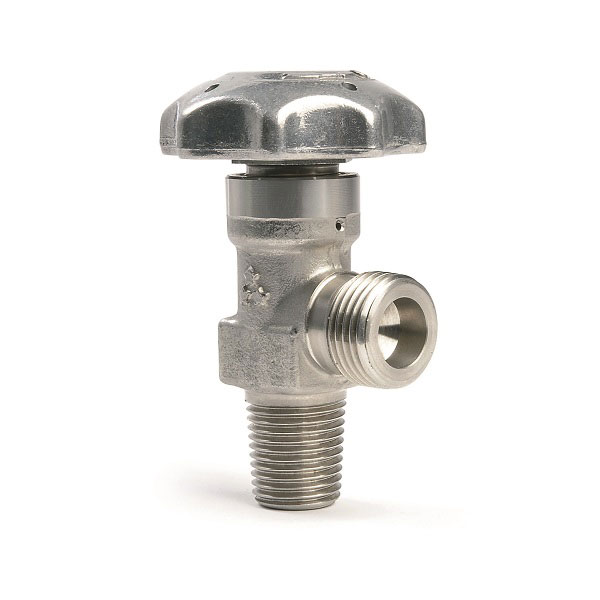
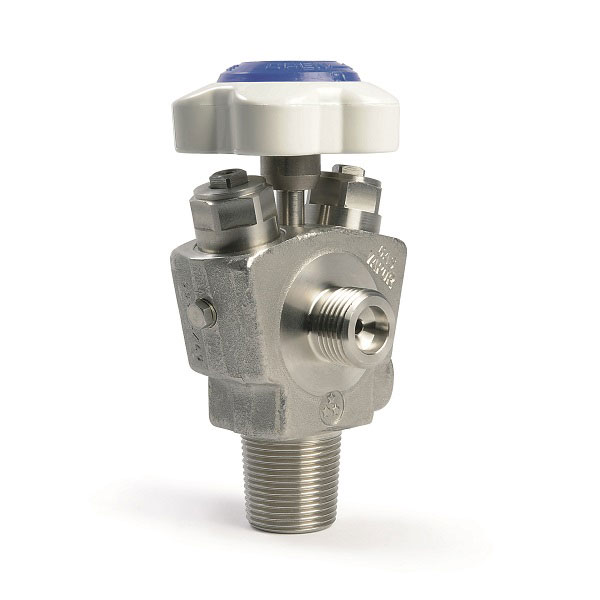
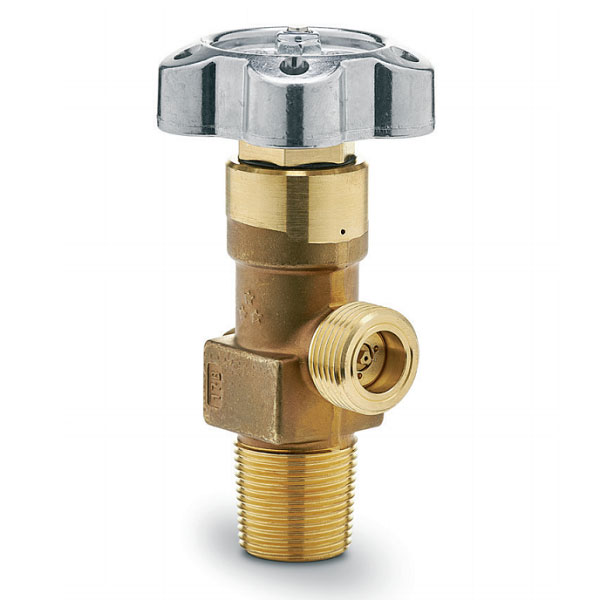
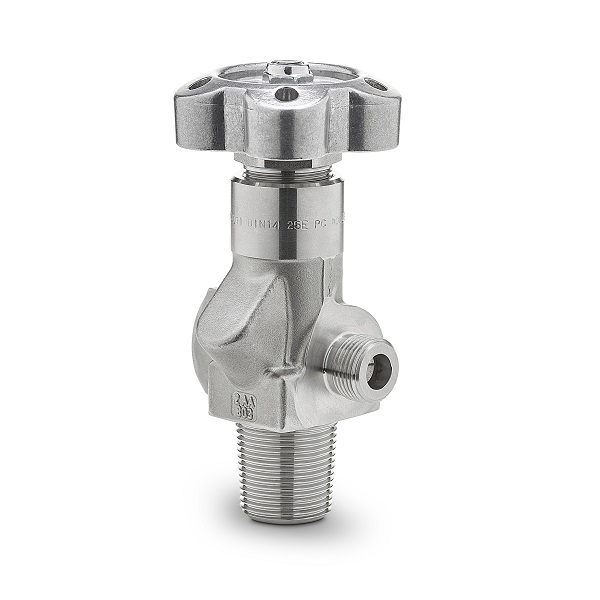
High purity cylinder valves

High purity cylinder valves with diaphragm sealing eliminate elastomeric contact with the gas.

  • The D200 is the standard high purity cylinder valve for research applications.
  • The D265 provides dual-port connection for applications requiring simultaneous downstream access.
  • The D283 and D282 integrate residual pressure protection to prevent cylinder backfill and cross-contamination.
  • The D203, D285, and D250 cover specific cylinder and pressure configurations.

Calibration gas cylinder valves

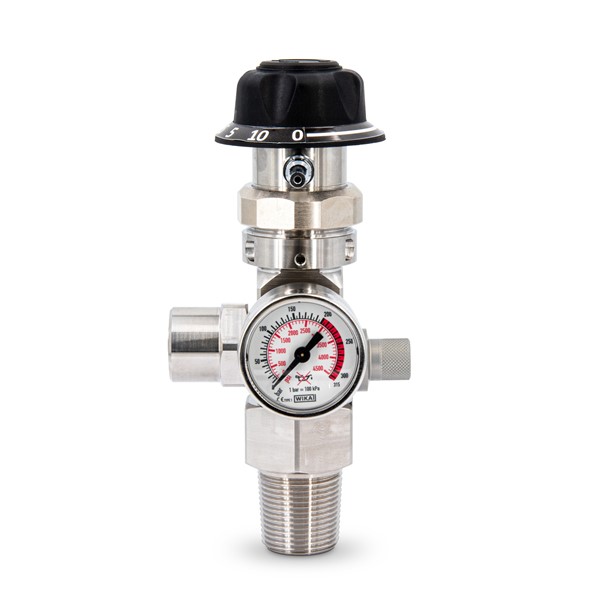
The D551 Ducal integrates an adjustable pressure regulator into the cylinder valve, eliminating external regulators for calibration gas delivery. The D552 Flowcal integrates a multi-position flow selector for direct flow-controlled delivery to a detector or analyzer.

The D405 is a constant flow cylinder valve for applications requiring a fixed pre-set flow rate. All three are designed for small-volume calibration gas cylinders and reduce the number of connections between the reference gas and the instrument being calibrated.

Accessories

The Rotarex accessories range completes the specialty gas distribution installation. Cylinder connectors are available in BS, UNI, DIN, CGA, DISS, AFNOR, and NEN standards to match all international cylinder valve outlet formats. The VD diaphragm line valve provides shutoff at any point in the distribution circuit.

Extensions (for TD/CM/CEN/MOD boards), straight and elbow pigtails, and duobloc valves provide the connection hardware for complex multi-cylinder installations.

The BA12 alarm box provides remote indication of supply status. Contact pressure gauges and gas cylinder holders complete the installation hardware range.

Why Rotarex for laboratory and research

  • Complete specialty gas distribution range: from cylinder valve to point-of-use, from a single supplier
  • Diaphragm and bellows sealing: no elastomeric contact with the gas, compatible with 5.0 and 6.0 grade service
  • Automatic SOB with manual reset (TDI High Purity, TDI Specyl, CEN): continuous gas supply without manual intervention
  • UHP equipment (RX series, tied diaphragm valves): all-metal sealing for applications requiring 6.0 grade and more
  • Specyl range: regulators, supply boards, and switchover boards designed for corrosive and aggressive specialty gases
  • Balanced valve technology (S800, S10, S15, MS15): stable outlet pressure as the cylinder empties
  • Point-of-use solutions (S21, Labline S22, MS15, MS20): compact bench integration for multi-instrument laboratories
  • Calibration gas integrated valves: D551 Ducal and D552 Flowcal eliminate external regulators from the calibration circuit
  • Residual pressure protection: D283 and D282 RPV cylinder valves prevent cylinder backfill and cross-contamination
downloads
  • Download
    Supply and Switchover Boards
    Last update: May 07, 2026
    Available in: en
  • Download
    Pressure Regulators Catalog
    Last update: Feb 17, 2026
    Available in: en/FR
  • Download
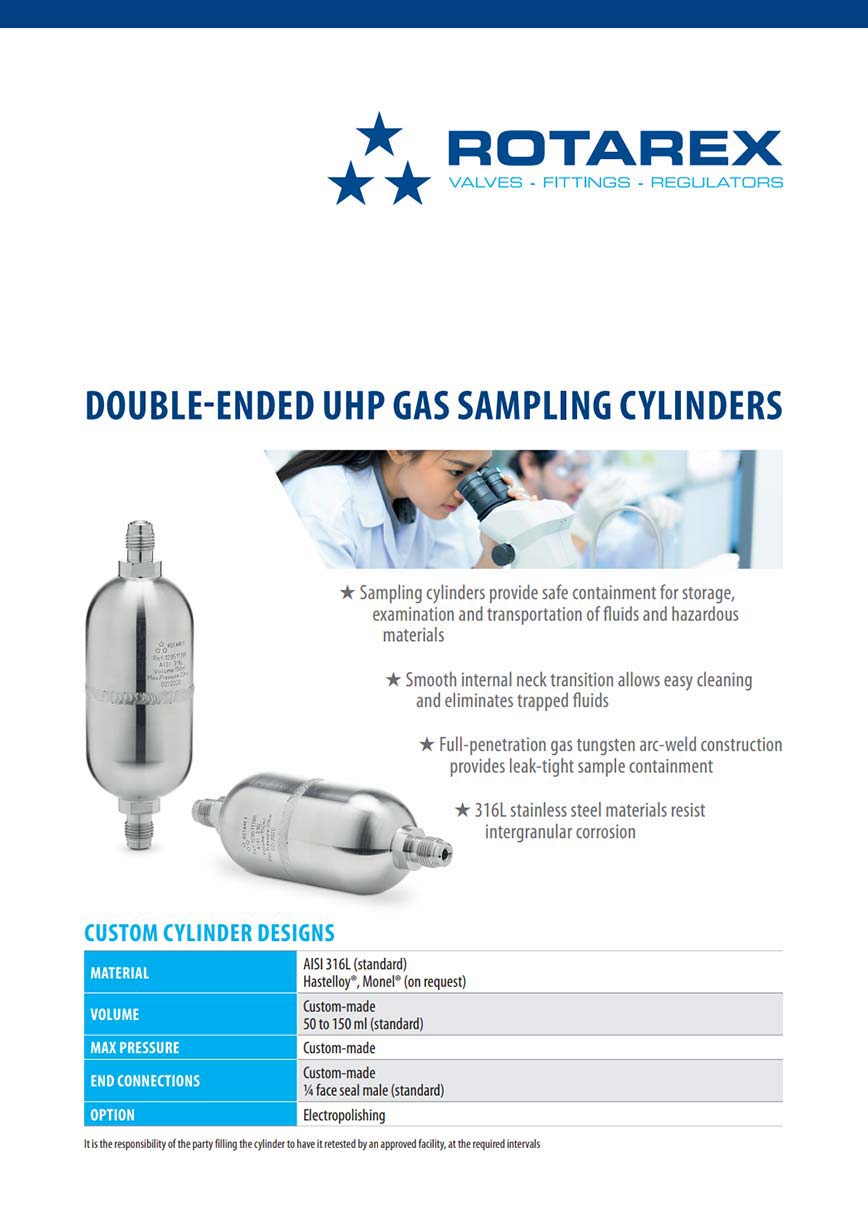
    Gas sampling cylinders Flyer
    Last update: Feb 17, 2026
    Available in: en
  • Download
    SPECYL Pressure regulator
    Last update: Feb 17, 2026
    Available in: en
  • Download
    TDI HIGH PURITY
    Last update: Feb 17, 2026
    Available in: en
  • Download
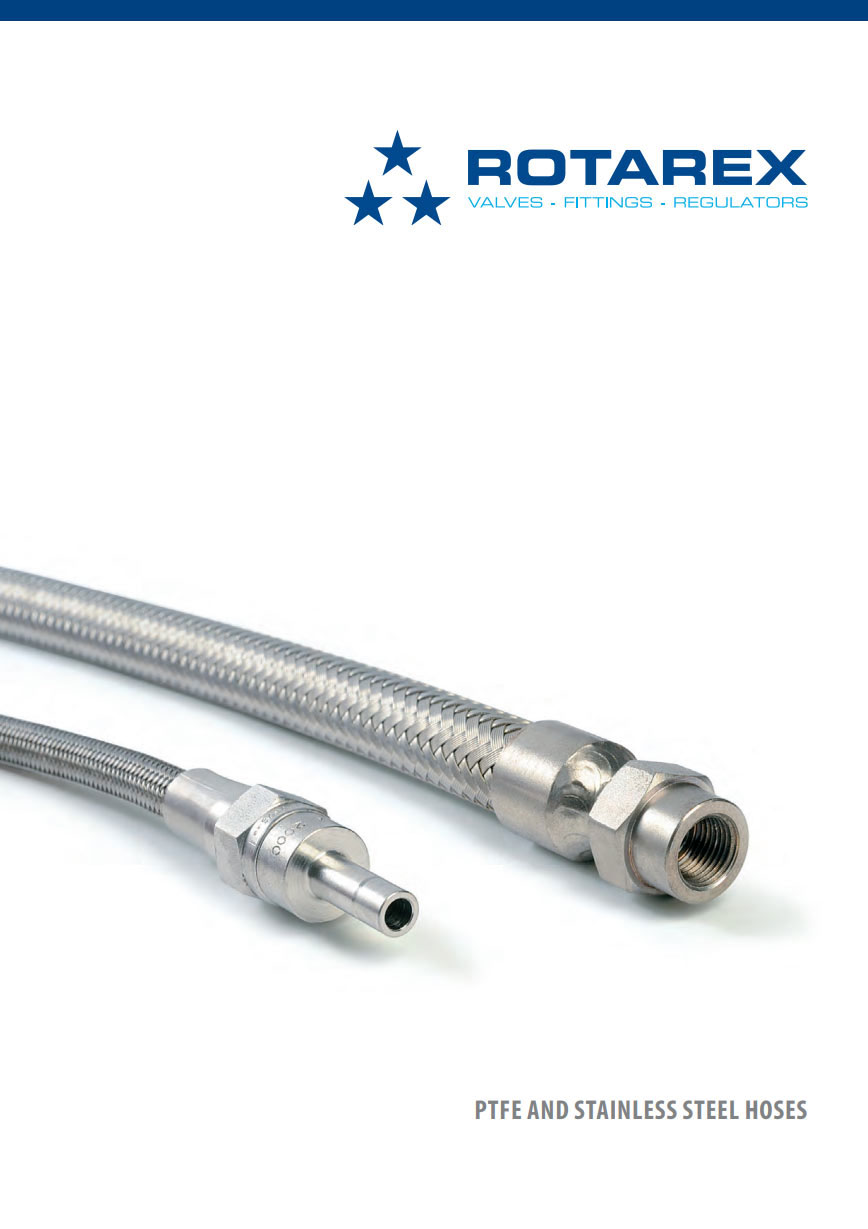
    Hoses
    Last update: Aug 05, 2024
    Available in: en
FAQ: gas equipment for laboratories and research
What purity grade is required for gas chromatography carrier gas?

The purity grade depends on the detector. Thermal conductivity (TCD) and flame ionization (FID) detectors typically work with 5.0 grade carrier gas (99.999%). Electron capture (ECD) detectors and mass spectrometry require 6.0 grade (99.9999%) or better, because trace impurities in the carrier gas produce background signals that interfere with detection at low concentrations.
In practice, the limiting factor is often the distribution system. A 6.0 grade cylinder supplying gas through equipment with elastomeric seals does not deliver 6.0 grade gas to the instrument. The distribution system must be rated for the same purity grade as the cylinder.

What is the difference between a single-stage and dual-stage pressure regulator?

A single-stage regulator reduces pressure from the cylinder supply to the set outlet in one step. As the cylinder empties and supply pressure drops, the outlet pressure shifts slightly. In most standard laboratory applications this drift is small, but it is measurable in instruments that rely on consistent gas conditions across a full cylinder.

A dual-stage regulator performs the reduction in two steps: a first stage to an intermediate pressure, then a second stage to the final outlet setting. This produces a more stable outlet pressure as the cylinder empties.

For analytical applications where retention time or signal response depends on consistent conditions across the life of a cylinder, a dual-stage design removes one variable from the system.

What is the difference between HP and UHP gas equipment?

HP (high purity) equipment maintains gas purity at 5.0 grade service. Materials in contact with the gas path include stainless steel bodies and diaphragm sealing. These are appropriate for carrier gas supply to GC instruments, general analytical gas distribution and standard specialty gas applications.

UHP equipment eliminates all elastomeric contact with the gas stream. All-metal sealing, tied diaphragm or bellows construction, and electropolished internal surfaces limit outgassing and particulate generation to levels compatible with 6.0 grade and above.

This is required for semiconductor research process gases, particle physics detector circuits, and any application where trace-level contamination from the distribution system itself would affect the measurement.

How does an automatic switchover board ensure continuous gas supply?

An automatic switchover board connects two cylinder banks to a common outlet. When the primary bank falls below a preset pressure threshold, the board opens the secondary bank and maintains supply without any operator action and without a pressure interruption to downstream instruments.

A manual reset mechanism allows the depleted primary bank to be replaced and reset as the new reserve while the experiment continues on the secondary bank. On models connected to an alarm box (BA12), remote monitoring confirms the supply status without requiring a physical check of the cylinder area.

How do I select equipment compatible with corrosive specialty gases?

Material compatibility depends on the specific gas, its concentration, and the operating pressure and temperature.

  • For halide acids (HCl, HF) and nitrogen oxides (NO, NO2): avoid copper alloys, use stainless steel with PTFE or PCTFE seats.
  • For ammonia (NH3): avoid copper and zinc alloys.
  • For strong oxidizers (Cl2, F2): specific alloys and elastomer-free seat materials are required.

No single material covers all aggressive specialty gases.

The gas supplier's material compatibility data for the specific gas and concentration is the primary reference for equipment selection. When this data is not available for a product, request a compatibility statement from the equipment manufacturer before placing the equipment in service. The Rotarex Specyl range covers the most common corrosive gas types found in laboratory and environmental analysis applications.

What is a calibration gas cylinder valve and how is it different from a standard valve?

A standard cylinder valve has two positions: open and closed. Using a calibration reference gas with a standard valve requires an external pressure regulator to reduce cylinder pressure, and a separate flow control device if a specific flow rate is needed.

Each additional piece of hardware adds connection points between the certified reference gas and the detector, and each connection point is a potential contamination source.

A calibration gas cylinder valve integrates pressure control or flow control into the valve body.

  • The D551 Ducal includes an adjustable pressure regulator.
  • The D552 Flowcal includes a flow selector.
  • The D405 delivers a fixed constant flow.

These eliminate external hardware from the calibration circuit, reduce the number of connections, and simplify the procedure between calibration sessions.

Connect with an Expert
Go up
×
Loading