Medical Air Regulators – Precision, Safety, and Reliable Performance

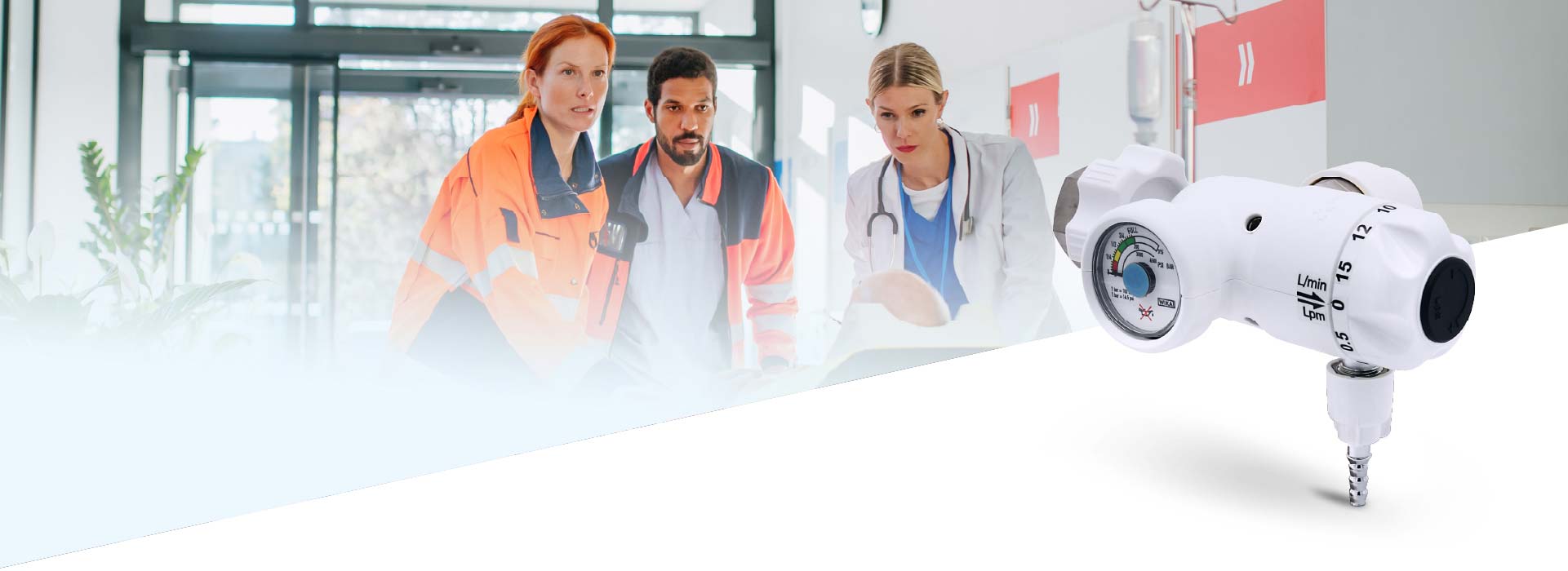
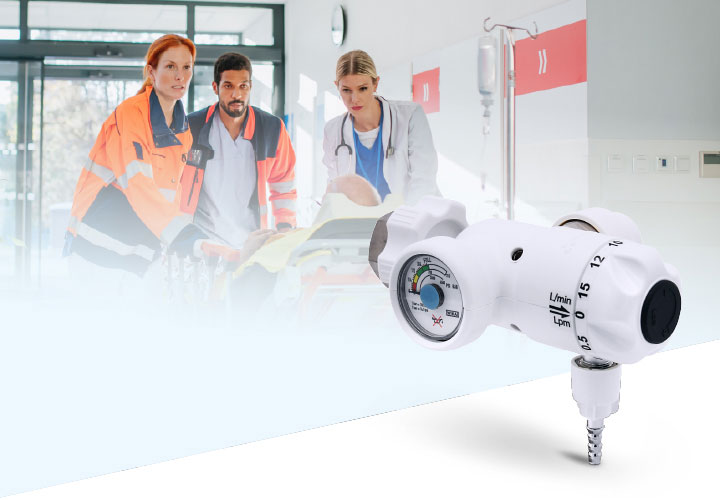
Using a high-quality medical air regulator is essential to ensure precise control of airflow and pressure in critical applications such as respirators, ventilators, and anesthesia machines. Designed for high performance, Rotarex medical air regulators deliver reliable and consistent pressure regulation for medical use. All regulators are manufactured from durable materials and comply with stringent safety, reliability, and performance standards.
Discover our range of medical air pressure regulators or request a quote today.

Product Listing

  • Cylinder pressure regulator
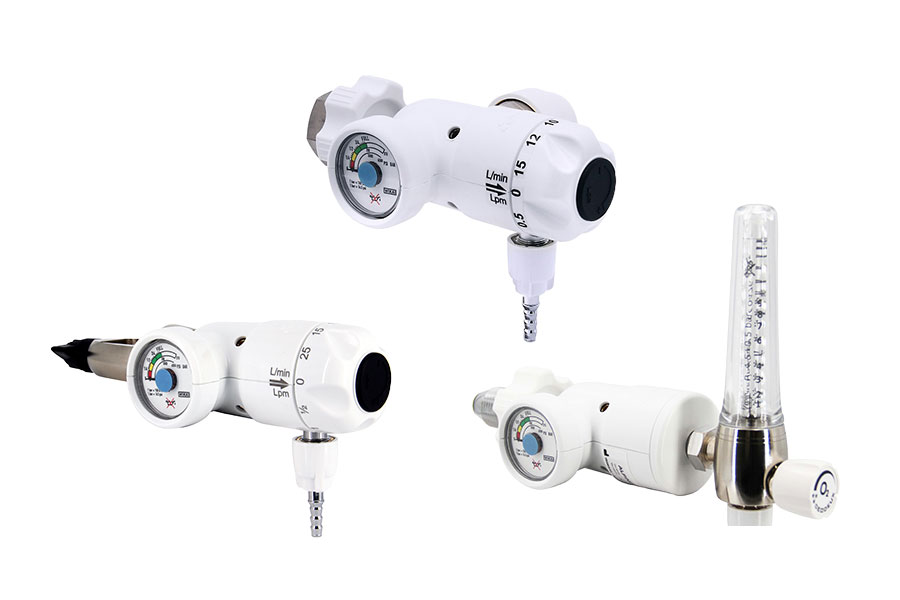
    With flow selector
    All medical gases

What is a medical air regulator?

A medical air pressure regulator is a critical device designed to reduce the high pressure contained in cylinders to a controlled, stable, and safe outlet pressure suitable for medical use, including patient care. Connected directly to the cylinder valve, it converts very high inlet pressure into a usable and consistent pressure required by medical equipment.

The regulator automatically compensates for pressure variations to maintain stable delivery. By ensuring a constant and reliable airflow, it supports the proper operation of essential devices such as ventilators and respirators, helping protect both patients and equipment while playing a key role in overall clinical performance and safety.

What is a medical air regulator?
How does a pressure regulator work?

How does a pressure regulator work?

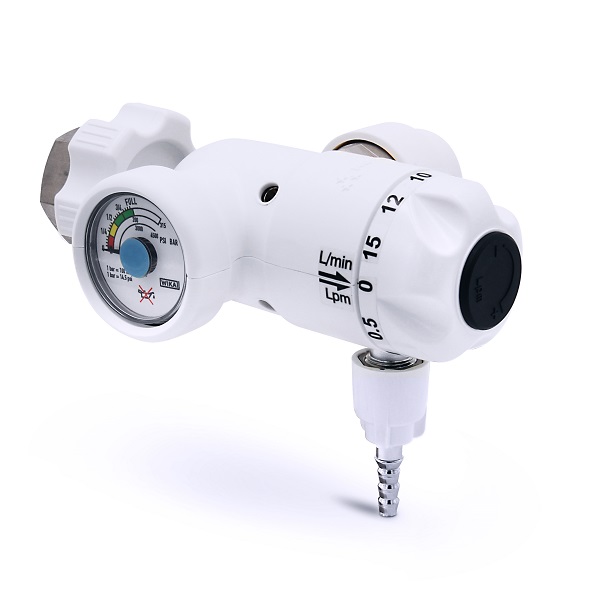
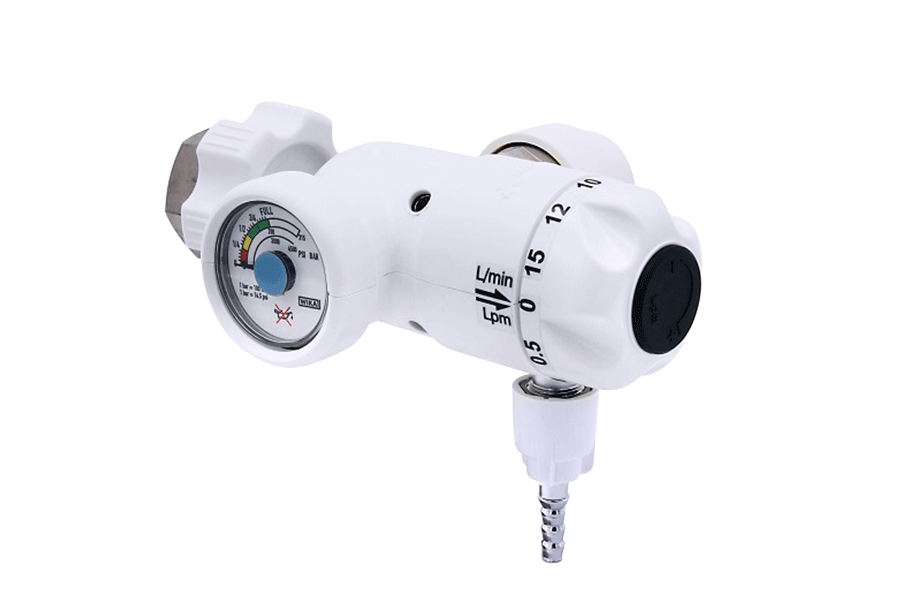
A medical air pressure regulator reduces the high inlet pressure contained in the cylinder to a safe and stable outlet pressure for medical use. Equipped with a pressure gauge and appropriate connectors, it ensures secure connection and accurate monitoring of medical gases. The medical pressure regulator reduces the inlet pressure to a stable outlet pressure and is equipped with a flow selector offering predefined flow ranges.

The airflow rate, expressed in LPM (liters per minute), is selected according to the application to ensure the correct amount of air is delivered. This ensures reliable operation of medical devices and helps protect both equipment and patients.

Depending on the configuration, the regulator may feature a flow selector or a column-type flowmeter for precise flow regulation. Versions with a yoke pin connection (pin index system) are also available, allowing safe and standardized connection to compatible medical cylinders.

Applications of Medical Air Pressure Regulators

Medical air pressure regulators are widely used in healthcare environments where the safe and reliable supply of medical gases is essential to support patient care. They play a key role in respiratory treatments, providing controlled medical air to ventilators, respirators and respiratory support devices used for patients in hospitals, intensive care units (icu) and emergency departments.

Medical air pressure regulators are also used in home care settings, where patients require long-term respiratory support outside the hospital environment. In these applications, regulators are connected to portable cylinders to deliver controlled medical air for home ventilators and other respiratory devices. Their reliability, ease of use, and consistent performance are essential to ensure safe treatment, patient comfort, and continuity of care at home.

In anesthesia and surgical environments, medical air pressure regulators support the administration of medical gases, often in combination with oxygen, to ensure accurate gas delivery throughout medical procedures. They are also commonly used in hospital wards and clinical areas to power or control pneumatic medical equipment, contributing to the safety and efficiency of patient care.

By delivering stable performance across a wide range of applications, they help protect patients, support healthcare professionals and ensure continuity of care in demanding clinical environments.


Applications of Medical Air Pressure Regulators
Key Features of a Medical Air Pressure Regulator

Key Features of a Medical Air Pressure Regulator

Medical air pressure regulators are designed to meet the high safety, performance, and reliability requirements of healthcare environments.

  • Precise pressure and flow control: Ensures accurate, stable outlet pressure and flow. Features a 12-position adjustable flow knob, including a close position, for smooth, continuous adjustment.
  • High resistance to contamination and corrosion: made from medical-grade materials, the regulator helps maintain air quality and prevents internal degradation, even in demanding hospital environments.
  • Stable performance over time: Designed to maintain constant air pressure and flow despite variations in inlet pressure or long-term use, it guarantees reliable performance throughout its service life.
  • Low maintenance and long service life: Its robust design reduces wear and maintenance, ensuring reliable operation and a 10-year service life in clinical environments.

  • Compliance with Medical Device Regulation (MDR): Designed and manufactured in accordance with applicable EU Medical Device Regulation (MDR) requirements to ensure safety, performance, and regulatory compliance throughout the product lifecycle.
  • Full traceability: Each regulator is fully traceable, with controlled materials, manufacturing, and quality processes to support regulatory compliance and long-term follow-up.

How to choose the right medical air regulator

Selecting the right medical air regulator is essential to ensure safe gas delivery, reliable equipment performance, and compliance with medical standards. The choice depends on the type of gas, the required flow and pressure, and the specific clinical environment in which the regulator will be used.

Following a step-by-step approach helps ensure the regulator is correctly matched to the application and delivers optimal performance in daily medical use.


  1. Confirm the gas type
    Choose a regulator designed for the specific gas: medical air, O₂, CO₂, heliox, or other medical gases.
  2. Check the cylinder connection standard
    Make sure the regulator matches the required CGA connection to ensure a secure, compliant fit to the cylinder or system.
  3. Define the required flow rate and pressure range
    Select the appropriate LPM range and outlet pressure based on the medical device and application needs.
  4. Verify material compatibility
    Ensure the regulator materials (e.g., brass) are suitable for the intended gas service and clinical environment.
  5. Match the application context
    Consider where it will be used, for ex. hospital, dental, laboratory, emergency or transport, to choose the right configuration and features.
Alpinox Medical Gas Regulators for Healthcare Applications

Alpinox Medical Gas Regulators for Healthcare Applications

Rotarex offers a complete range of medical gas regulators, the Alpinox range, designed to meet the highest requirements of healthcare applications. The Alpinox pressure regulator is available with a full range of medical gases, such as medical air, oxygen, nitrous oxide, and other specialty gases, ensuring safe and reliable gas control across clinical environments.

Designed to connect seamlessly with standard medical gas connections and hospital systems, Alpinox regulators ensure secure integration, consistent performance, and long-term durability across diverse clinical environments, from intensive care and operating rooms to emergency and transport applications.

FAQs: Common questions about medical air regulators
What is medical air and what is it used for?

Medical air is mainly used in respiratory therapy as a power source for patient ventilators, and for blending with oxygen. It is also used as the driving gas for nebulized drugs and chemotherapy agents. The gas can be administrated with a portable equipment such as a cylinder equipped with a valve and a regulator, or by connection to a complete gas line which requires numerous equipment.

Which quality standards do Rotarex Meditec products comply with?

Rotarex Meditec products are designed, validated, produced and controlled during their whole lifetime according to a very stringent quality system which exceeds requirements of ISO 13485 standard.

What airflow ranges are available for Rotarex Meditec medical air pressure regulators?

Rotarex Meditec medical air pressure regulators are available with airflow ranges from 0–6 up to 0–25 LPM, allowing them to meet the requirements of a wide variety of medical applications, from low-flow therapies to higher-demand respiratory devices.

Which medical gases are compatible with Alpinox pressure regulators?

Alpinox pressure regulators are available for a wide range of medical gases, including medical air, oxygen, nitric oxide, and other specialty medical gases. Each regulator type is specifically configured and validated according to the gas it is intended for, ensuring safe gas control, compliance with medical standards, and reliable performance across clinical applications.

Do medical air pressure regulators require regular maintenance?

Medical air pressure regulators are designed for long-term reliability and low maintenance. When used under normal clinical conditions and in accordance with manufacturer recommendations, they require minimal routine maintenance. Regular visual inspections and functional checks are recommended to ensure proper operation.

Thanks to their robust design and medical-grade materials, Alpinox medical air pressure regulators offer a service life of up to 10 years, helping reduce downtime and maintenance costs in healthcare environments.

What are the features of medical air regulators?

Rotarex Meditec medical air pressure regulators use Rotarex technology to deliver precise and stable pressure control. Key features include a 12-position adjustable flow control knob, high resistance to contamination and corrosion thanks to medical-grade materials, stable outlet pressure despite inlet pressure variations, and a long service life of up to 10 years.

These regulators are designed for precision medical applications and comply with EU Medical Device Regulation (MDR) requirements, ensuring safe and reliable performance across clinical environments.

Connect with an Expert
×
Loading