Oct 06, 2026
Diaphragm vs Bellows Valves for UHP: How to Choose
Cryogenic gases have become strategically essential across today’s most advanced industries, from the energy transition to cutting-edge developments in electronics and aerospace. As global demand for high-performance technologies and low-carbon energy solutions continues to grow, cryogenics plays a pivotal enabling role in modern industrial plants and energy systems.
In a world facing rising energy needs, efficient storage is a key driver of technological and industrial progress. By drastically reducing the volume occupied by gases, liquefaction makes it possible to store and transport large quantities of cryogenic temperature levels, unlocking new possibilities for hydrogen infrastructure systems, high-tech manufacturing and scientific innovation. Cryogenic storage tanks are now a common feature in energy and research facilities requiring safe and stable cold storage conditions.
However, beyond their technological and environmental benefits, cryogenic liquids and gases introduce significant engineering challenges. Extreme temperatures, material constraints, pressure management and system control require advanced solutions to monitor system performance and ensure safety, reliability and operational efficiency in critical applications.
Cryogenics is the science and engineering of extremely low temperatures, typically below −150°C. In the gas industry, it involves the production, storage and transportation of liquefied gases such as argon, nitrogen, helium, oxygen and hydrogen. At these temperatures, gases undergo a phase change from vapor to liquid, enabling their physical properties to be harnessed for industrial and scientific applications.
One of the fundamental principles of cryogenics is gas liquefaction. When a gas is cooled to its boiling point, it condenses into a liquid state, drastically reducing its volume. This phase transition significantly improves logistical efficiency, allowing large quantities of gas to be stored and transported in a compact and practical form. Such volume reduction is essential for industrial supply chains and large-scale energy systems.
Beyond storage efficiency, ultra-low temperatures themselves are a core principle of cryogenic applications. Liquefied gases provide controlled cooling capabilities that are indispensable in advanced fields. In medicine, they are critical for MRI systems operating under superconducting conditions. In aerospace, cryogenic fuels support high-performance space propulsion systems, where the ability to precisely manage gas flow, pressure and temperature is crucial. In scientific research, they enable experiments and technologies that require stable environments close to absolute zero.
Cryogenic gases cover a broad range of applications, from energy infrastructure to cutting-edge scientific research. The most commonly used cryogens include hydrogen, nitrogen, argon, oxygen and helium, each characterized by extremely low boiling points and specific industrial functions.
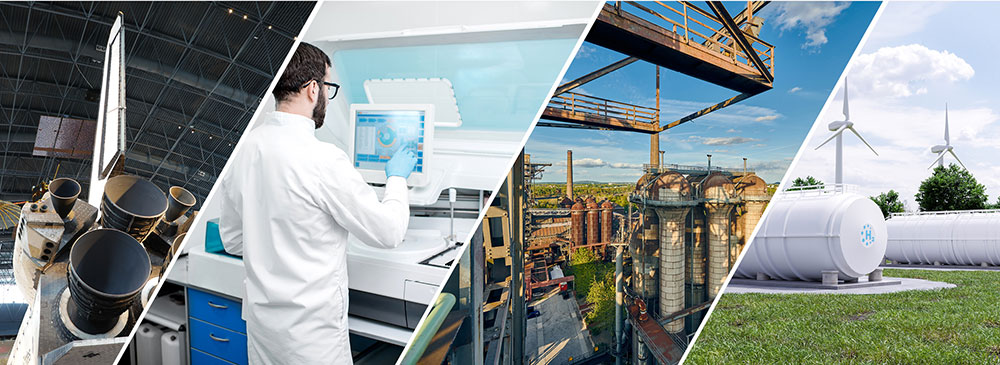
Cryogenic gases are at the heart of some of today’s most demanding industrial and scientific environments. From space propulsion systems to hydrogen energy infrastructure and advanced research laboratories, the ability to safely store, control and distribute gases at ultra-low temperatures is essential.
In the aerospace sector, cryogens such as liquid hydrogen (LH₂) and liquid oxygen (LOX) are used as high-performance rocket propellants. Their extremely low boiling points enable high specific impulse engines to be achieved, making them indispensable for satellite launches and deep space missions. High-integrity cryogenic valves, including bellows-sealed designs, are widely used in ground support equipment, fuel handling systems and cryogenic infrastructure to ensure leak-tight isolation and safe operation.
In the energy industry, cryogenic gases are indispensable as a solution for storing large quantities. Hydrogen is often considered an essential element of the energy transition, offering an alternative to fossil fuels. Hydrogen makes it possible to store energy, transport it over long distances and release it when needed.
Cryogenic gases play an important role in industrial gas processing and metallurgical applications. Liquid oxygen and liquid argon are widely used to enhance combustion efficiency, control chemical reactions and create protective atmospheres during high-temperature metal production and refining processes.
In research institutes, cryogenic gases enable major advances in physics, medicine and materials science. Liquid helium is essential for cooling superconducting magnets in MRI systems, particle accelerators and quantum computing platforms. Liquid nitrogen is widely used for biological preservation and laboratory cooling.
Cryogenic environments impose particularly demanding conditions. Extremely low temperatures can cause materials to contract and become more brittle, requiring components specially designed for these conditions.
Thermal insulation is essential for maintaining very low temperatures by limiting heat input.
When a gas changes from a liquid to a gaseous state, its volume increases considerably. This phenomenon, known as volumetric expansion, is particularly pronounced in cryogenics and causes an increase in pressure in the tanks. Precise control of the gas flow rate is therefore essential to ensure the safe and controlled operation of cryogenic installations.
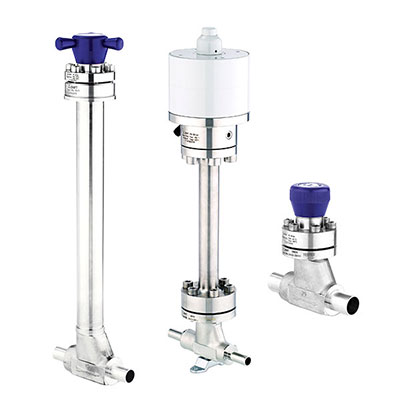
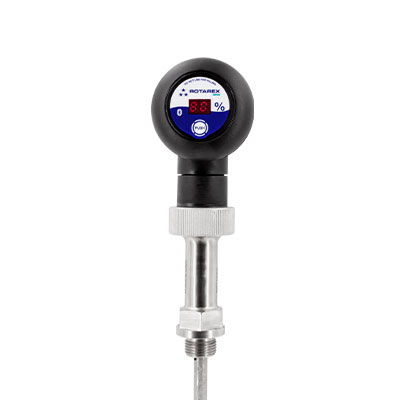
Rotarex offers a range of products that meet these demanding conditions:
Cryogenic technologies are entering a phase of sustained expansion, driven by structural transformations in energy systems, advanced manufacturing processes and scientific innovation. As industries pursue decarbonisation, increased performance and growing digitalisation, the need to store, transport and control gases at ultra-low temperatures continues to grow.
One of the main drivers of this growth is the global acceleration of hydrogen-related projects. Governments and private investors are funding large-scale hydrogen production facilities, liquefaction plants and international transport corridors. Because hydrogen must be stored under high pressure or in liquid form to be transported efficiently over long distances, cryogenic storage and transfer systems are becoming essential to the development of a viable hydrogen economy.
The semiconductor industry is another powerful driver of growth. Global demand for chips, driven by artificial intelligence, electric vehicles, renewable energy systems and advanced electronics, continues to increase manufacturing capacity worldwide. Semiconductor manufacturing relies heavily on high-purity gases and precisely controlled environments.
Beyond energy and electronics, research institutes and large-scale scientific facilities are also expanding rapidly. Investments in quantum computing, particle physics, and advanced medical imaging rely on cryogenic environments, particularly for superconducting technologies. These developments reinforce the long-term demand for safe and efficient cryogenic storage and distribution systems.
Together, these trends point to opportunities for sustained growth throughout the cryogenic value chain. As applications become more complex and safety standards more stringent, the market is moving towards integrated, highly reliable solutions that combine storage, flow control and digital monitoring in extreme environments.